Getting Married in Madeira
Plenty of these guides are written by photographers hoping the post earns them the trip. I have shot on this island more than once, from a wedding down by the sea to a sunrise elopement above the clouds, and I would go back for the light alone. Couples keep asking me the same things before they book, so I have written the answers down.
Madeira is subtropical and steep and green, a volcanic island a few hours off the coast of Portugal where it is more or less spring all year. The weather changes from one valley to the next, so you can drive out of rain and into sun in twenty minutes, and the cloud that fills the valleys is the thing you climb above at first light.
The whole island fits into a long weekend of driving. These are the three places I would build a day around: Pico do Arieiro for the sunrise above the cloud, Ponta de São Lourenço for the red cliffs at the eastern tip, and Fanal for the old laurel forest in the mist. This is where I would send you, and what I would tell you before you go.
Pico do Arieiro
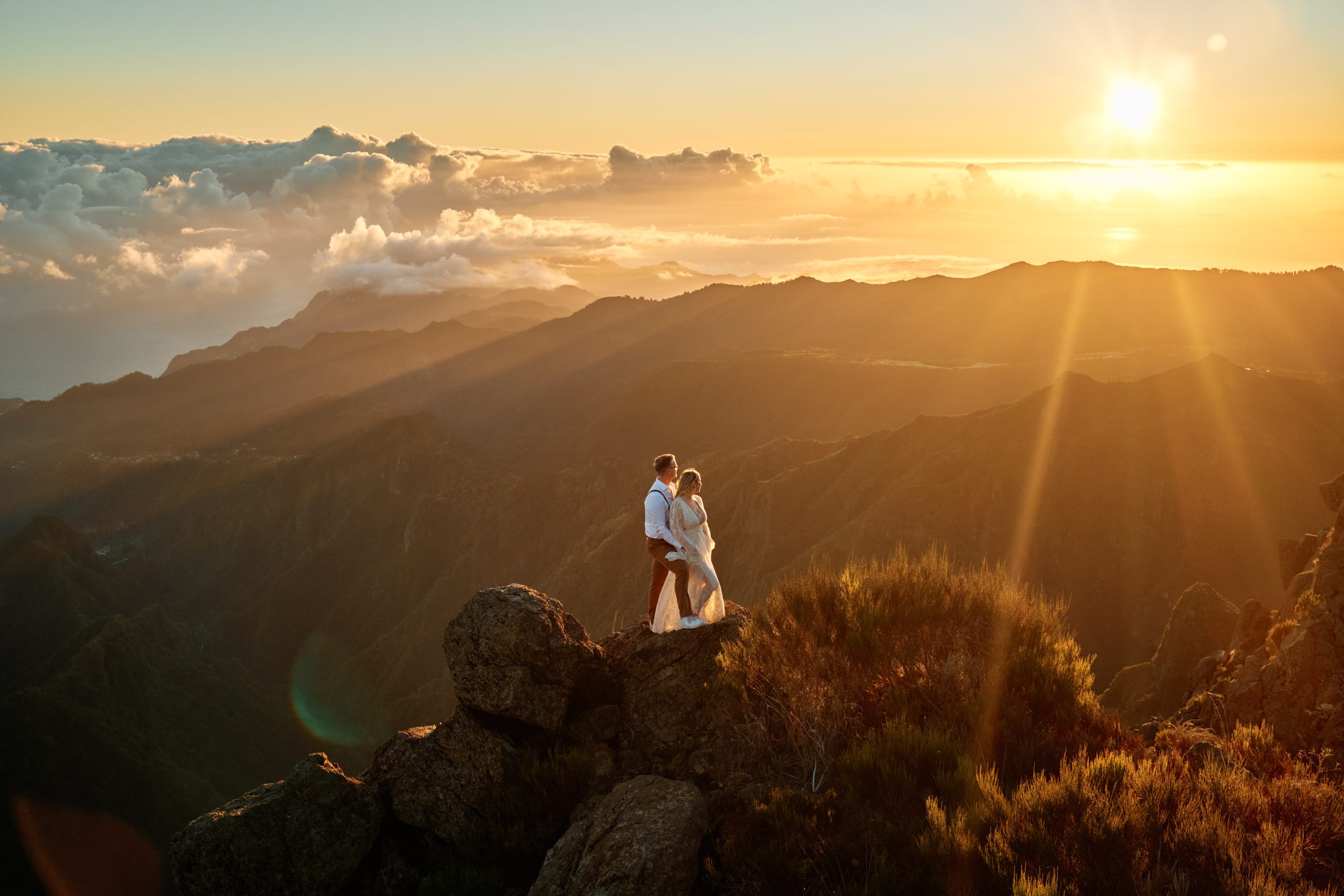
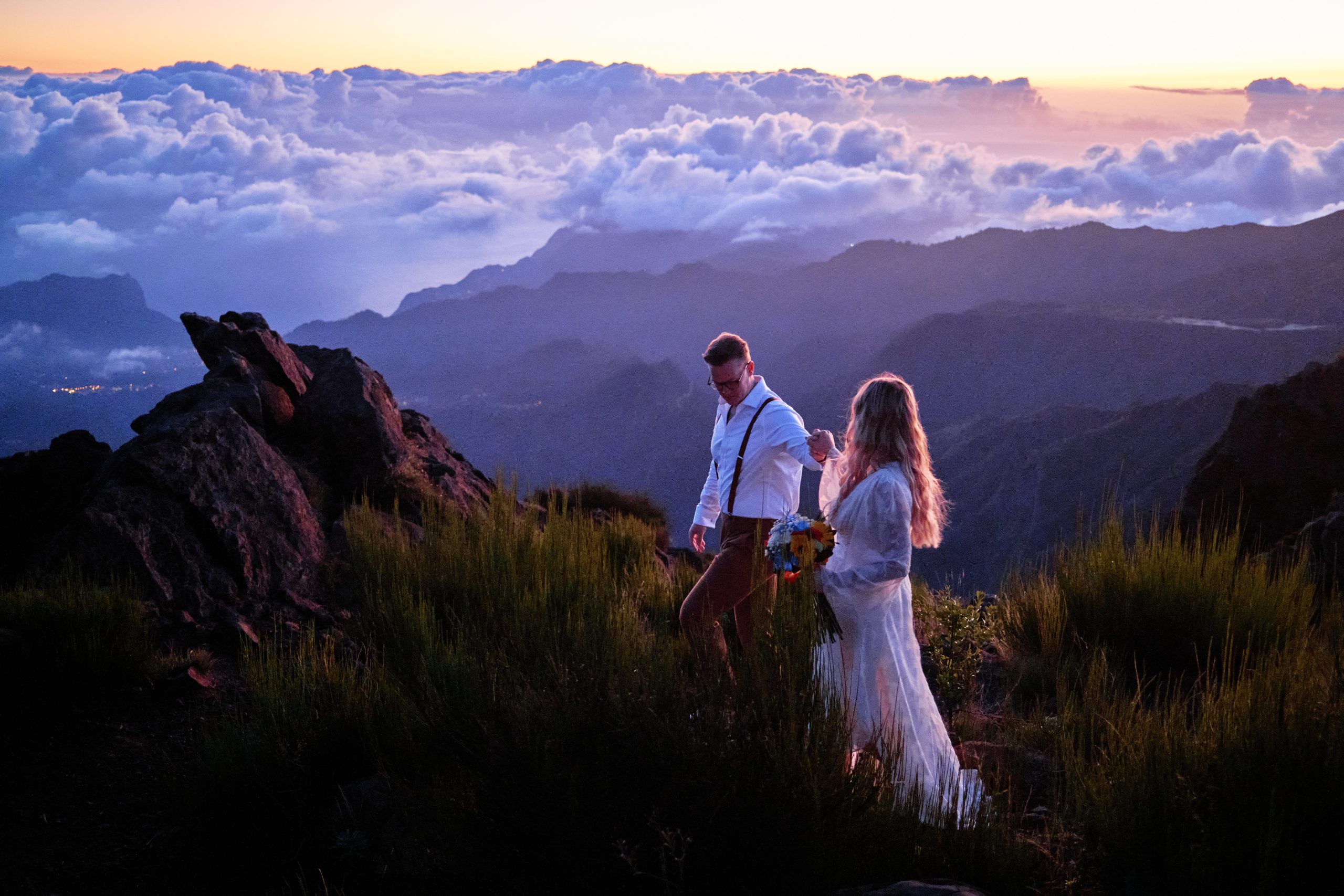
Pico do Arieiro is the third highest point on Madeira, and one of the few you can drive almost to the top of. Before dawn the car park fills with people who came for the same thing: the moment the sun rises over a floor of cloud with Pico Ruivo and the ridge standing out of it. A trail runs along the spine between the two peaks, cut into the rock with steps and short tunnels. It is cold up there before the sun, so bring more than you think you need. You can see a whole morning of it in Justine and Jack's elopement.
Ponta de São Lourenço
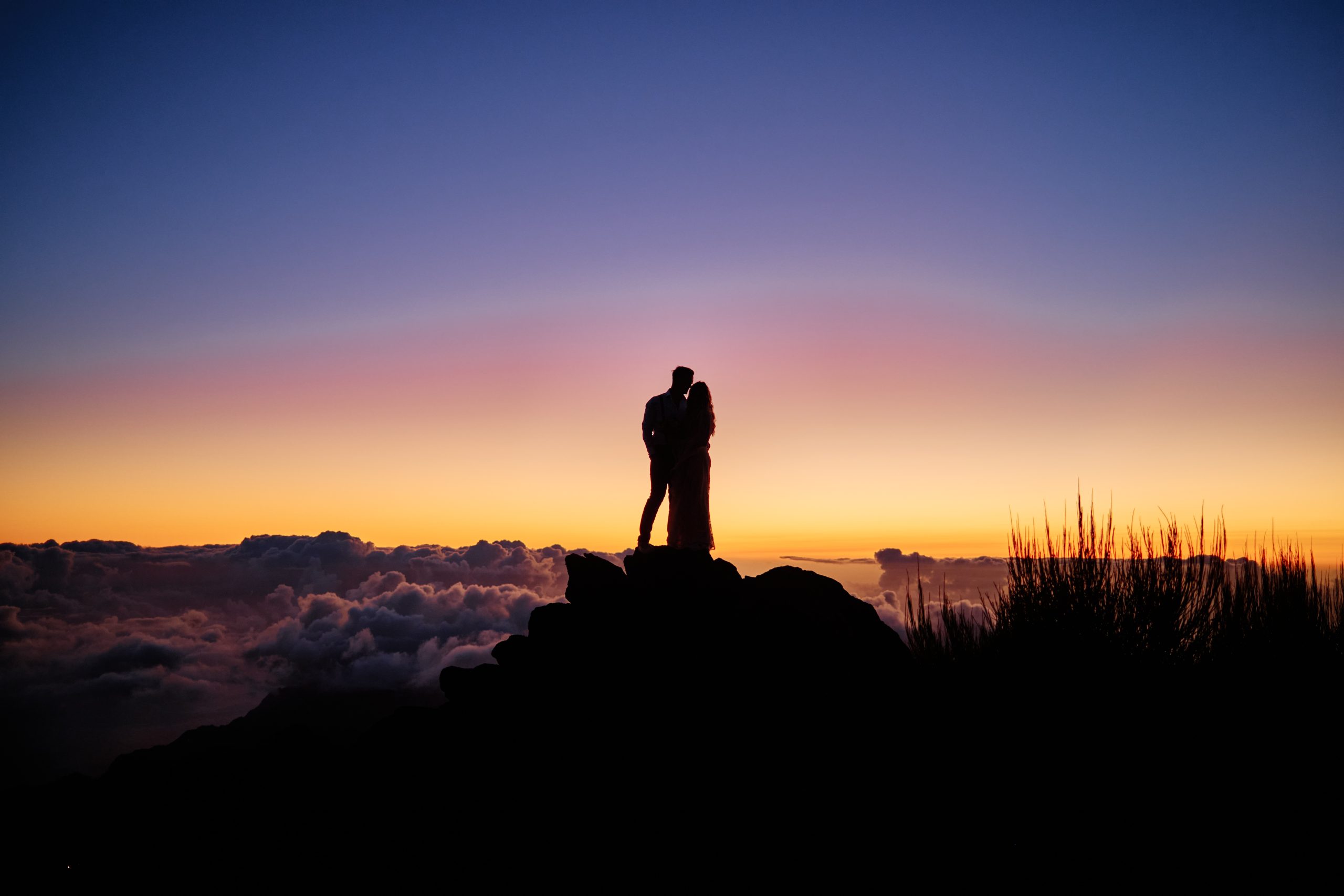
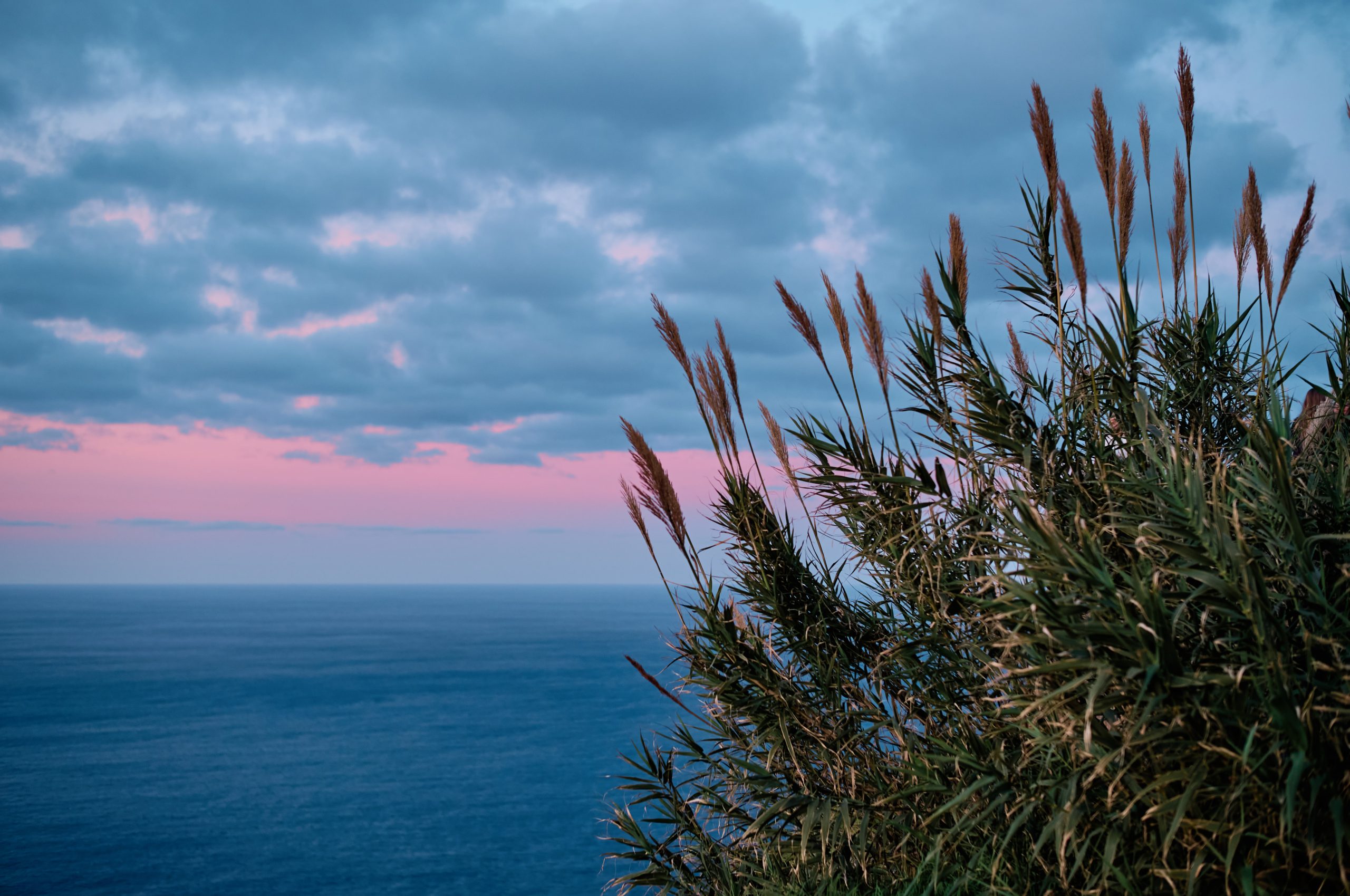
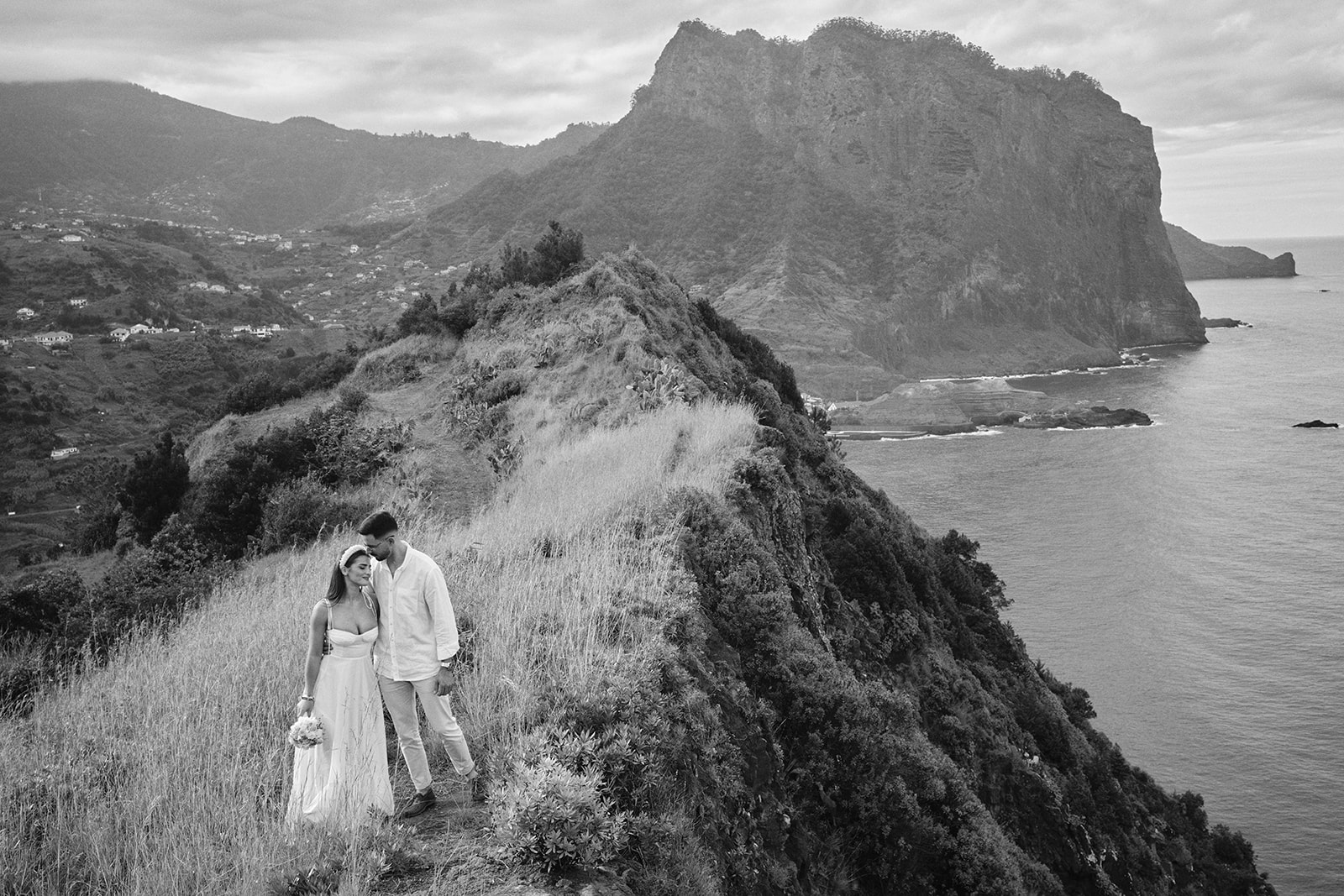
Ponta de São Lourenço is where Madeira stops being lush and turns to bare volcanic rock, a narrow peninsula of red cliffs and headlands reaching east into the sea. It is the driest, most open corner of the island, all wind and colour, and the walk out towards the lighthouse at sunrise is one of my favourite hours anywhere. When the north of the island is under cloud, this is where the sun will be.
Fanal
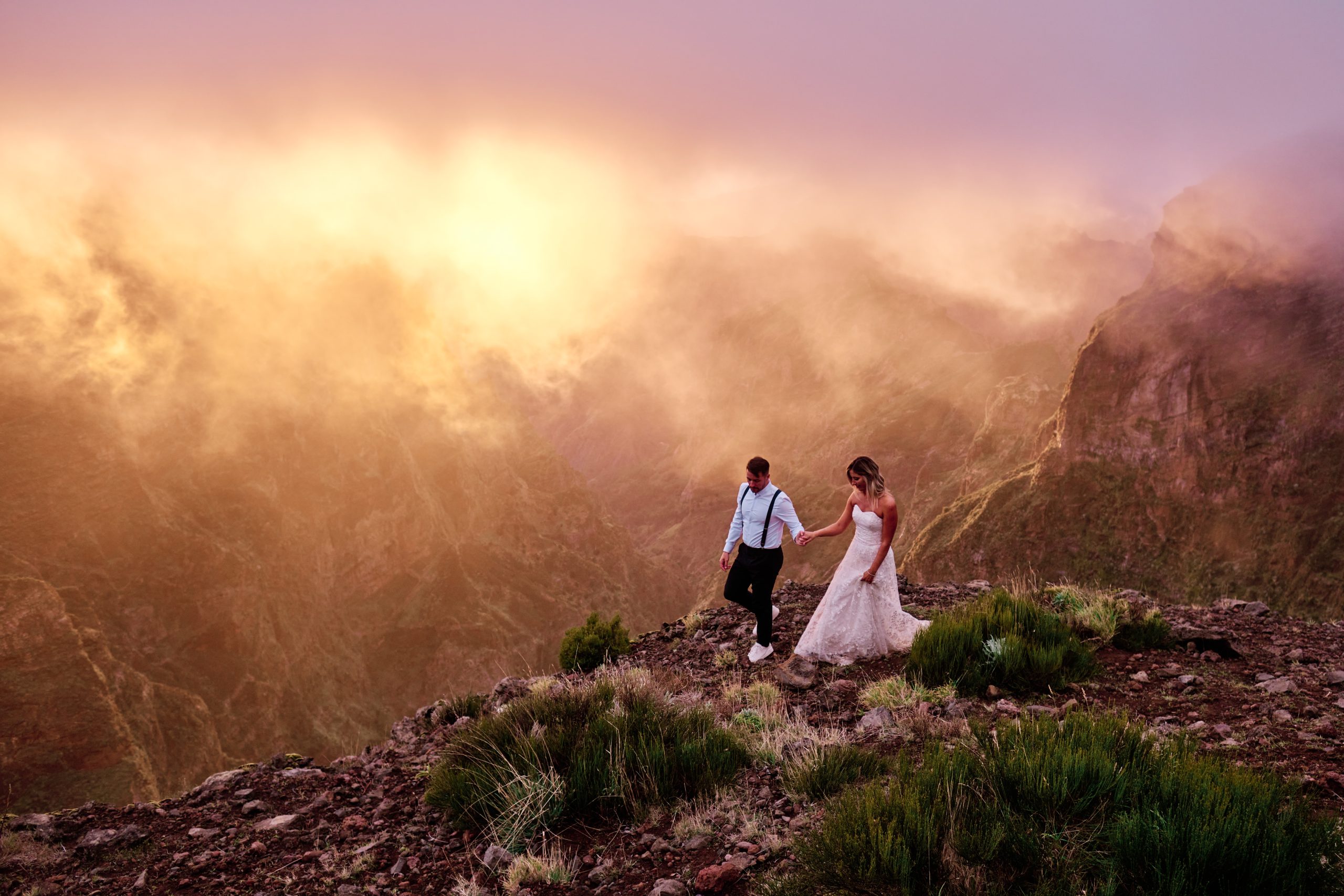
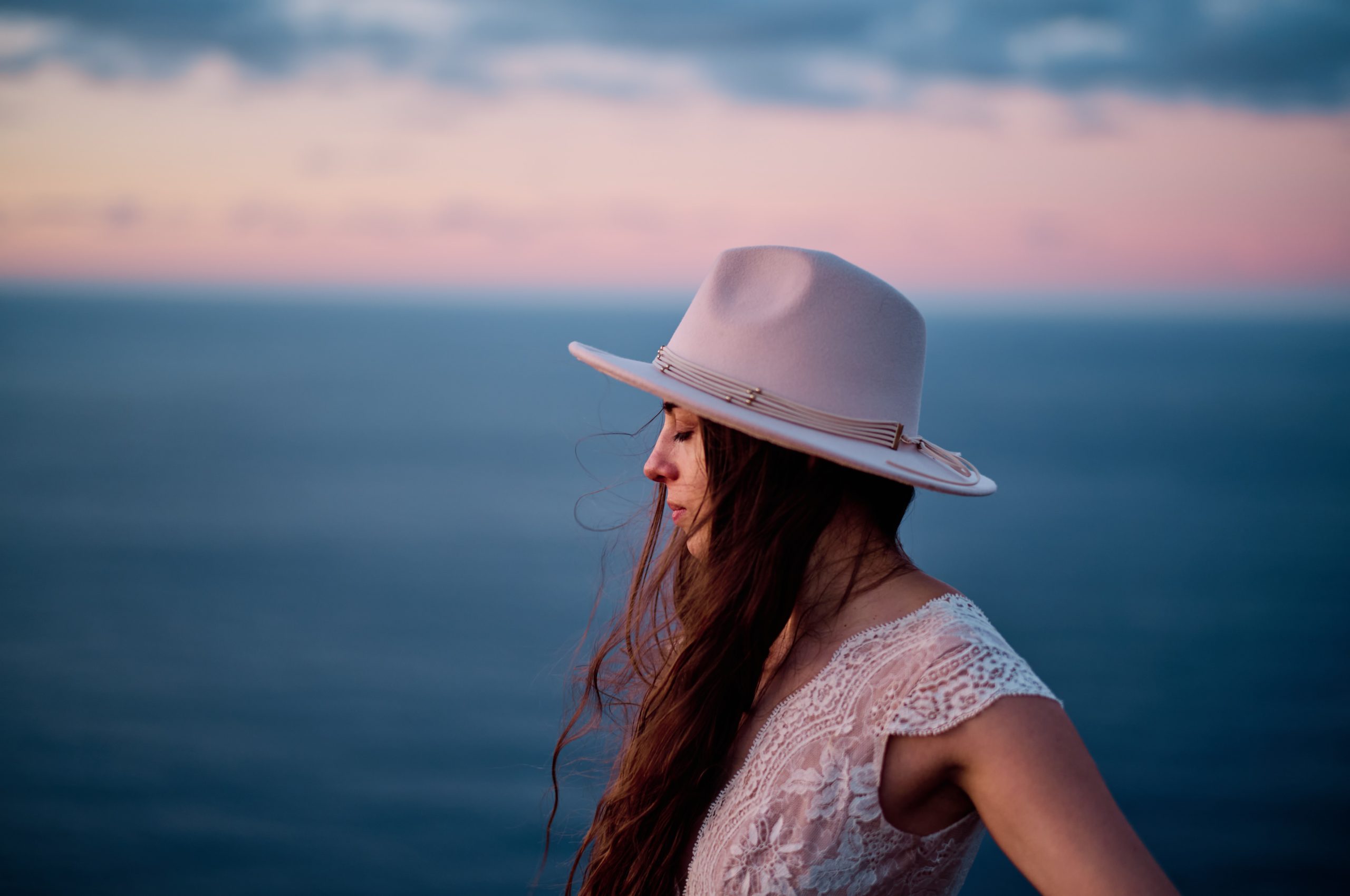
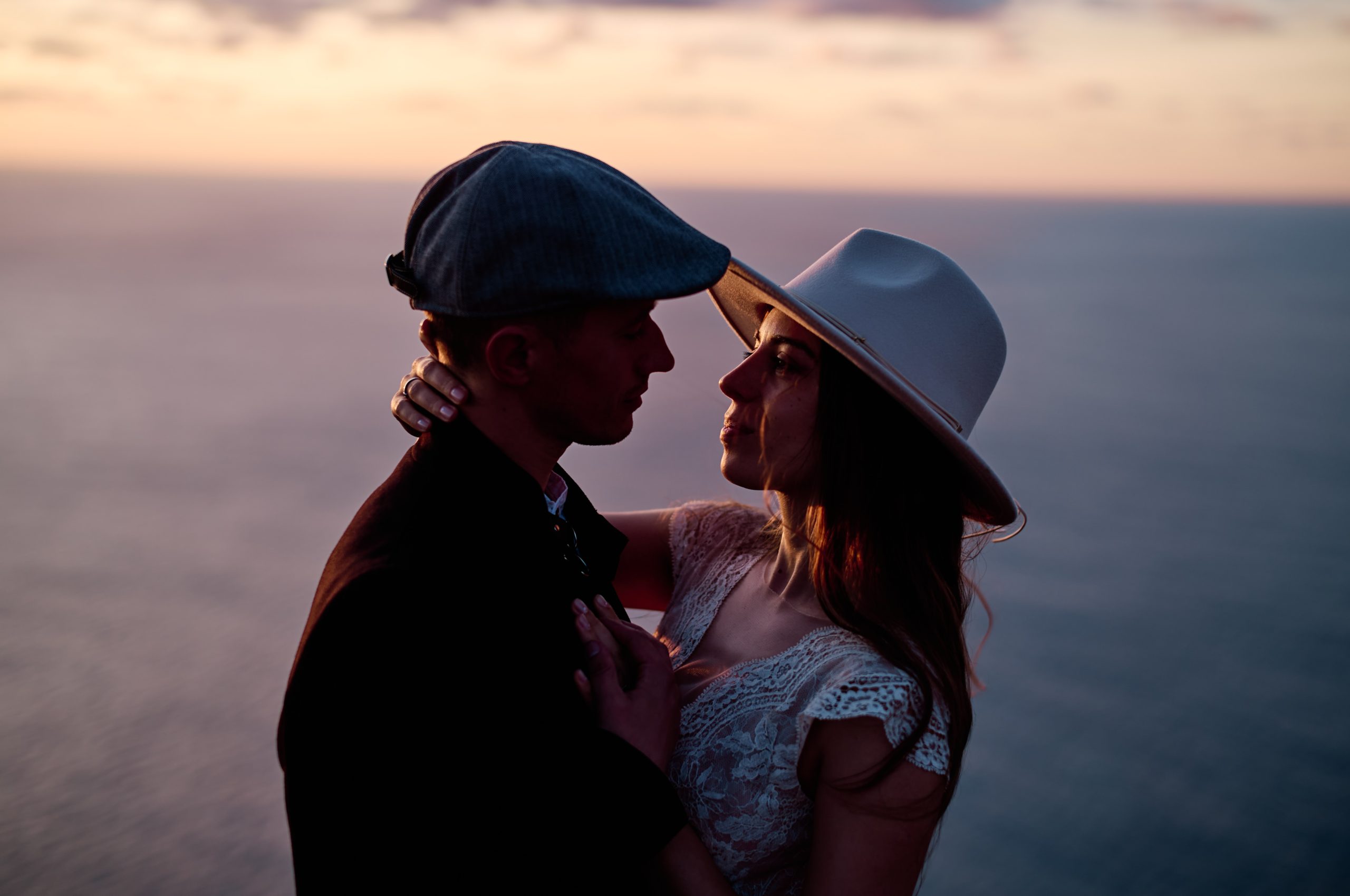
Fanal sits up on the north west, part of the laurisilva, a cloud forest so old it is a World Heritage site in its own right. The trees are squat and wide and centuries deep, and the mist rolls through them for much of the year, which is exactly the point. It is a short, strange drive from the coast into another world. If you are the couple who want your morning to look like a fairy tale rather than a postcard, this is the one.
Funchal & the south
The wild west
The weddings and elopements that got me here.
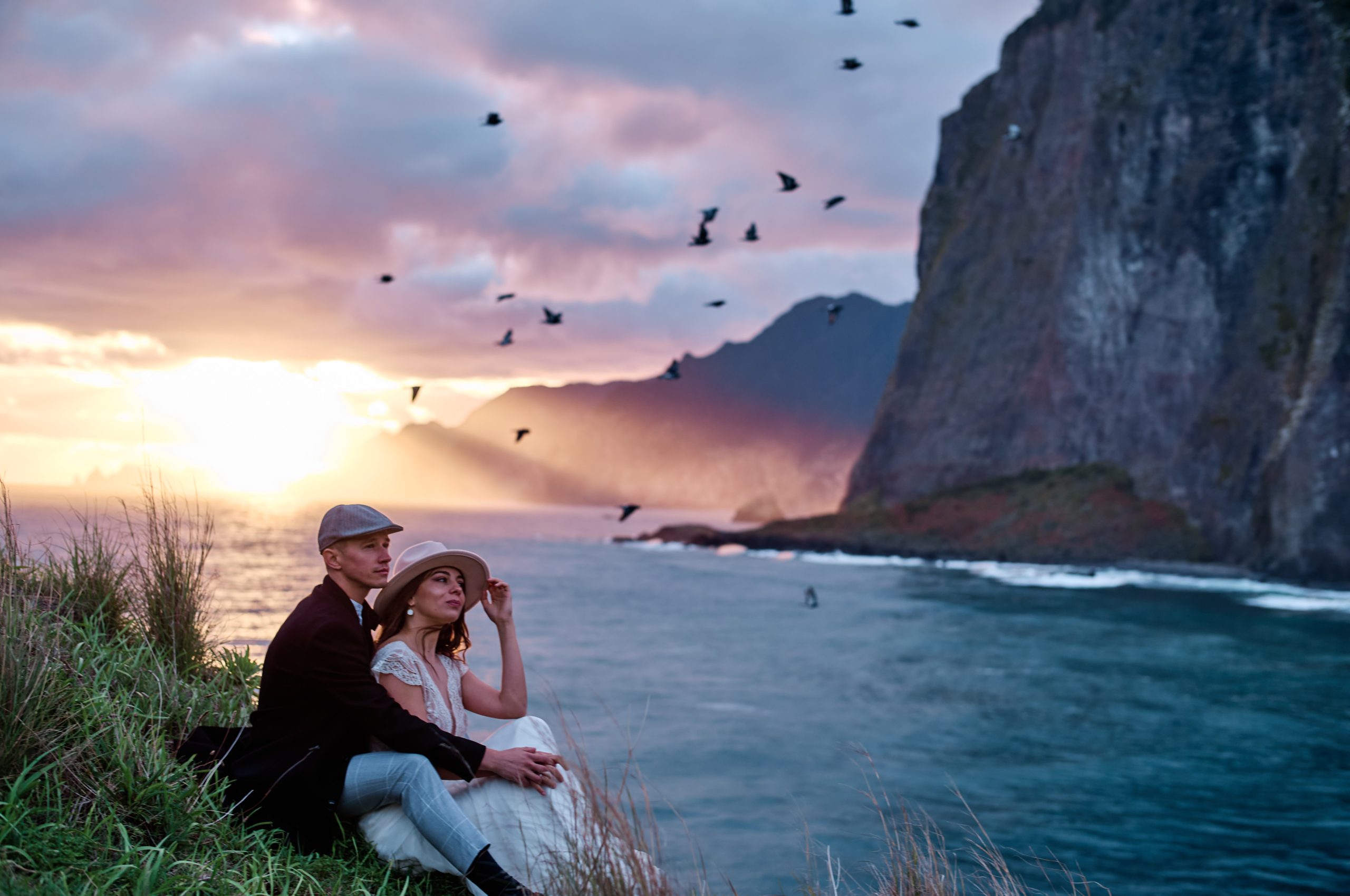
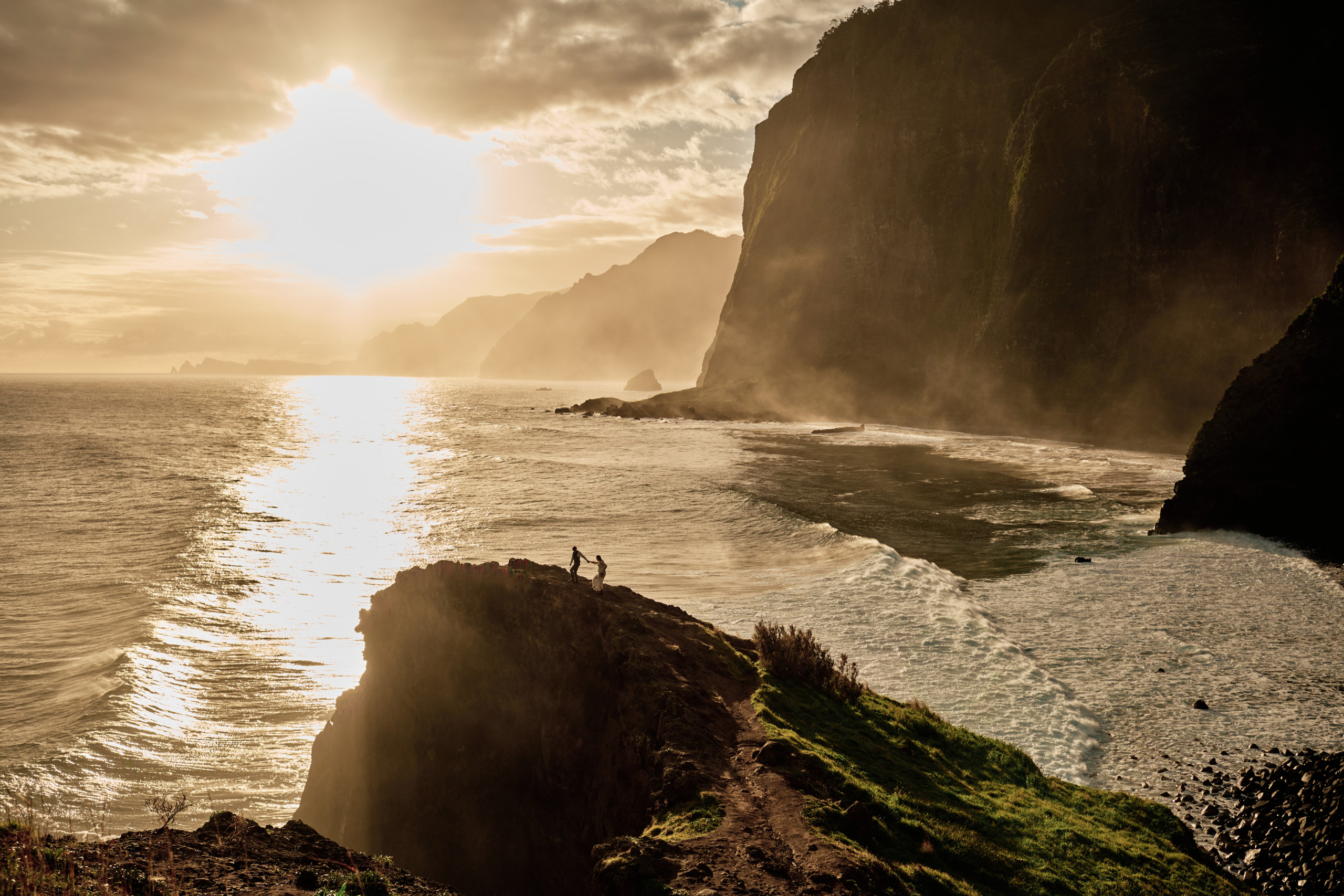
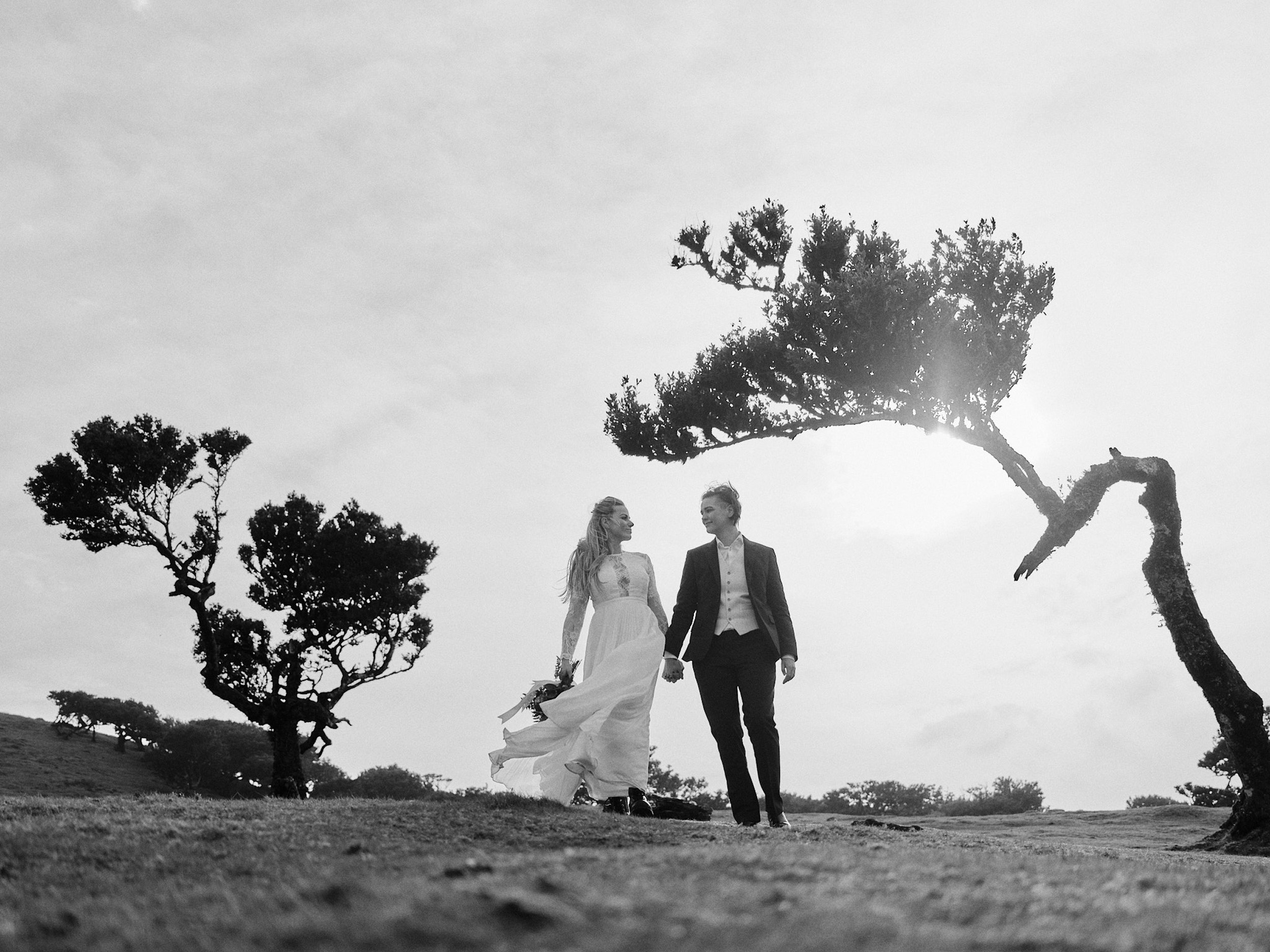
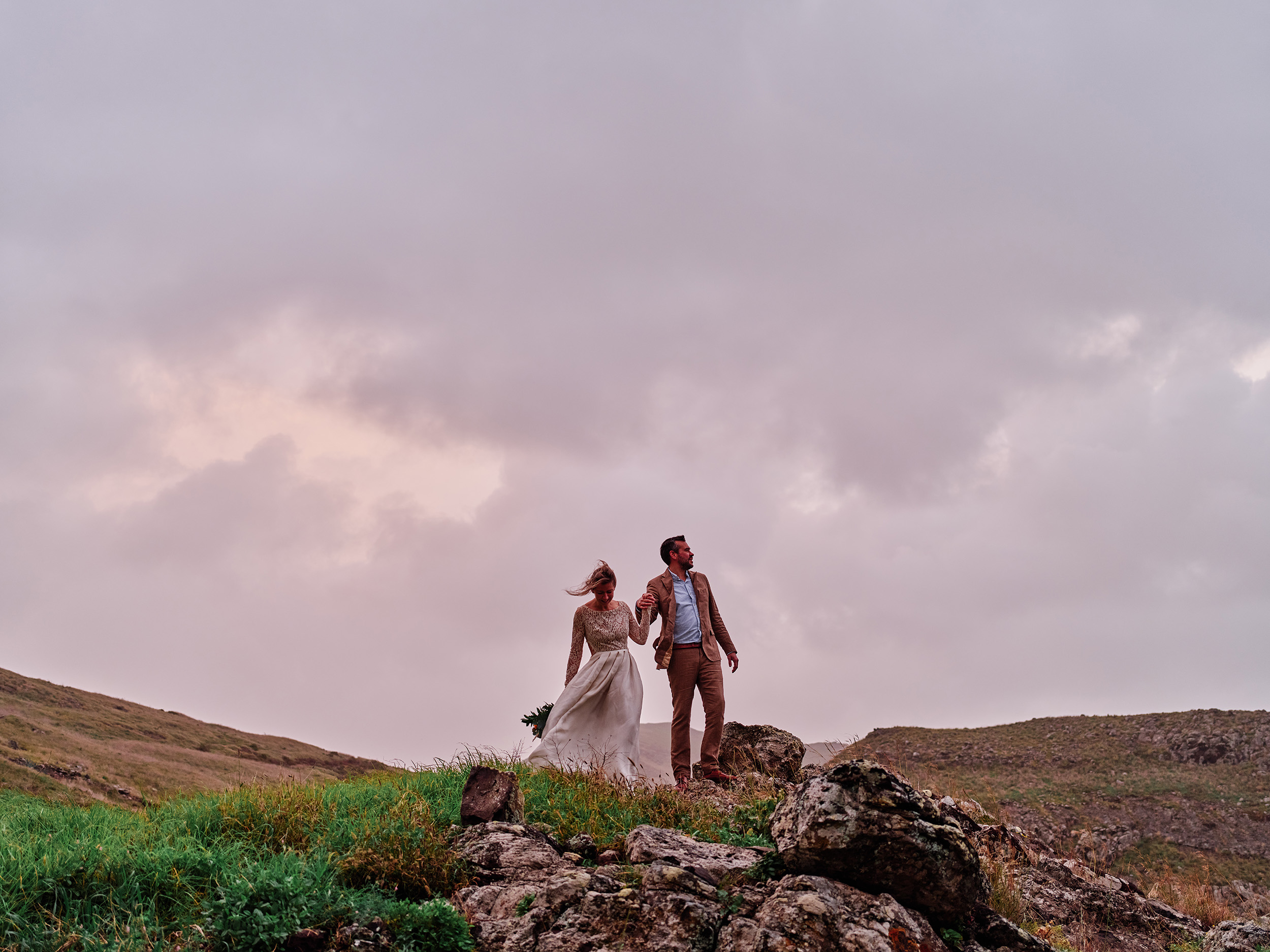
Madeira is mild the whole year, roughly fifteen to twenty five degrees, so there is no bad season, only different ones. April to June and September to October are the sweet spots, warm and settled and greener, with fewer people than high summer. Winter is the wettest stretch, and the north is always cloudier and windier than the south. When one side is grey, drive to the other, or climb above the cloud altogether.
You fly into Funchal, code FNC, which has direct flights from Lisbon and Porto, from many UK cities, and from mainland Europe; from the UK it is about four hours. The runway is famous for its crosswinds and dramatic landings, and windy days do cause diversions, so leave slack in your connections. Porto Santo, the sandy sister island, is a short flight or a couple of hours by ferry if you want a day of it.
Funchal, the capital on the south coast, is the easy first base, with the hotels, the restaurants and the cable car, and it puts most of the island within a day trip. Ponta do Sol and the sunny south west are the safest bet for reliable golden light and a slower seaside mood. The north, around Santana and Porto Moniz, is greener and wilder, with waterfalls, the natural sea pools and the traditional A-frame houses, but the weather there is less dependable.
You drive on the right, and a car is essential; the best light and viewpoints are scattered and remote. The roads are steep and full of hairpins, but modern Madeira is threaded with fast tunnels and expressways that make crossing the island quick, while the old coast roads are slow and scenic. Fog is common on the high routes up to Pico do Arieiro, so drive slowly and be ready to give up on a summit. You do not need a four by four, but you do need decent brakes and a bit of nerve on the hills.
Madeira is on the euro, and cards work almost everywhere, but carry a little cash for small cafes, parking machines and rural spots. The clocks here match the UK and mainland Portugal, so there is no time change to catch you out; it is the Azores, not Madeira, that sit an hour behind. The signature walks follow the levadas, the old irrigation channels, giving gentle paths deep into the mountains, and the Funchal cable car up to Monte is worth the ride. Away from Funchal, villages are quiet and close early.
Marrying legally in Portugal as a foreigner is possible but bureaucratic, so most couples I photograph hold a symbolic ceremony wherever they like on the island and complete the legal paperwork at home. Start the documents around six months out if you do want the legal route. I am not a lawyer, and a good local planner is worth their fee, especially for the sunrise permits and the timing of the light.
Yes. Portugal lets foreign couples marry with no residency requirement at all. Civil ceremonies run through the registry office with two witnesses; your documents need apostilles and sworn Portuguese translations, and birth certificates must be recently issued. Start the paperwork a few months out and the island does the rest.
Nobody can promise it, and that is the point. The laurisilva sits in cloud more mornings than not, especially early, and when the sun burns through it is gone. Maria and Jonathan’s morning at Fanal happened because we pivoted there the moment the mountain said no to the first plan.
When it works, you stand above a sea of cloud at 1,800 metres and watch the island wake up, and the road goes all the way to the top, so it is a drive rather than a hike. It also means mountain weather: we have been turned back by an ice storm in July. Justine and Jack got the cloud sea. Layers, a plan B, and no pride about using it.
Because it is four islands in one: cloud forest, high peaks, banana terraces and a proper capital with proper restaurants, all inside an hour’s drive. Mónica and Nuno’s day crossed half of them before lunch.
Almost any month, honestly: the island is subtropical and stays mild through winter. Spring and autumn give the clearest cloud seas and the best walking weather. Summer brings more visitors but nothing like Mediterranean crowds.