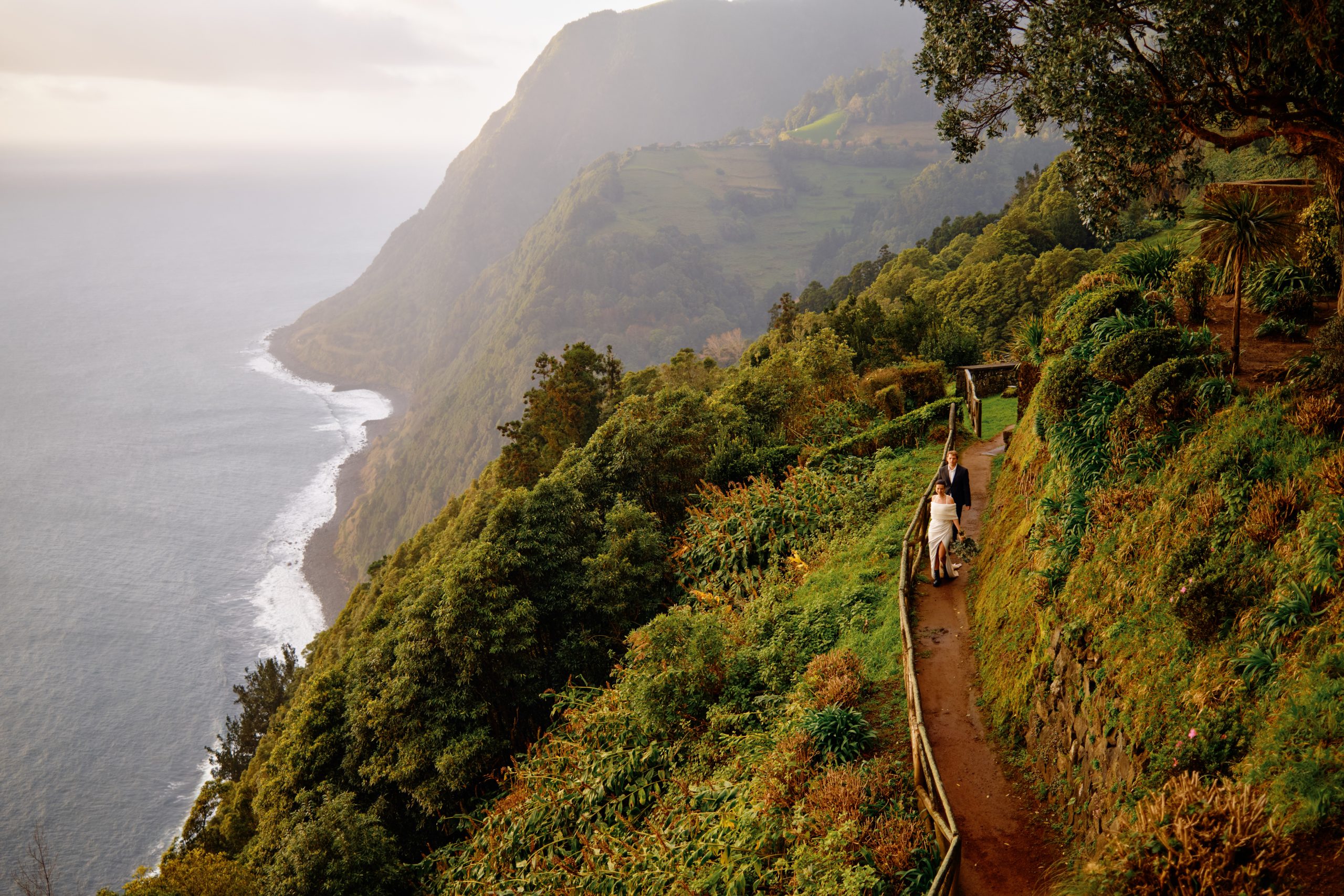
Getting Married in the Azores
Plenty of these guides are written by photographers who want to go. I have been, more than once, across several of the islands and in all of its weather, and I want to go back. Couples keep asking me the same questions before they book, so I have written the answers down.
The Azores are volcanic and green and a little unreal: crater lakes, black cliffs, hydrangea hedges, and weather that turns over by the hour. That last part is the secret; the light after the rain is some of the best I have ever worked in.
There are nine islands. These are the three I would put a couple on: São Miguel to arrive and settle into, Terceira for the old town and the cave, and Pico for the mountain and the vineyards. This is where I would send you, and what I would tell you before you go.
São Miguel
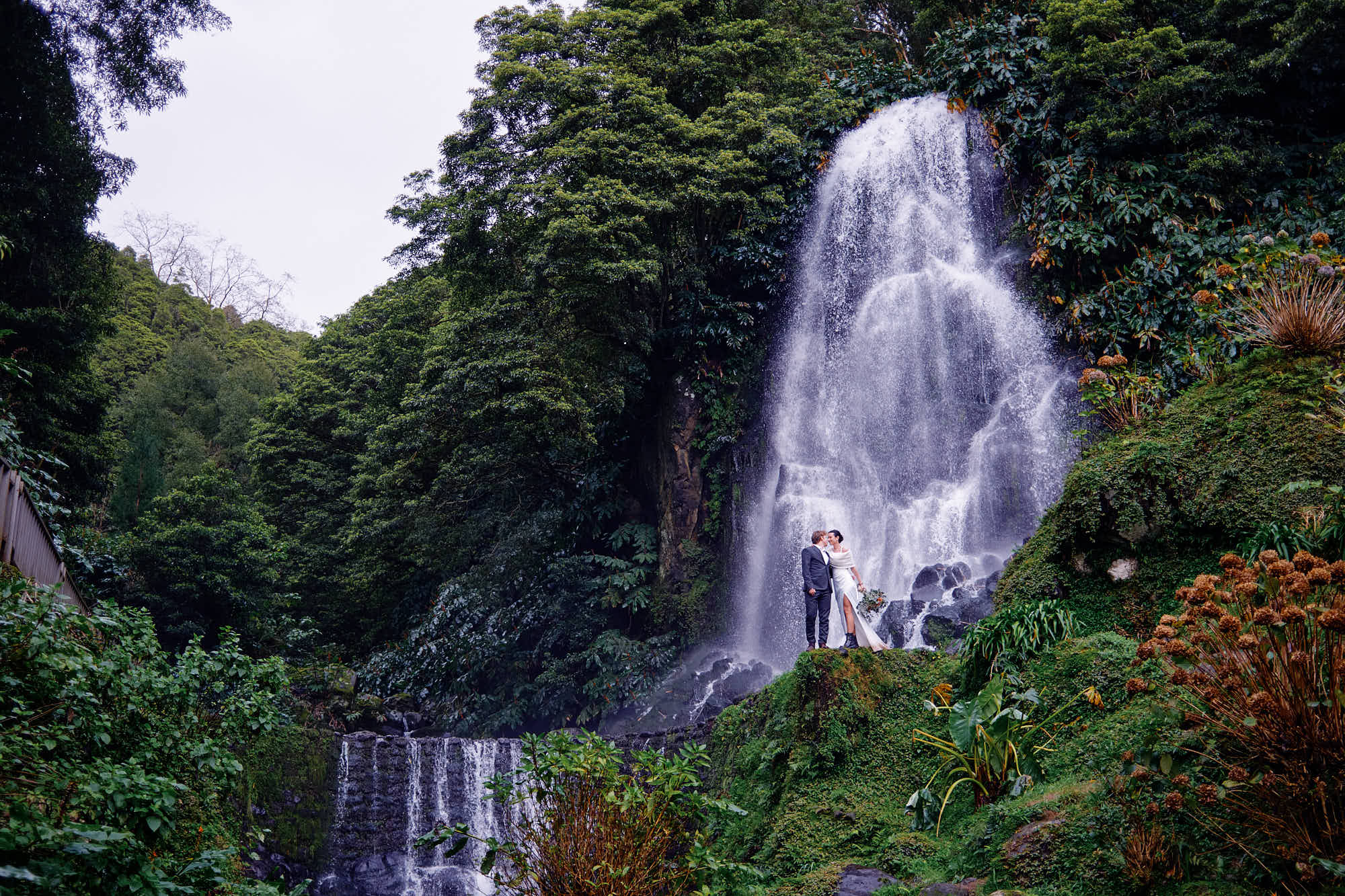
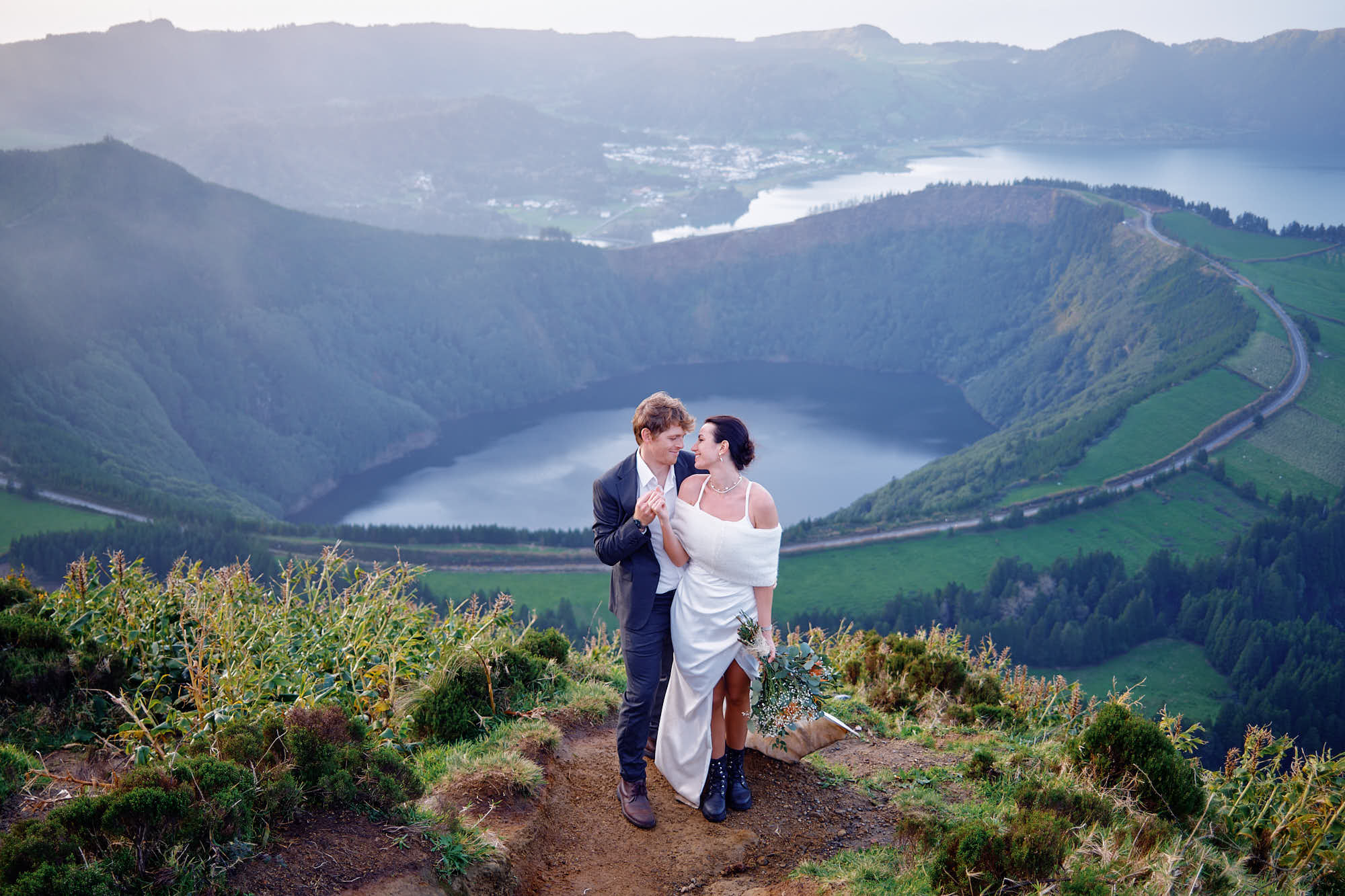
São Miguel is the largest of the islands and the simplest to get to, with direct flights into Ponta Delgada from Boston, New York and Toronto, and from Lisbon, Porto and a handful of European cities. It is also the most varied. Sete Cidades is the one on the postcards, twin crater lakes sitting in a single vast caldera. Lagoa do Fogo is the wild one, a protected lake with no roads and no buildings, reached only on foot. Furnas is a whole valley of steaming ground where dinner is still cooked in the earth. In between there are waterfalls, Europe's only tea plantations, and hills the colour of a snooker table.
Terceira
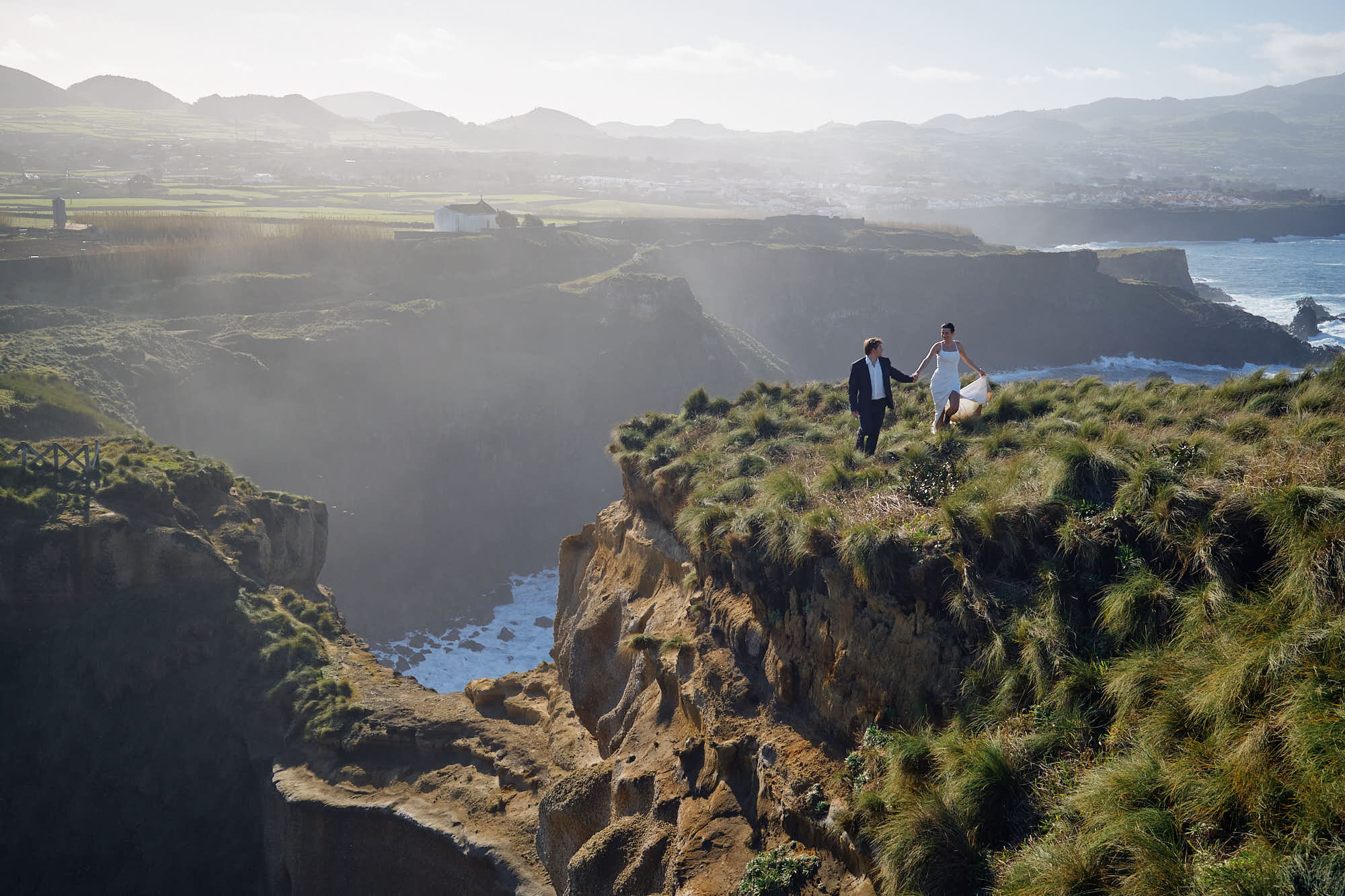
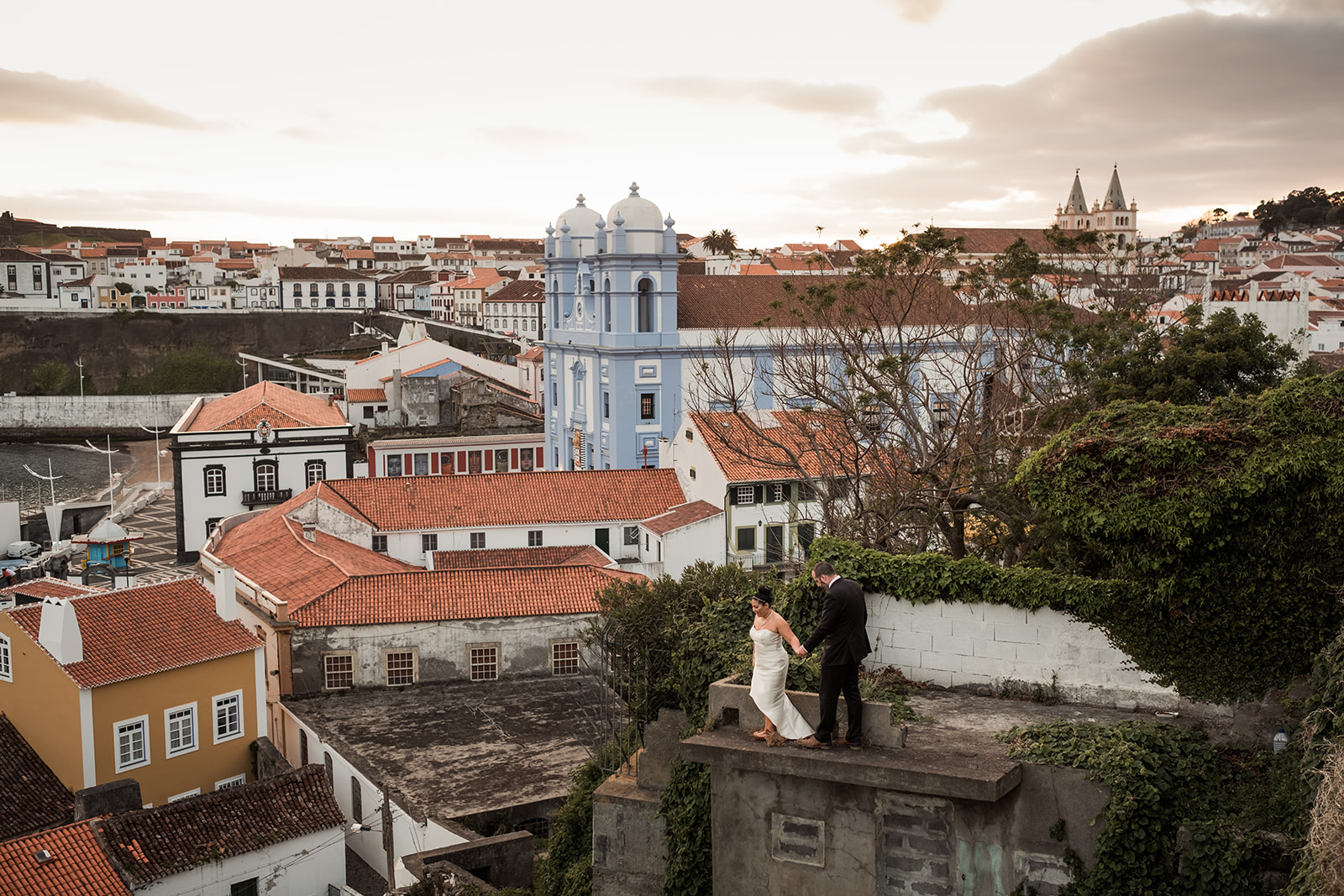
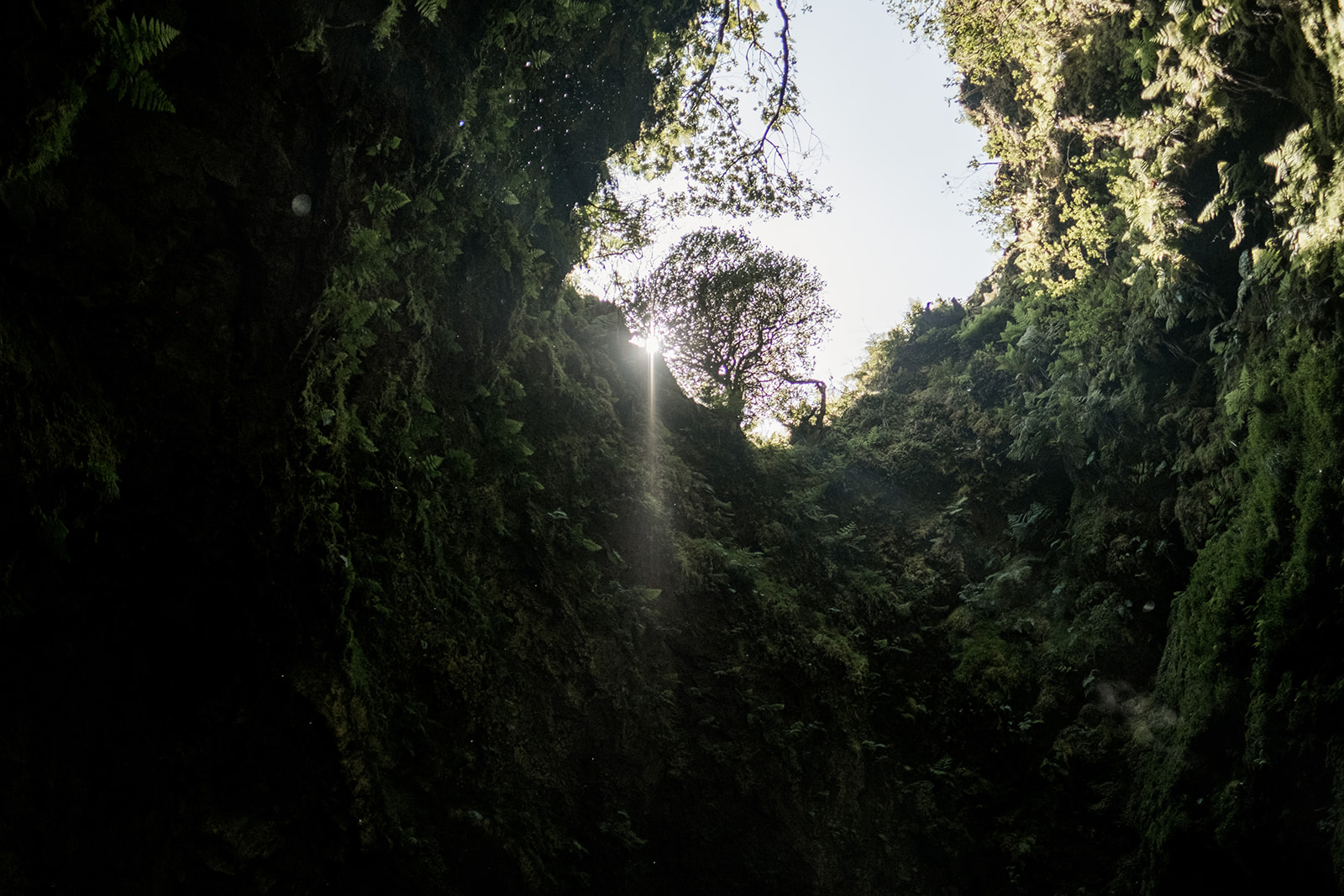
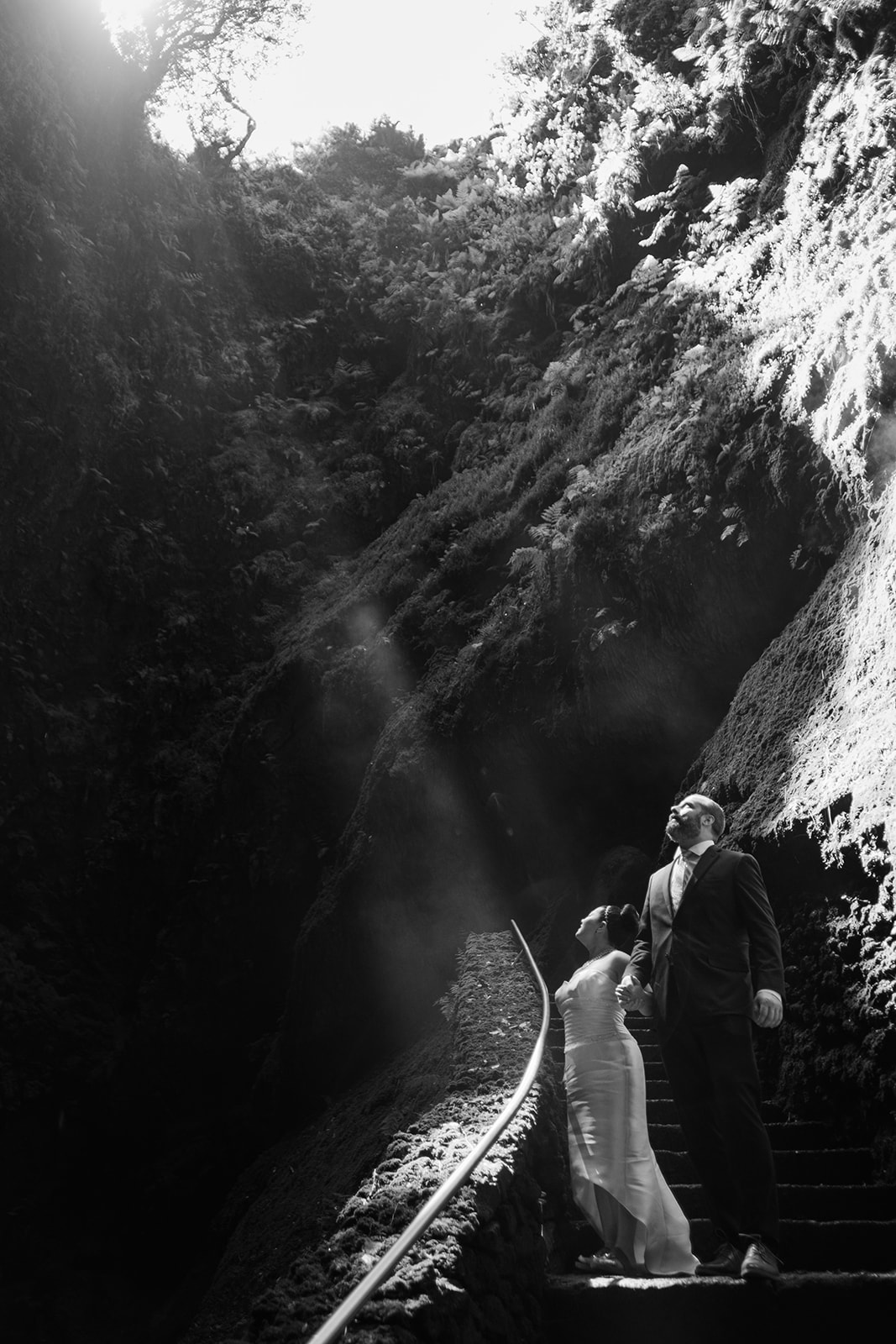
At the heart of Terceira is Angra do Heroísmo, a UNESCO-listed harbour town of cobbled lanes and painted churches, centuries old and still lived in. And then there is Algar do Carvão: a volcanic chimney you climb down into, a cavern the size of a cathedral lit by a single shaft of daylight from far above, with a still lake of rainwater at the bottom. Nothing else I have photographed feels quite like it. You can see a whole day on the island in Tawnie and Justin's elopement.
Pico
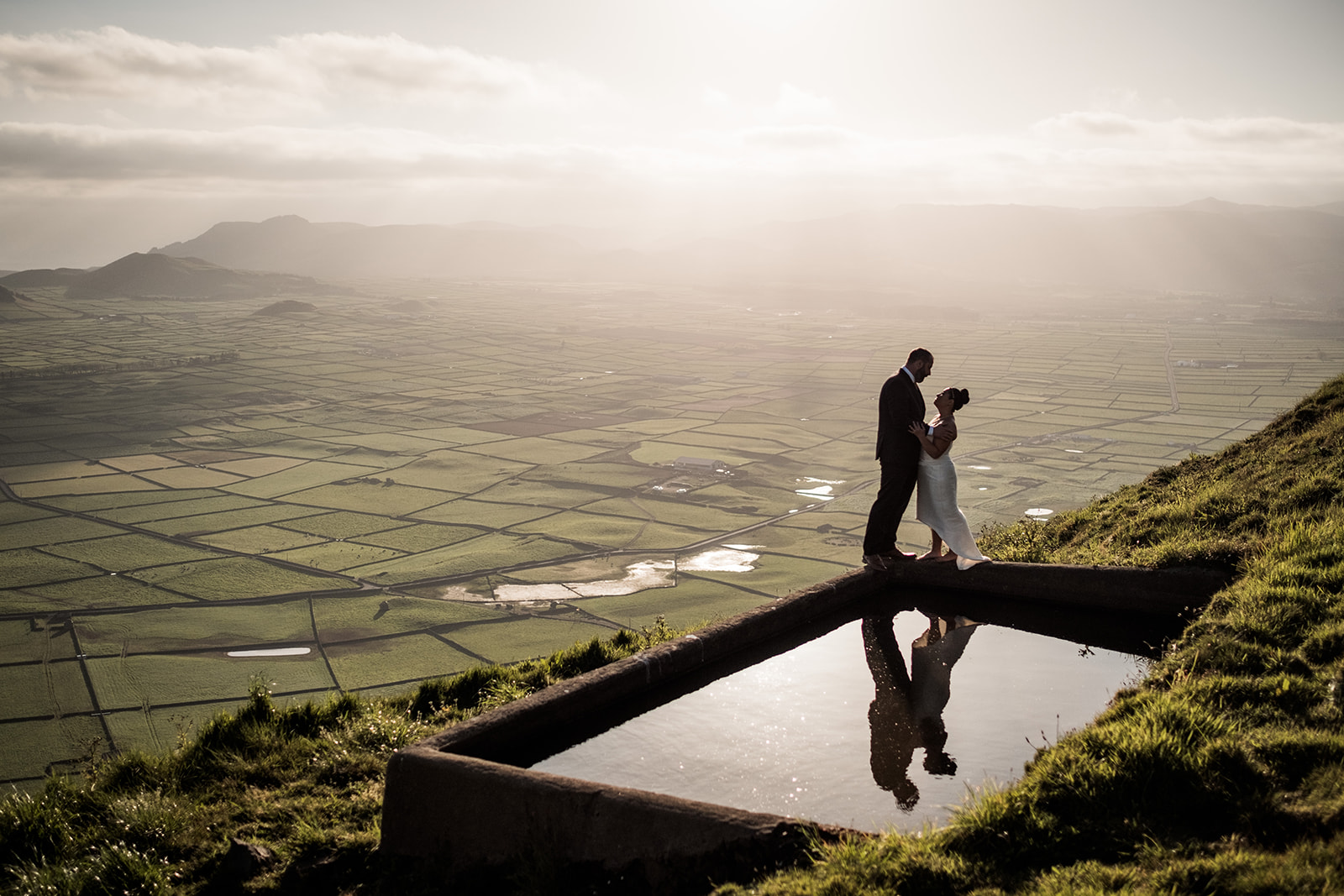
Around the base of the volcano runs a landscape found nowhere else on earth, a UNESCO World Heritage site of vineyards grown inside thousands of little corrals of black lava stone, running right down to the water. Whales pass offshore. If you are the couple planning to marry on Pico, I would move a good deal to be the one holding the camera.
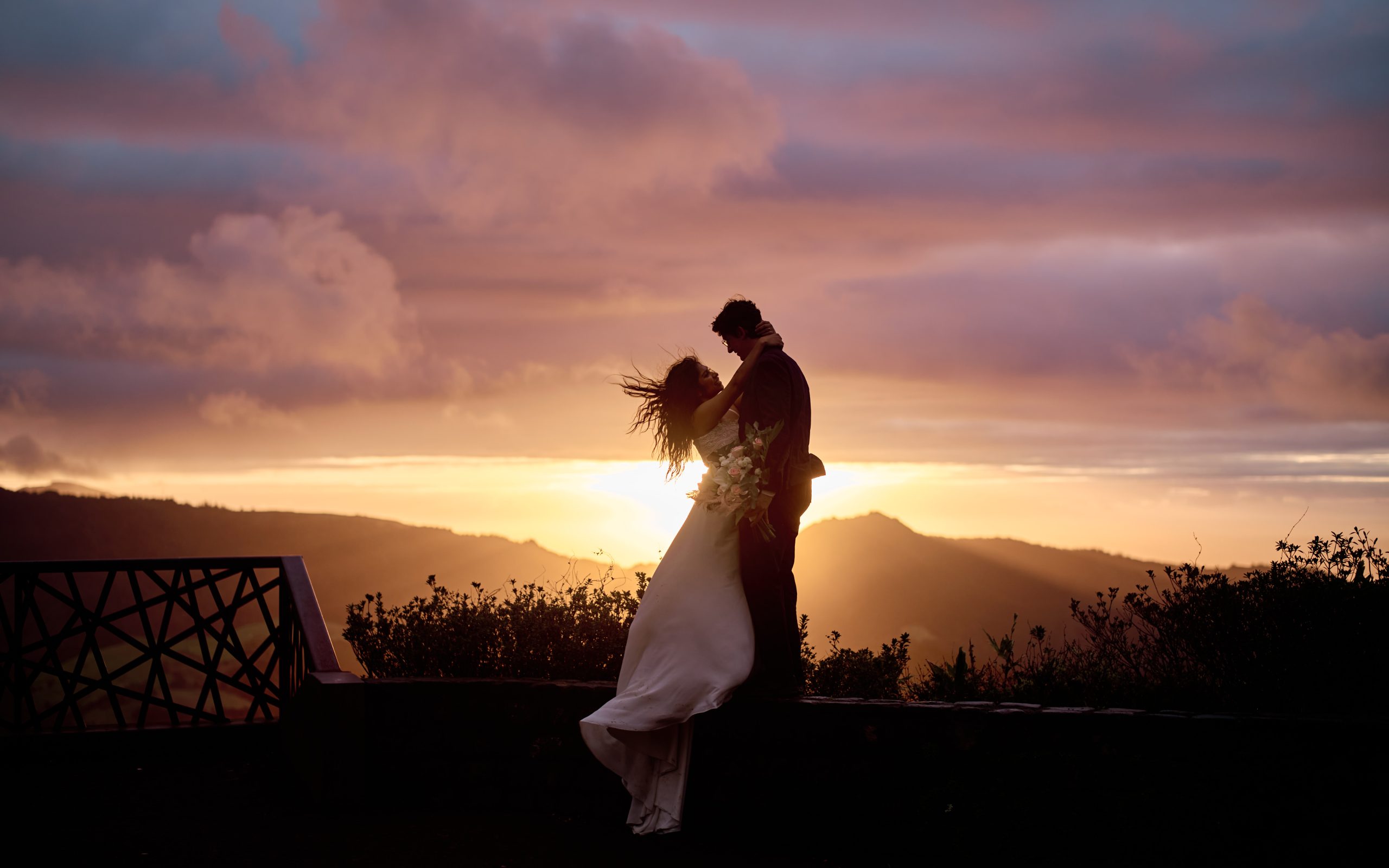
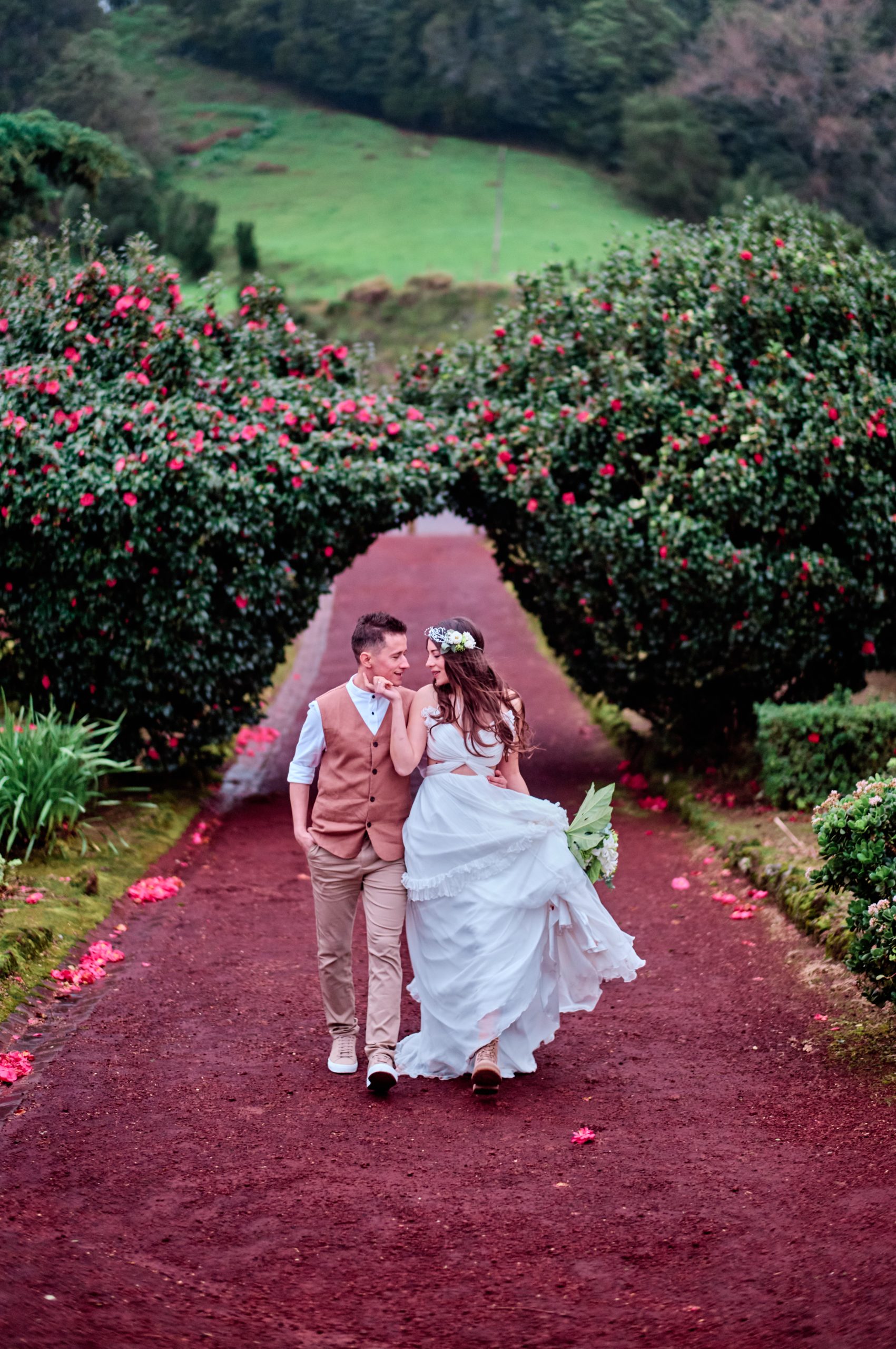
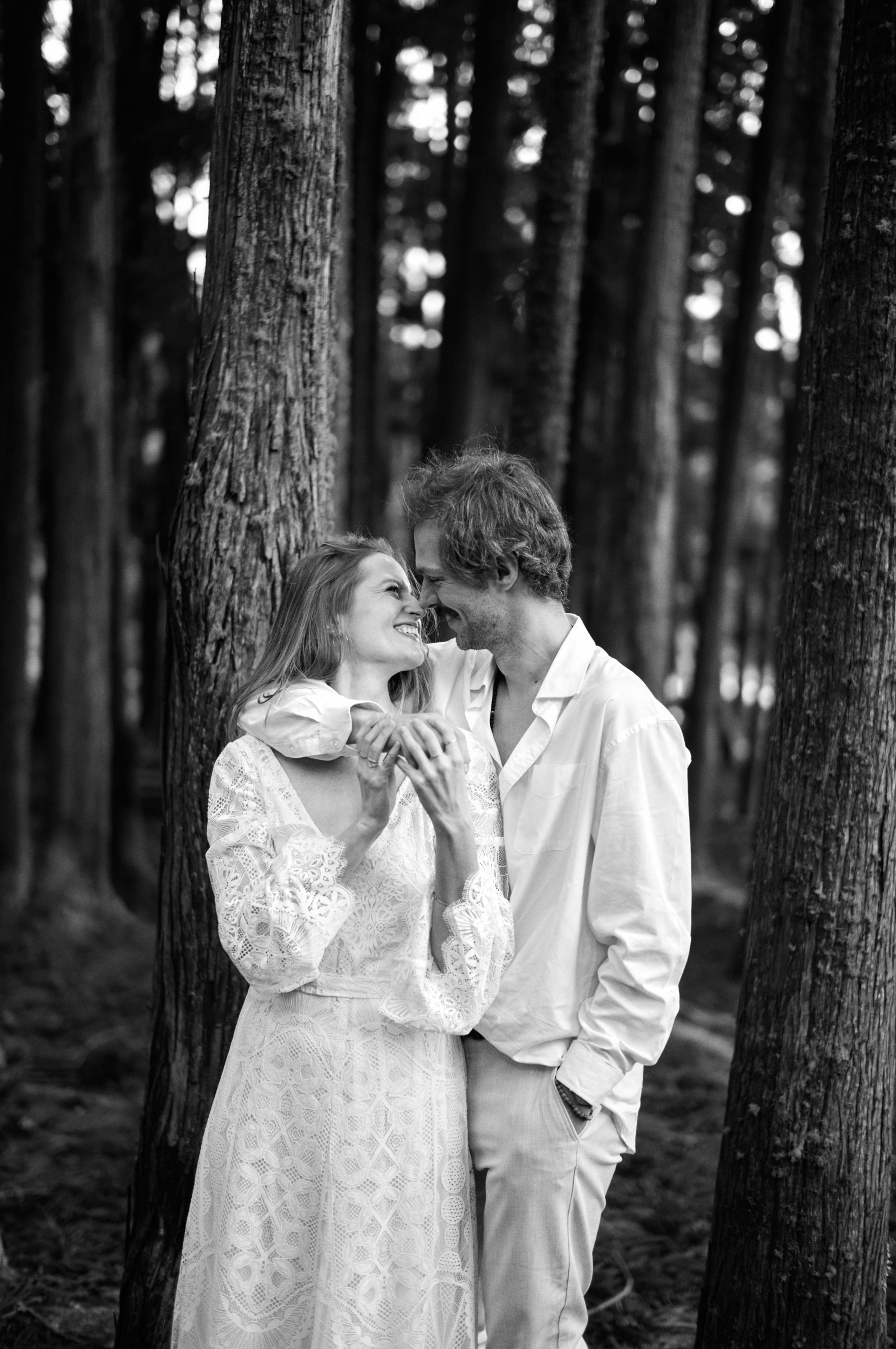
The weddings and elopements that got me here.
Mild and oceanic, rarely hot, rarely cold, and changeable. May to September is the most settled and the greenest, and whales pass from April to June. Come expecting weather and dress the day for it. The light after a shower is worth the wait.
Fly into Ponta Delgada on São Miguel. Its code is PDL, and it is the only airport in the islands with direct flights from North America, nonstop from Boston, New York, Toronto and Montreal on Azores Airlines and a few others, along with daily links to Lisbon, Porto and the main European cities, so it is usually the cheapest way in. Terceira has its own airport at Lajes (TER), Pico a small one (PIX), and Faial another at Horta (HOR). Between islands you fly SATA Air Açores, which routes almost everything back through Ponta Delgada, so a Terceira to Pico leg tends to connect through PDL. The flights are short, but they are small planes on thin schedules and they sell out weeks ahead in July and August, so book the inter-island legs as soon as your dates are set. Pico and Faial sit close enough that the half-hour ferry between Madalena and Horta beats the flight on both price and time.
On São Miguel, stay in or around Ponta Delgada. It is central, has the most to eat, the easiest airport run, and Sete Cidades, Furnas and Lagoa do Fogo are all inside an hour. On Terceira, base yourself in Angra do Heroísmo, the old walled town, and you can reach most of the island quickly. On Pico, Madalena is the obvious choice, a short ferry from Faial with the vineyards and the mountain on the doorstep. I would not spread one trip across more than two islands unless you have a fortnight.
You will need one. Public transport barely reaches beyond the towns, and the best light is always at some viewpoint down a narrow lane. Book it before you land, because cars get scarce and expensive in summer, with daily rates roughly doubling between spring and August. They drive on the right, an automatic costs more than a manual, and there are no toll roads anywhere. Fill up when you pass a station and expect dairy cows on the road, fog that arrives in minutes, and single-track lanes with a drop on one side. If you are hopping islands, it is simpler to hire a fresh car on each one than to ferry a car across.
The islands are on the euro, and a card works almost everywhere, but carry a little cash for village cafes, markets and the smaller places that would rather not take one. The Azores run an hour behind mainland Portugal and the UK, which quietly catches people out on flight times. Sundays are slow and many small places close, so plan the day around it. The set-piece meals and the whale watching want booking ahead in season. And whatever the forecast promises, pack for four seasons in a day.
Most couples hold a symbolic ceremony, entirely their own, in any language, and complete the legal paperwork at home. A binding civil marriage is possible but bureaucratic and conducted in Portuguese. Start the documents around six months out. I am not a lawyer, and a good local planner earns their fee.
São Miguel first: the crater lakes, the wild coast and the direct flights. Terceira is smaller, stranger and quieter, and I love it for exactly that. Maria and Jonathan married on São Miguel; Tawnie and Justin chose Terceira. You cannot pick wrong, only differently.
Four seasons a day is not a saying here, it is the forecast. Rain arrives sideways and leaves twenty minutes later. Claudia and Deniz got soaked, so did I, and those frames are some of my favourites of that year. Bring a second option and a sense of humour.
Yes: the Azores are Portugal, and Portugal asks for no residency at all. Registry-office civil ceremonies with two witnesses, apostilled documents with sworn translations, and paperwork started a few months ahead. Straightforward by destination-wedding standards.
Direct flights reach São Miguel year round from Lisbon and Porto, and from Boston on the North American side, with more seasonal routes in summer. Inter-island hops are short. It is far closer than the map makes it feel.
At the edges of the day, on the coast. Silvia and Florin walked to the lighthouse at sunrise and had the Atlantic morning entirely to themselves. The crater viewpoints earn their fame, but the empty coastline is where the island feels like yours.