Getting Married in Lofoten
Plenty of these guides are written by photographers hoping the trip will follow. I have worked up here in the long light, from a fjord wedding to an elopement on a clifftop over an empty beach, and I have shot at one in the morning in full daylight and thought there was nowhere else I would rather be. Couples ask me the same things before they book, so here are my answers.
Lofoten is a chain of Arctic islands off the north of Norway, where sharp granite peaks rise straight out of the fjords and small red fishing cabins sit out over the water. The weather is fierce and it turns in an hour, but the light is the whole point, and in high summer it barely leaves at all.
The islands string out along one road, so you can see a lot in a week. These are the corners I would build the trip around: Reine and Hamnøy for the peaks and the red cabins, Ryten for the hike to a wild white beach, and the midnight sun for the hours nobody else is awake. This is where I would send you, and what I would tell you before you go.
Reine and Hamnøy
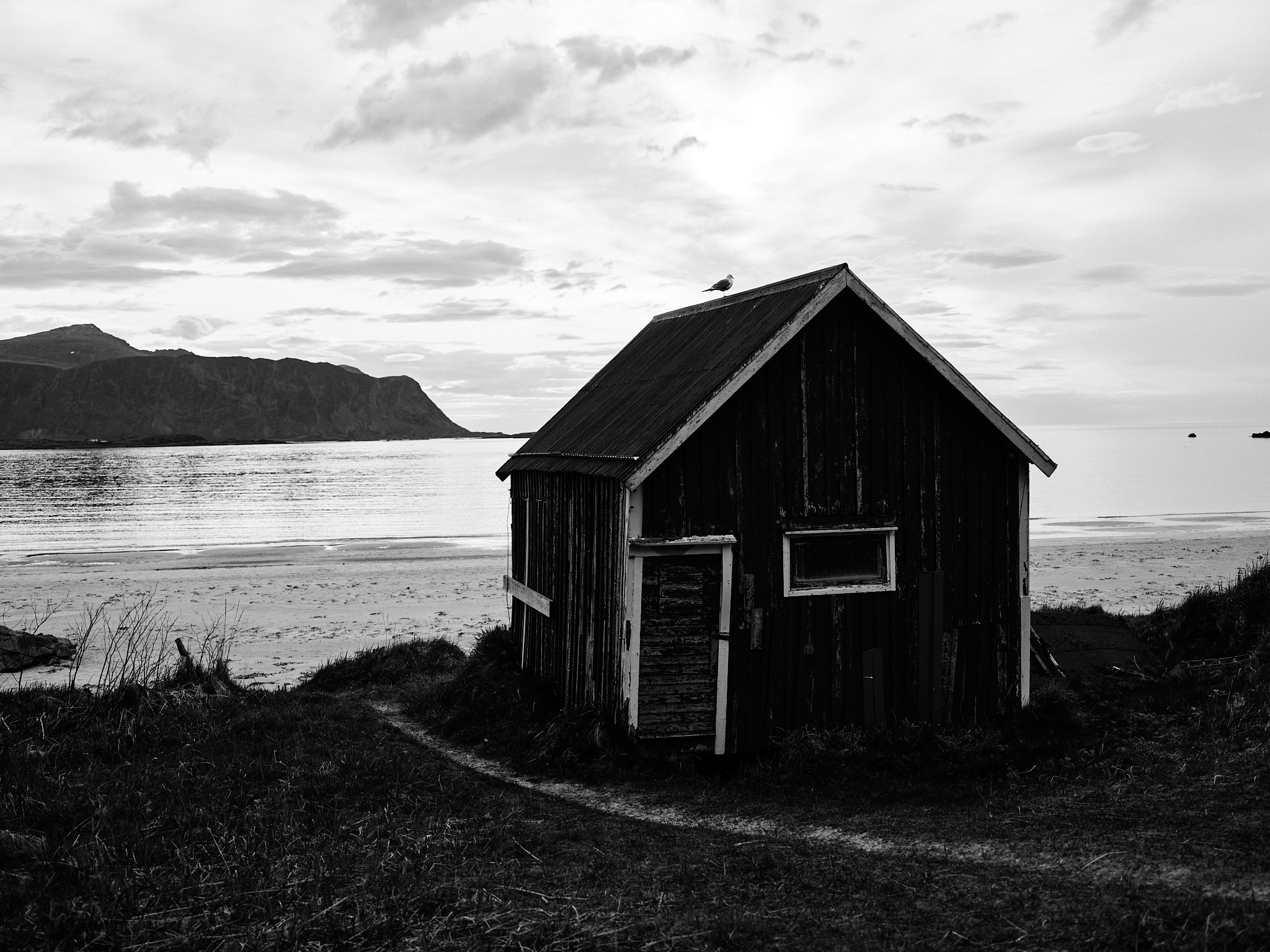
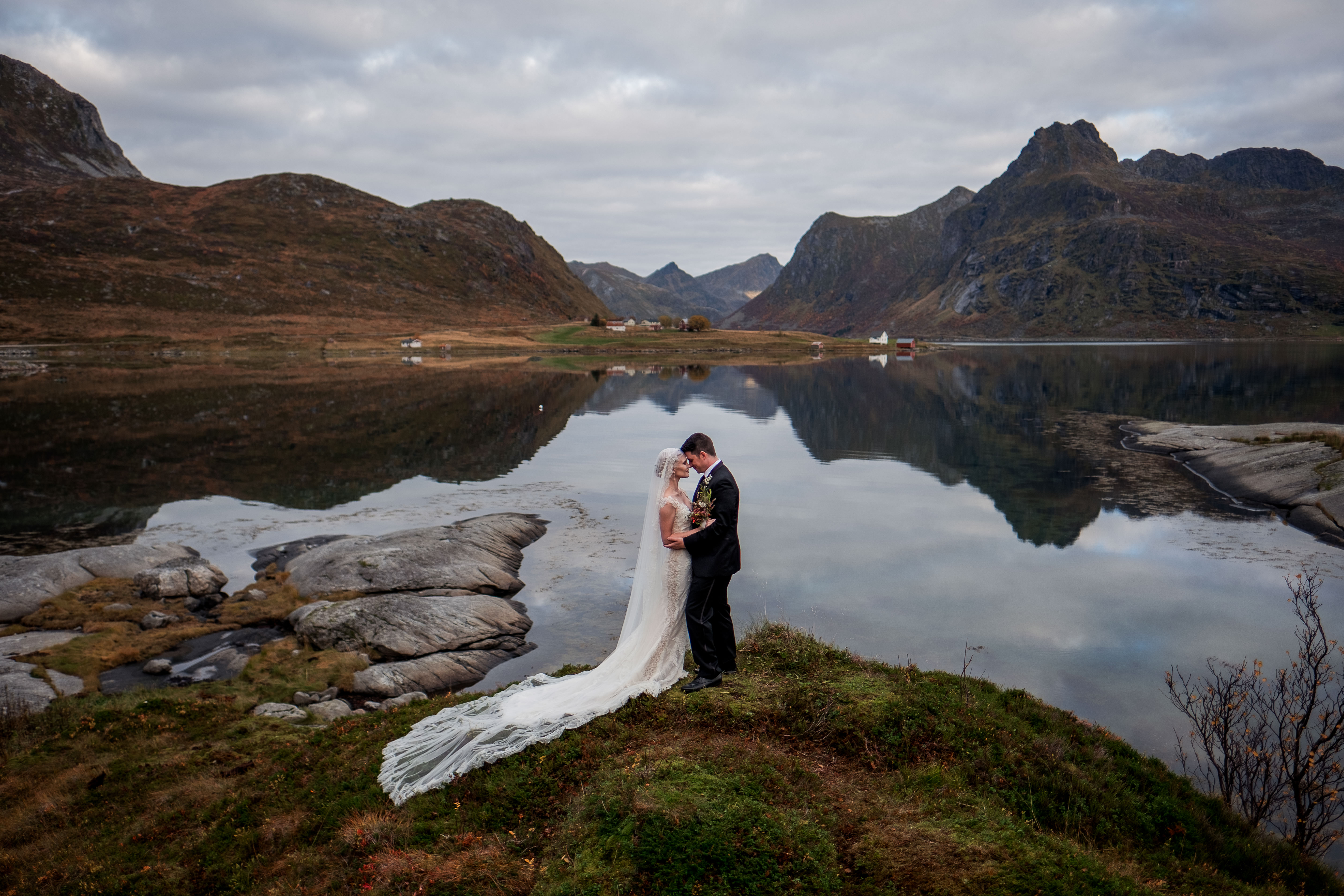
Reine is the picture most people carry of Lofoten: a scatter of red fishermen's cabins on the water under a wall of jagged peaks. The classic view down onto it comes from Reinebringen, a steep climb up stone steps that a Sherpa-built trail has made just about doable, and the reward is the whole of Reine laid out below you. Just along the road, Hamnøy has the most photographed cabins in the islands. It is the busiest corner in summer, so we work it early or late, when the light is long and the car parks are empty.

Ryten
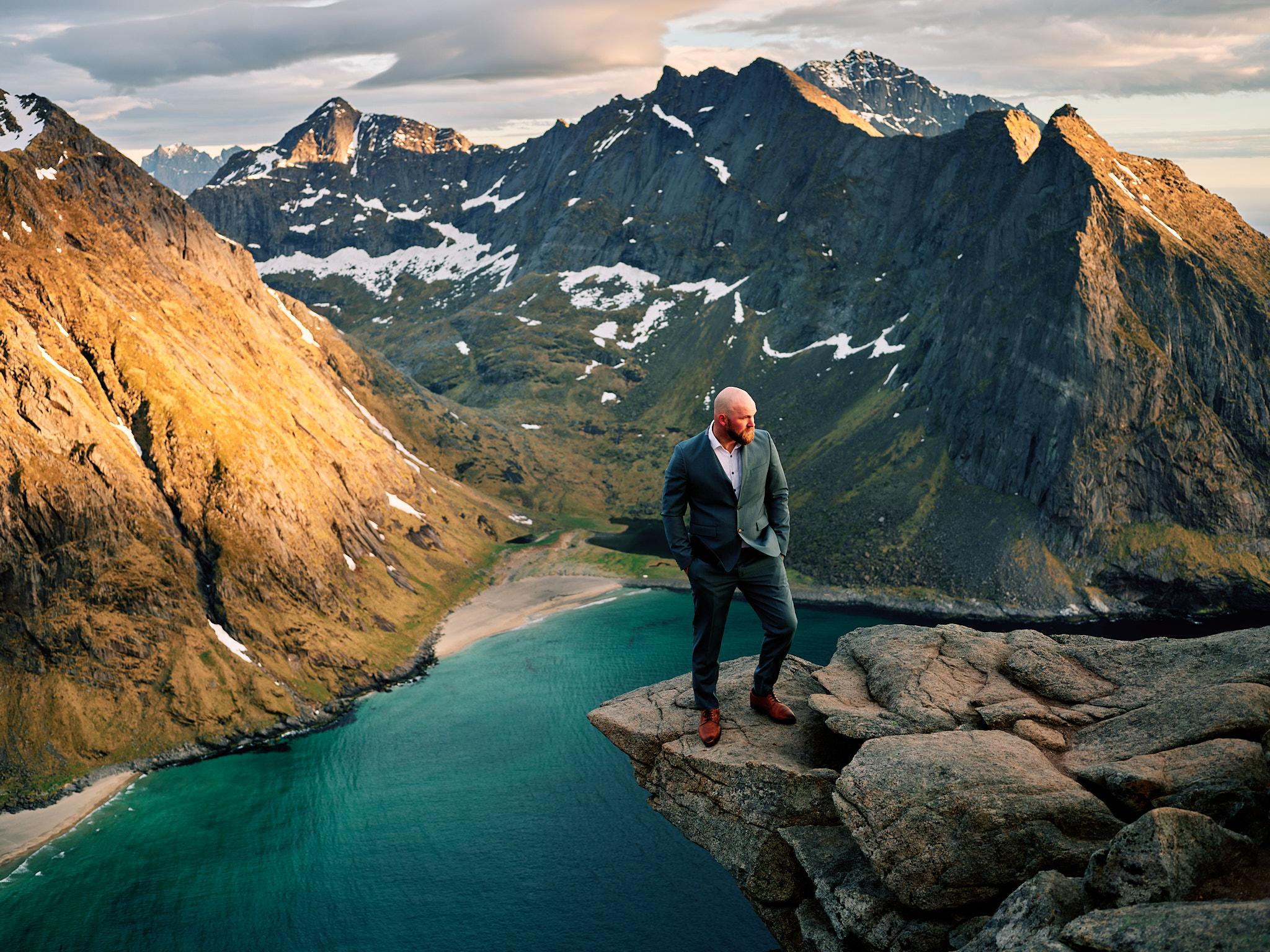
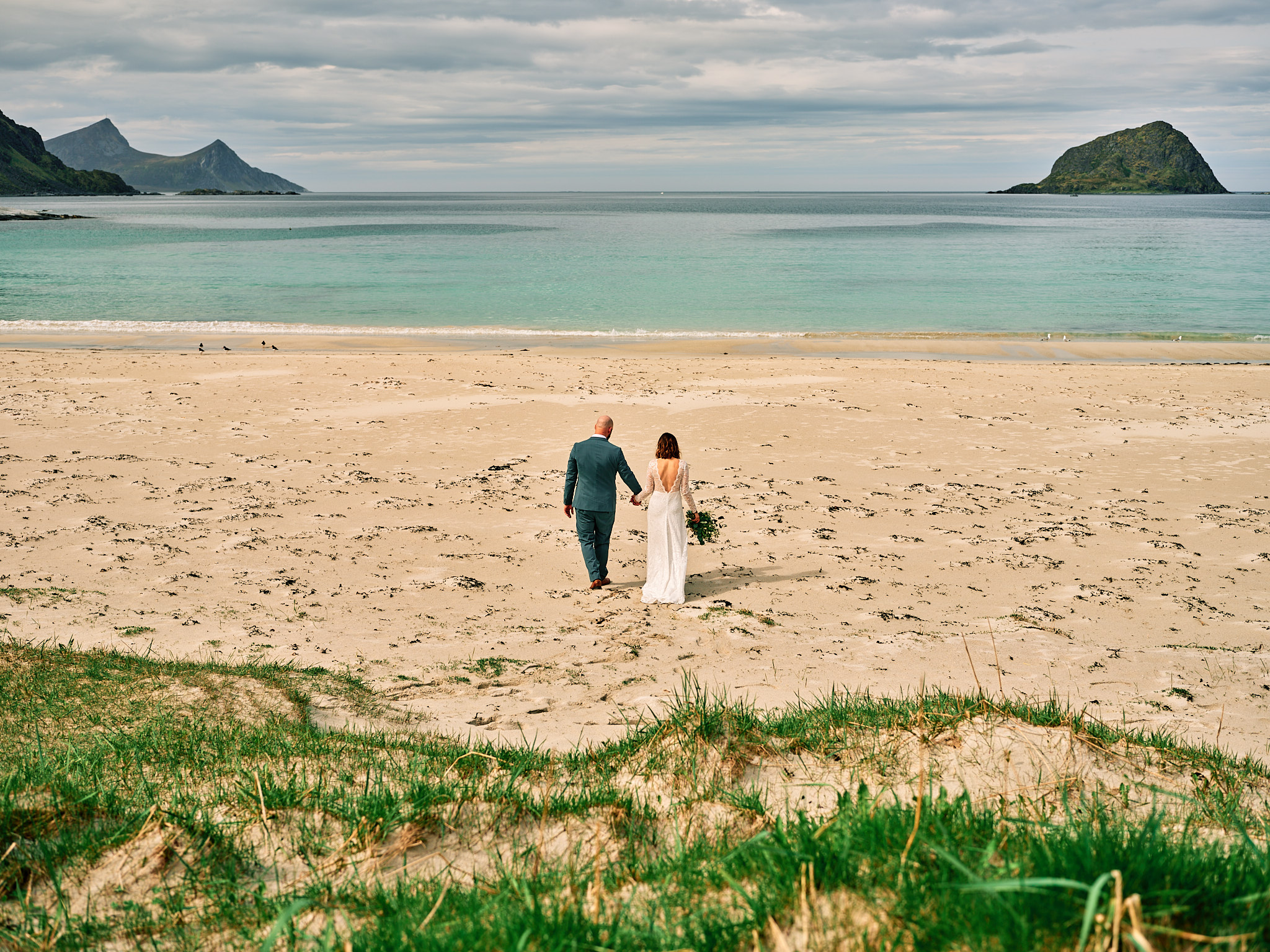
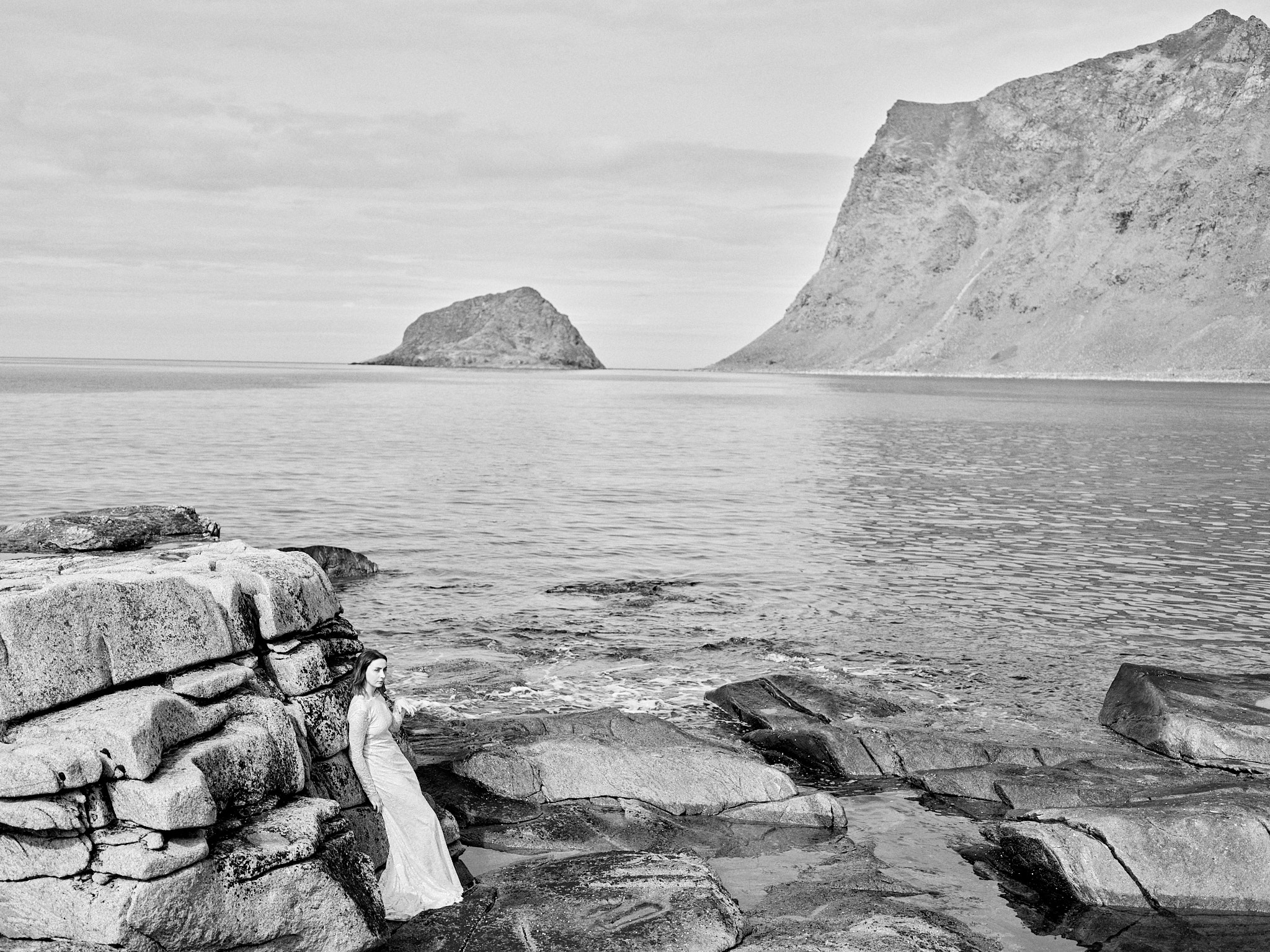
Ryten is the walk that pays you back. You climb from the road over a boggy saddle and drop towards Kvalvika, a wide beach of white sand with nobody's footprints on it but your own, then scramble up to the clifftop where the rock juts out over the drop. It asks the most of you of anywhere in this guide, and it gives the most back. You can see the whole hike in Ine and Jimmy's elopement.
The midnight sun
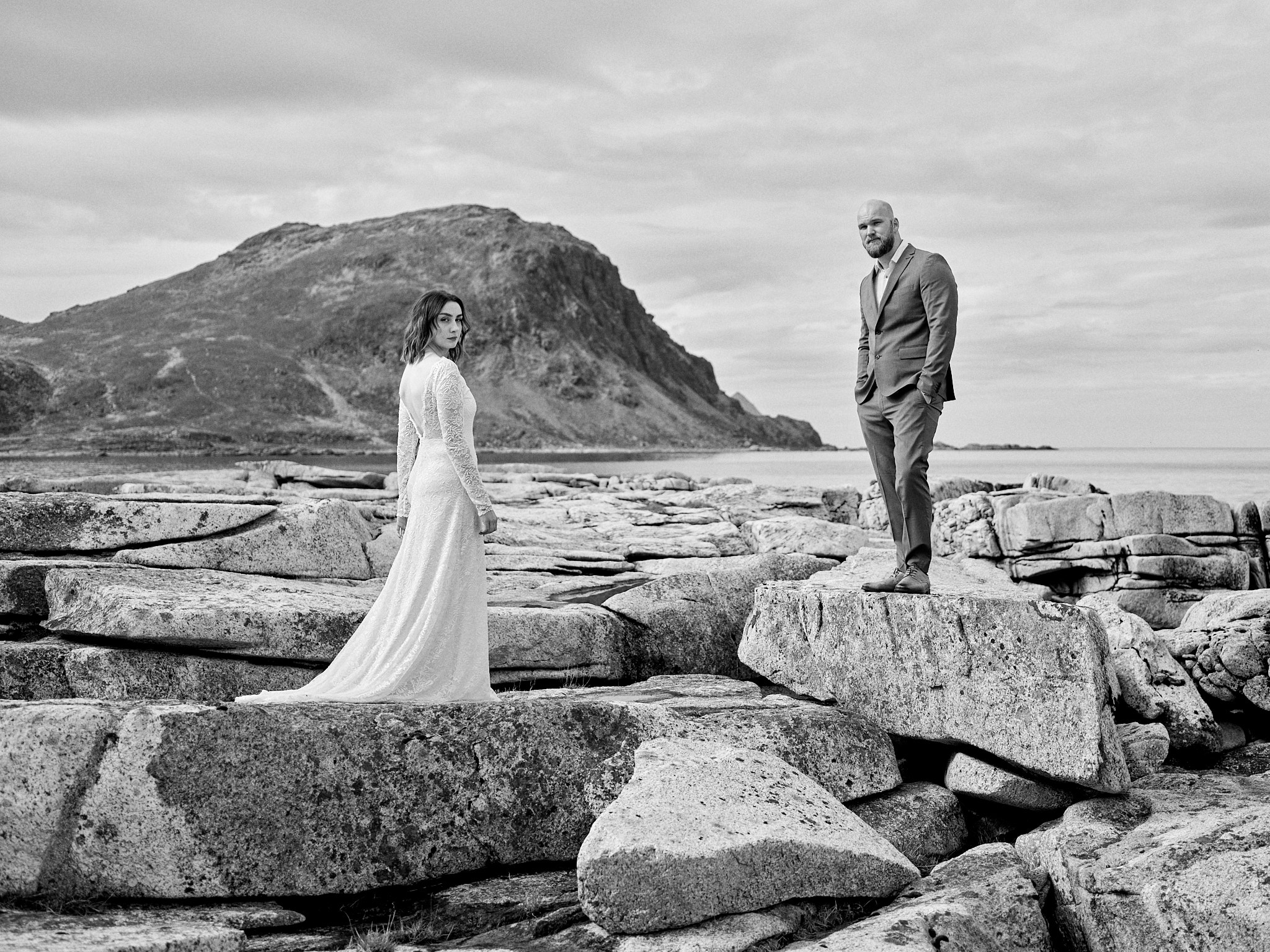
That endless light is the reason to come. From late May to the middle of July the sun does not go down, so the best hours are the ones everyone else is asleep for, when the peaks turn copper and you have the coast to yourself. It is cold and it is fickle and the weather can turn a plan inside out in an hour, but when it comes together at midnight on a Lofoten beach, there is nowhere I would rather be holding a camera.
The weddings and elopements that got me here.
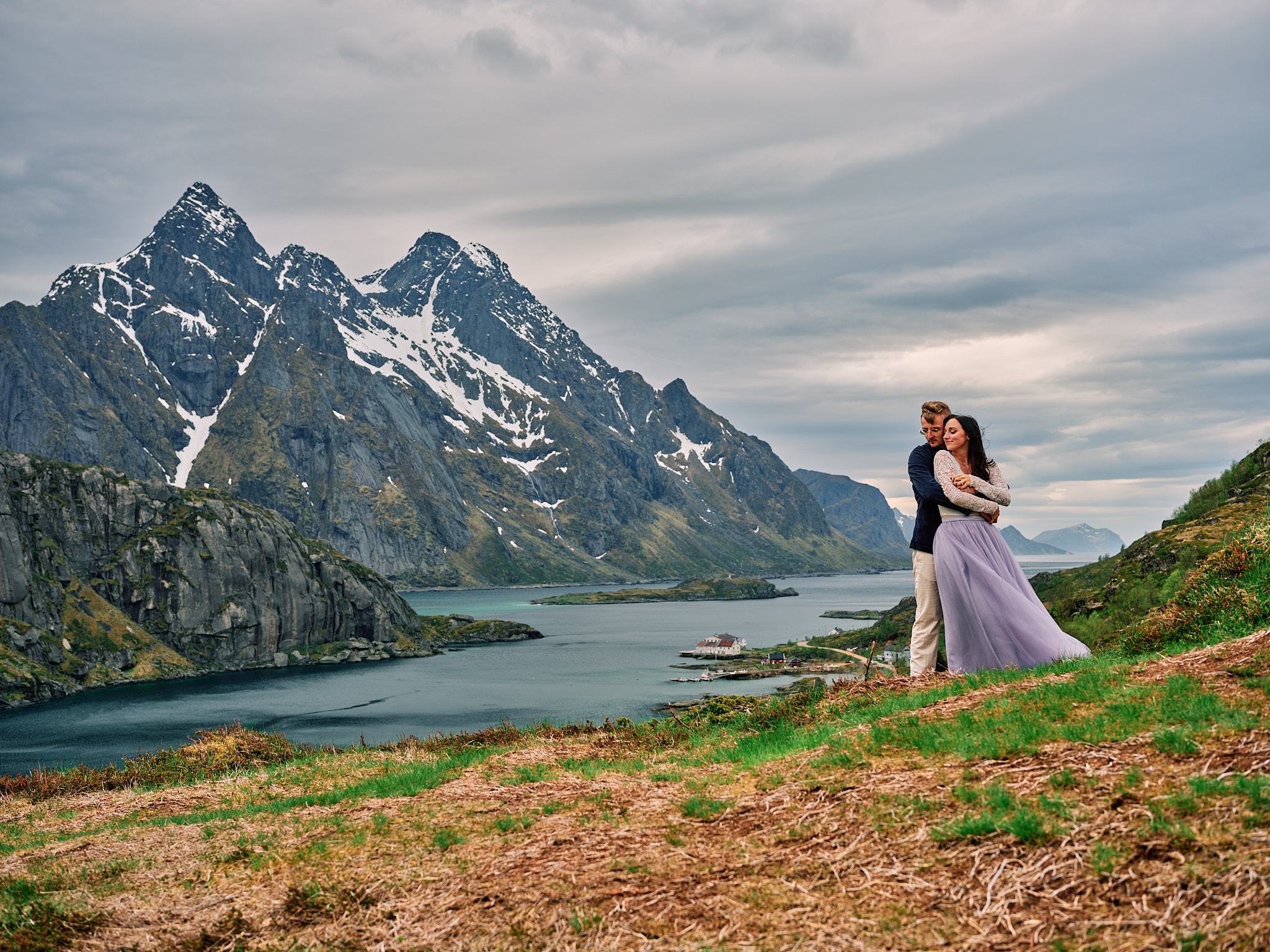
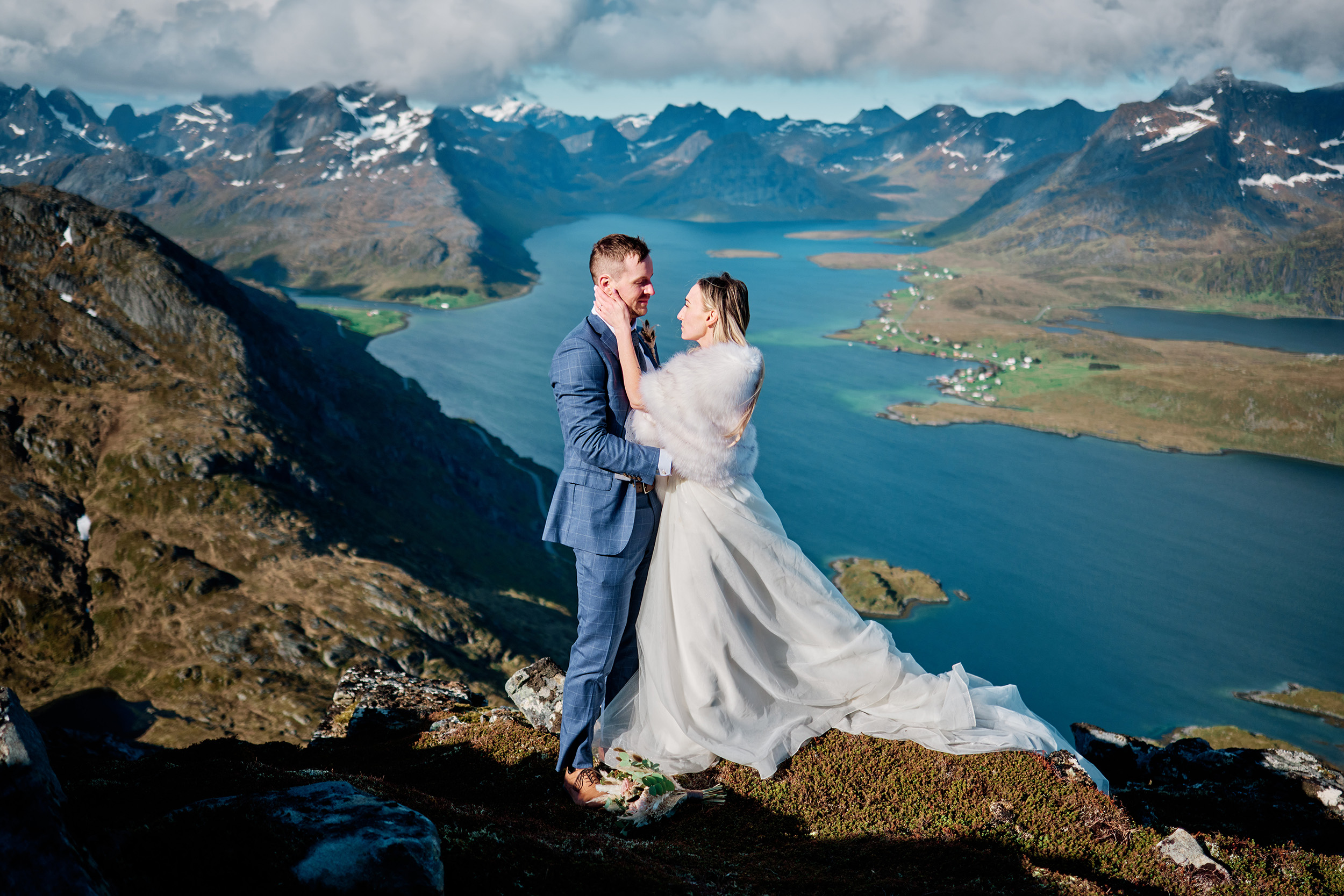
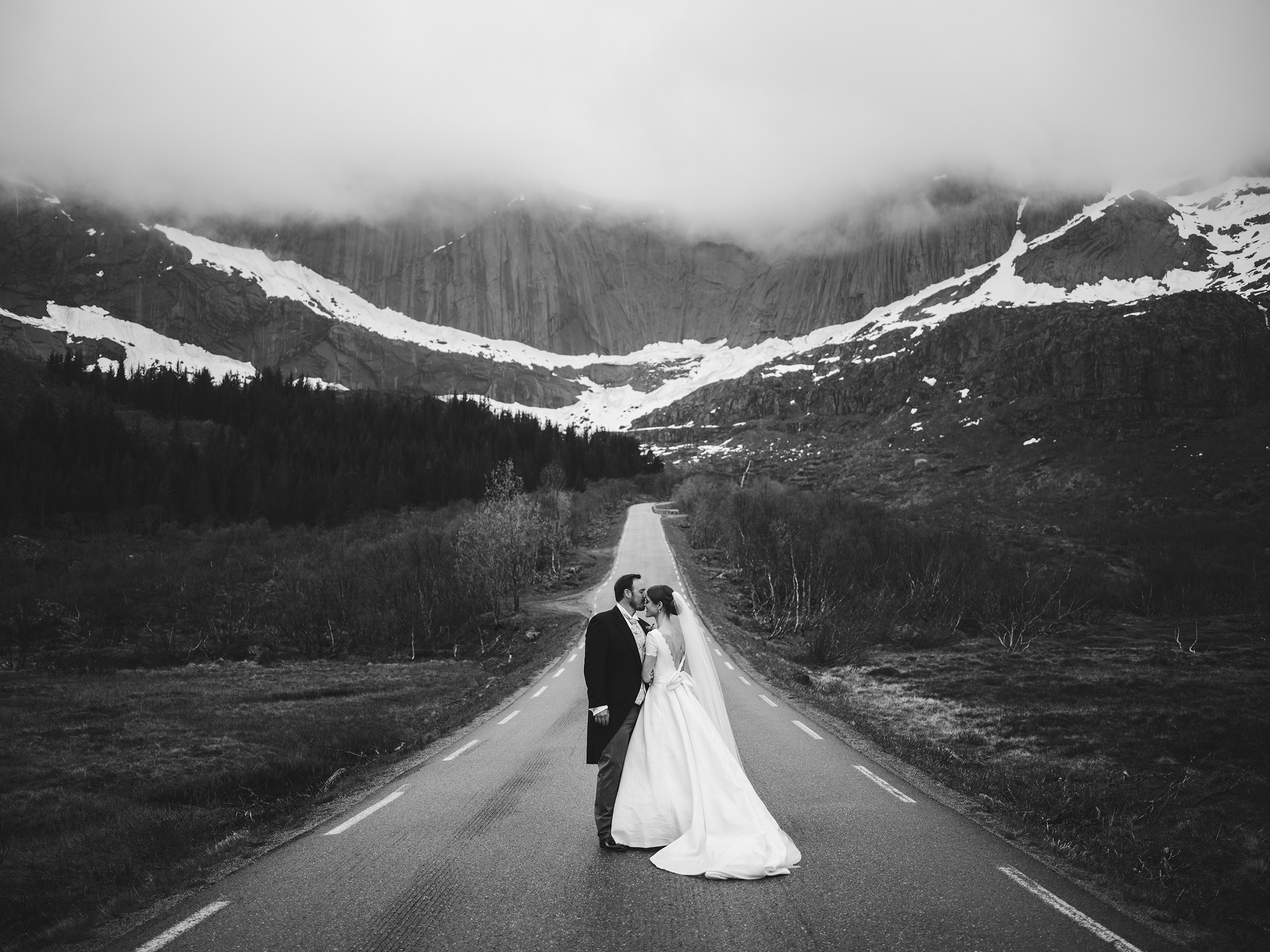
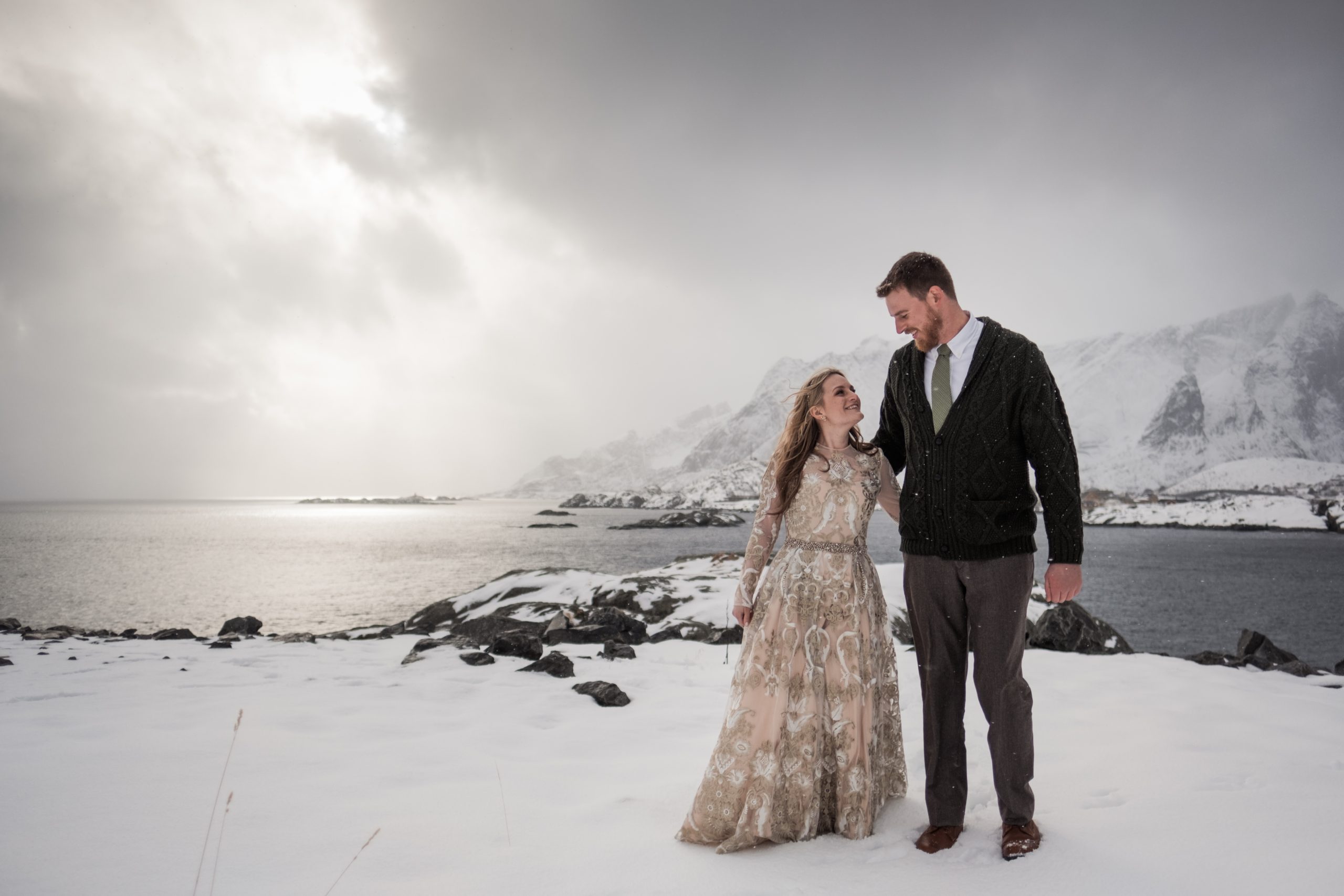
The light is the whole decision. From late May to mid July the midnight sun never sets, giving you warm, endless golden hours and the greenest, mildest weather; this is peak season and the safest window, and also the busiest. September brings autumn colour, thinning crowds and the return of the northern lights. Winter is snow and aurora and real drama, but short days, ice and storms come with it. Most couples pick summer or early autumn for workable weather and long light.
There is no direct flight to the islands, so you route through Oslo, then either fly Oslo to Bodø and take the short hop to Svolvær or Leknes right in Lofoten, or take the car ferry from Bodø across to Moskenes. You can also fly into Harstad-Narvik and drive the E10 in, roughly five hours. Reckon on the better part of a travel day whichever way you go, and know that weather delays the small flights and ferries first.
Reine, Hamnøy and Sakrisøy in the dramatic west are the postcard heart of it, sheer peaks and red cabins over the water, best for the most iconic scenery and busiest in summer. Henningsvær, the so-called Venice of Lofoten, is a photogenic village strung across skerries with a famous clifftop football pitch. Svolvær is the practical hub, the airport, the shops and the services, good for a first or last night. The red rorbuer cabins are the stay to book wherever you land.
You drive on the right, and a car is essential; almost nothing worth photographing is reachable without one. The E10 is the spine of the islands, and west of Leknes the roads narrow to single-lane bridges and tunnels, so be patient behind the motorhomes. Wind is a constant on the exposed bridges. Fuel stations are few and far between, so fill up when you can. Parking is under real pressure at the honeypots, Reine, Ryten and Hamnøy, so arrive early or off-peak. In winter, studded tyres are the law and it is for confident drivers only.
Norway is on the krone and it is expensive, so budget generously. It is very nearly cashless: contactless works everywhere, down to unstaffed roadside stalls, and you rarely need notes. Tipping is not expected. The clocks are one hour ahead of the UK. The right to roam, allemannsretten, lets you walk and stand on open, uncultivated land, which is a gift when you are hunting for a ceremony spot; treat it with respect and leave no trace. In high summer, plan the day around the night, because that is when the light is best and the crowds are gone.
Norway is one of the more straightforward places in Europe for foreigners to marry legally, but it needs paperwork done in advance: a certificate from the tax office confirming you are free to marry, valid for four months, before a civil ceremony with the county governor. Start three to four months out, because incomplete documents are the usual delay. Many eloping couples still choose to sign the legal papers at home and hold a purely symbolic ceremony here, for total freedom of place and time. I am not a lawyer, and a local planner is worth it either way.
Yes, but Norway’s paperwork is slower than the fjords are pretty. You need a certificate of no impediment from your home country, apostilled, and an application to the Norwegian Tax Administration eight to twelve weeks before the date; the resulting certificate is valid for four months. Plenty of couples sign at home instead and keep Lofoten for the day itself.
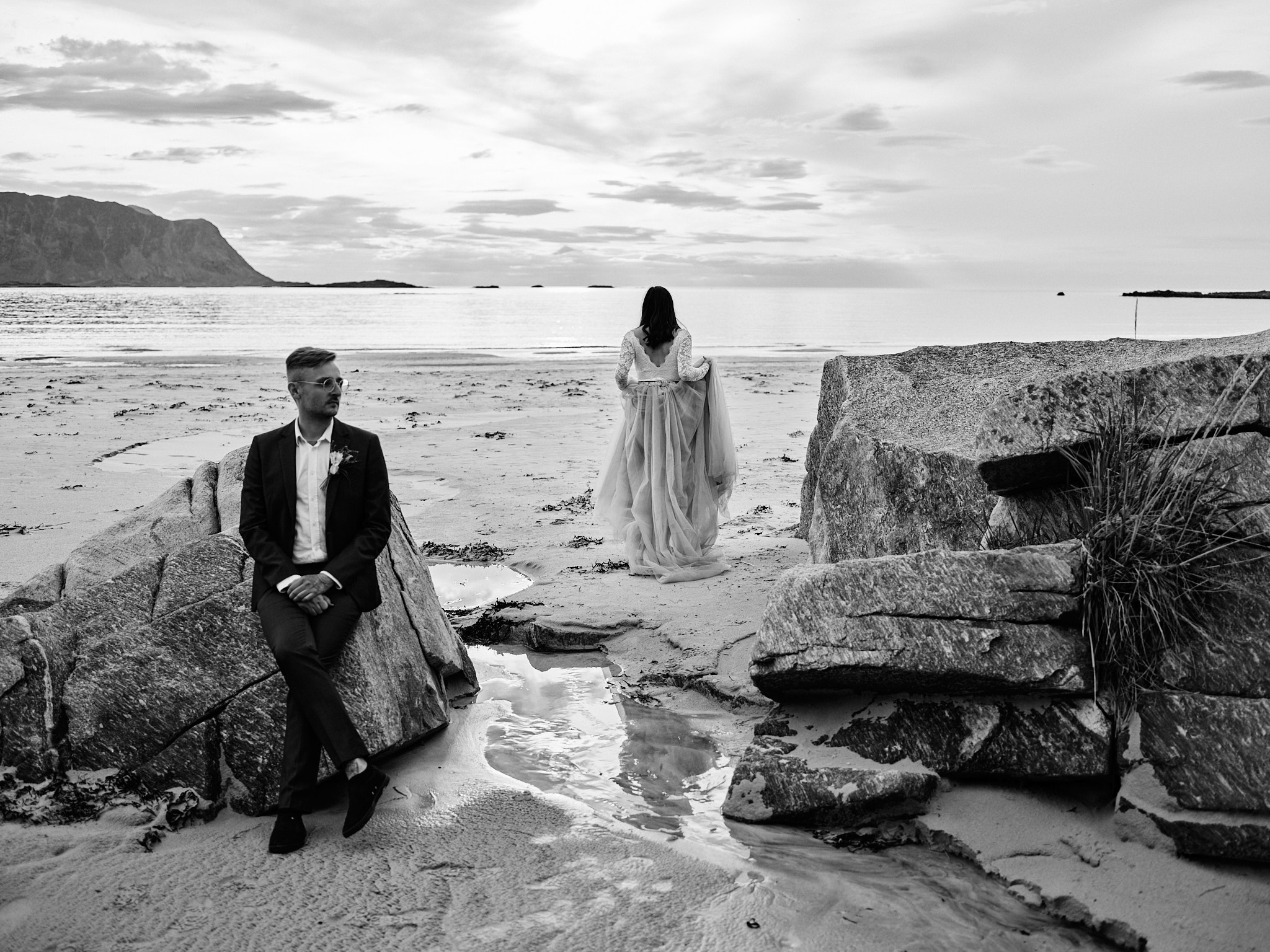
The sun stays above the horizon from roughly 28 May to mid July, which means golden light at two in the morning and no schedule at all. Ine and Jimmy hiked into the night on their elopement and the light never once told us to stop.
Realistic and spectacular, if you respect it. Short days concentrate the best light of the year into a few blue-gold hours, aurora appears when the sky cooperates, and the driving needs margins. Siri and Seb married in the snow and the emptiness was the luxury.
The famous viewpoints grow tripods at sunrise and sunset in season. Walk ten minutes past any of them and you are alone: the islands are much bigger than their Instagram pins. Sophie and Johan’s day barely saw another soul.
If you can walk ninety minutes uphill, you have options most couples never see. Boots under the dress, the dress in the pack, and a summit to yourselves. That is the Lofoten I keep coming back for, and the couples who choose it never regret the sweat.