A photographer’s guide to the whole boot, beyond the mountains.
Italy is twenty countries wearing one name: Roman streets, Renaissance cities, green hills, great lakes, a wild south and volcanic islands. I have photographed weddings across most of them. This is where I would send you.
i
Rome
The eternal city · before it wakes
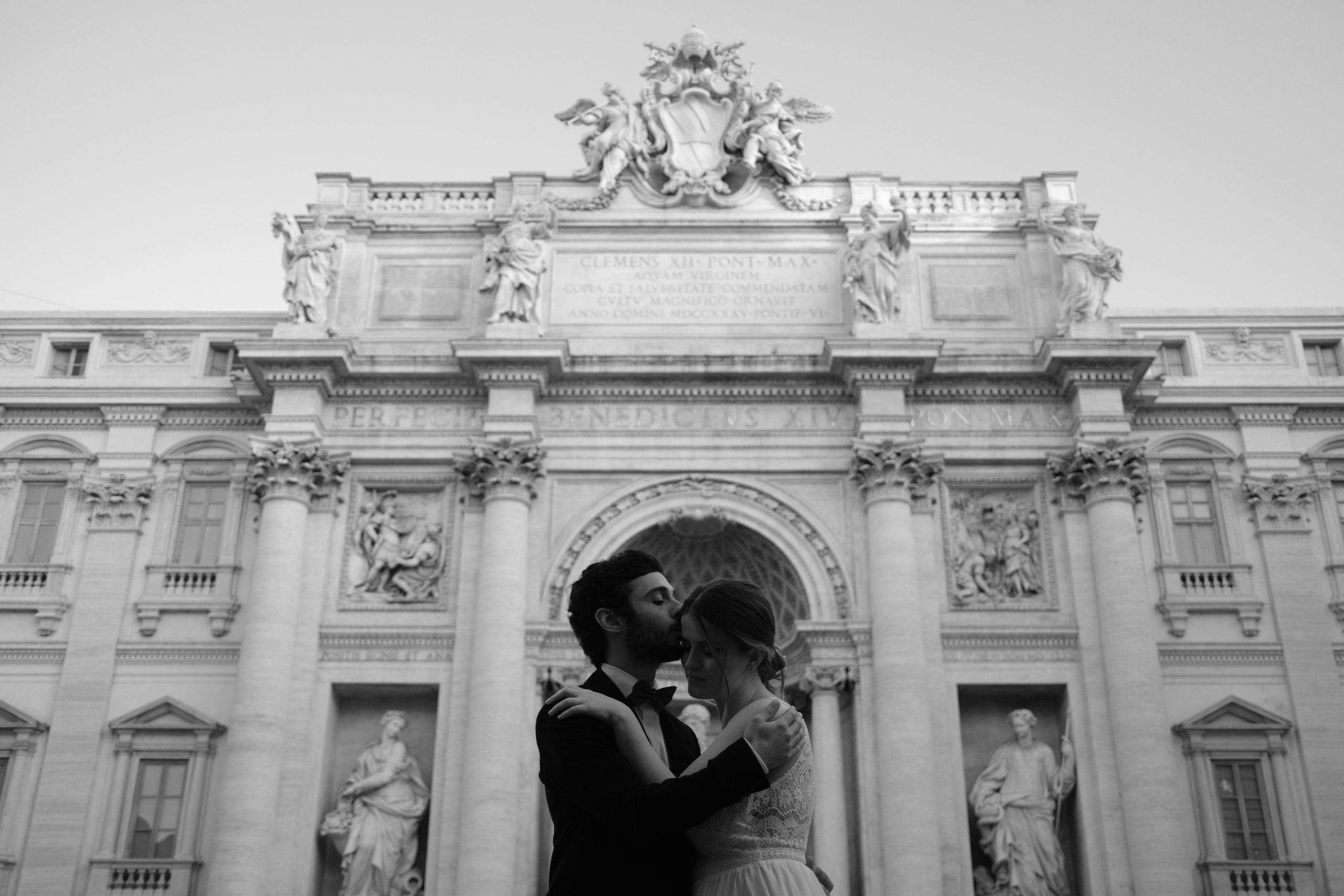
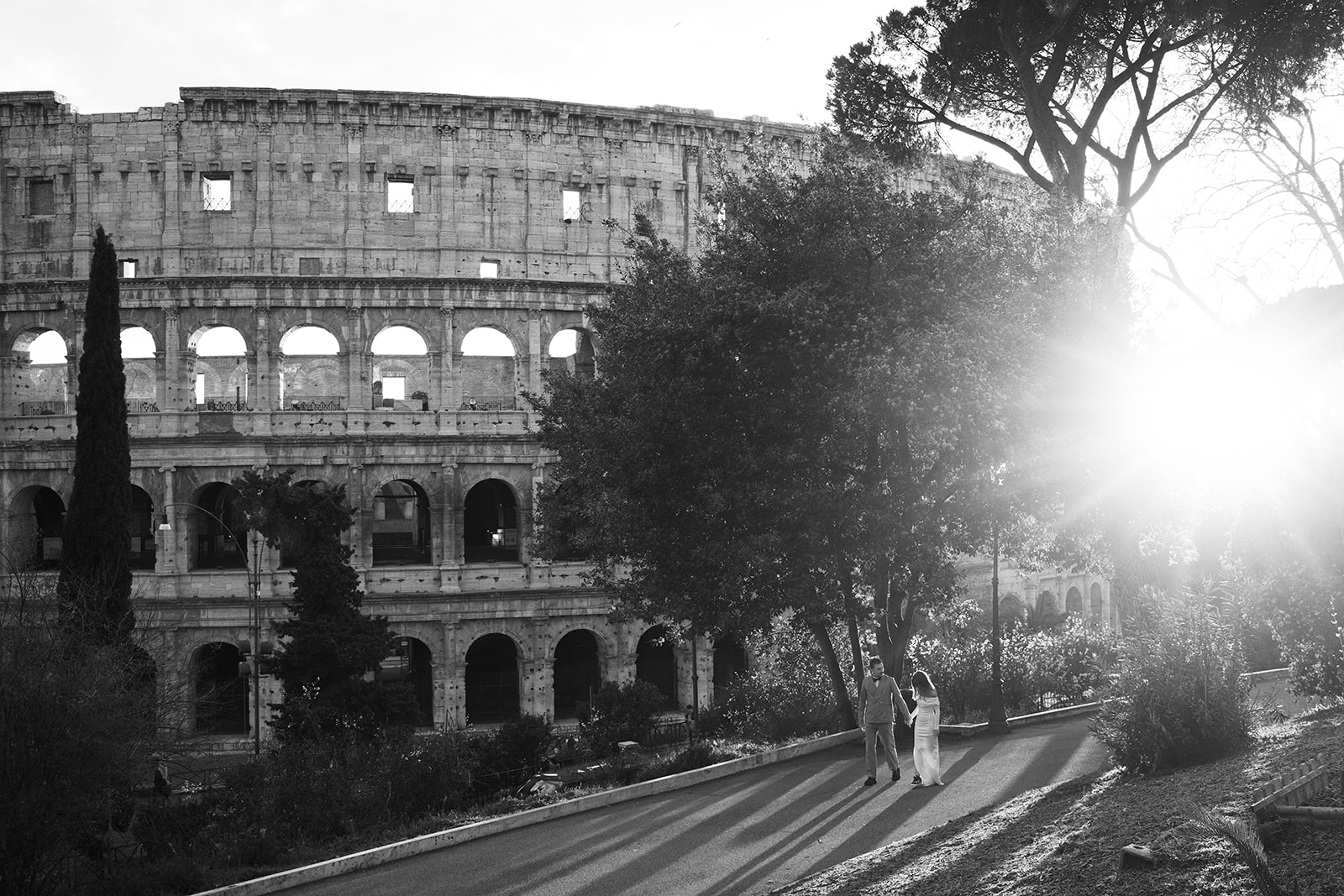
Rome at sunrise is a different city: the centre empty, the fountains loud, the light the colour of the buildings. By nine it belongs to the crowds again, so the trick is to be finished before they arrive.
Rozina and Salvatore walked the empty centre with me at dawn, close enough to the Trevi to hear it from a street away. Civil ceremonies happen in the city’s historic halls and book far ahead, so start early or keep the legal part elsewhere.
Rome, before the crowds
ii
Florence & Tuscany
The Renaissance city · the hills behind it
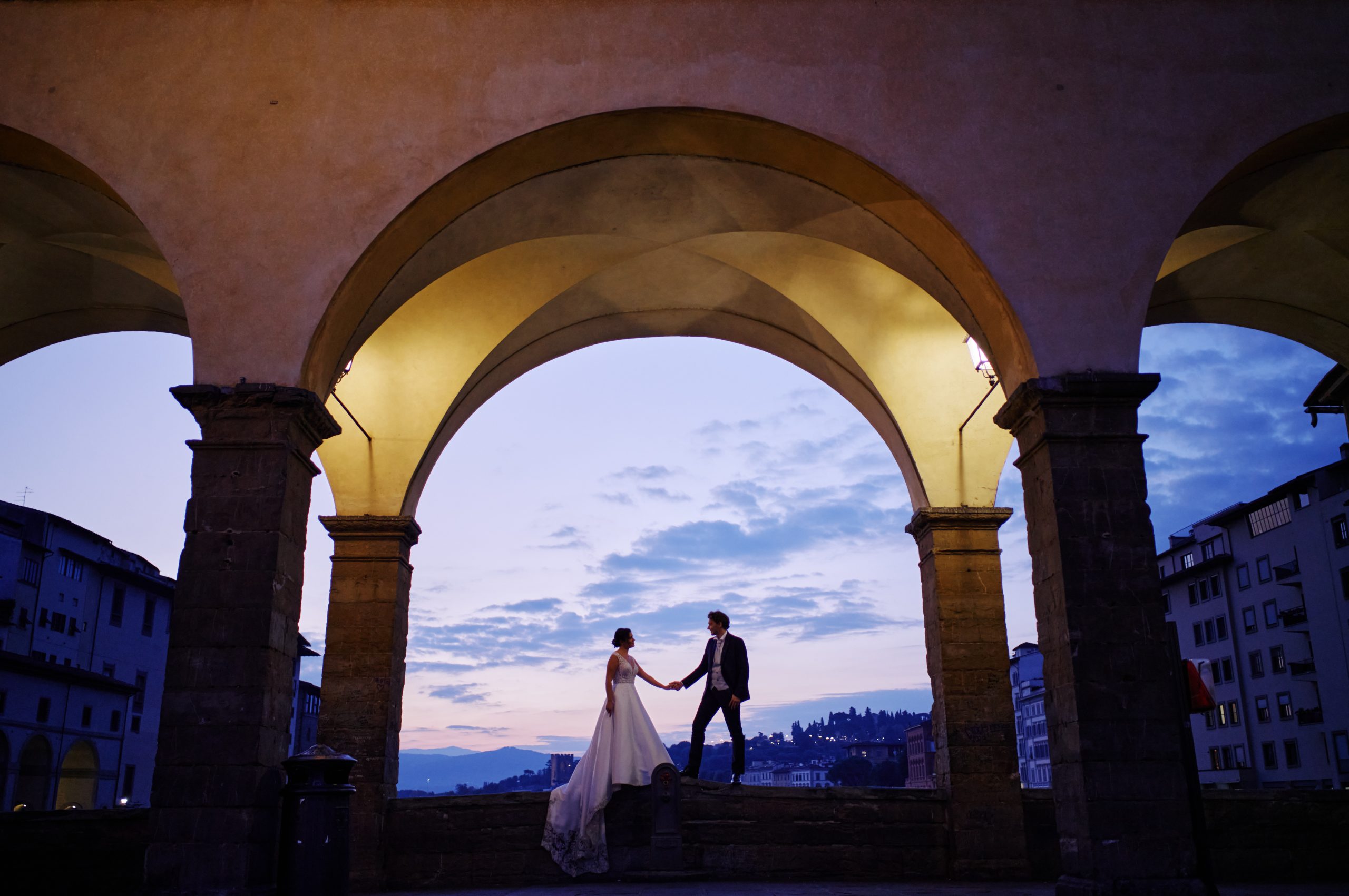
Florence gives you the Arno, the domes and the piazzas, and the moment the sun is properly up, more visitors than any wedding needs. The hills south of the city are the remedy: cypress lanes, stone farmhouses and light that behaves all evening.
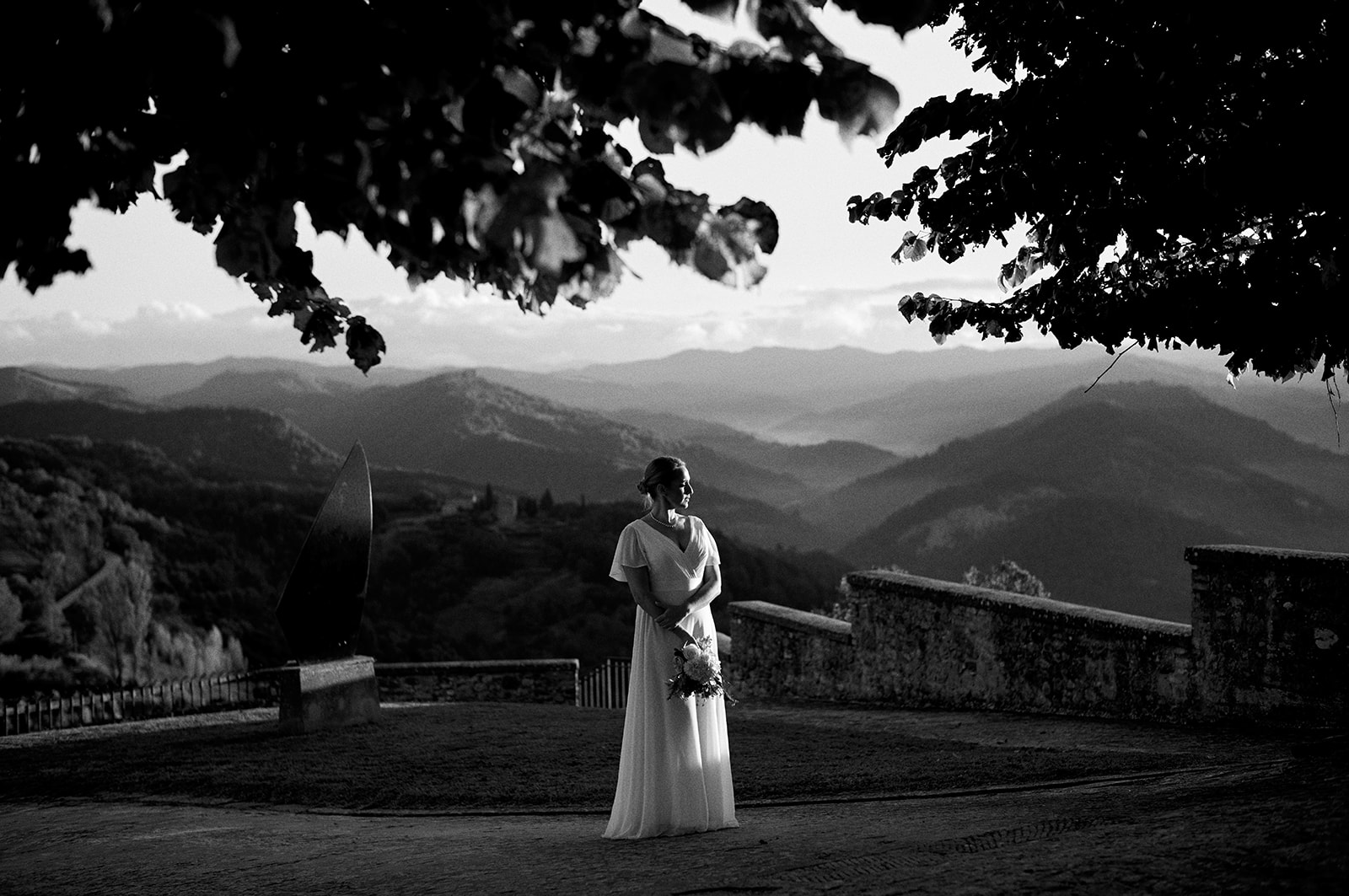
Umbria is Tuscany without the tour buses: walled hill towns, empty piazzas and hosts who still notice you. Montone is my favourite of them, a stone town on a hill where the day moves at walking pace.
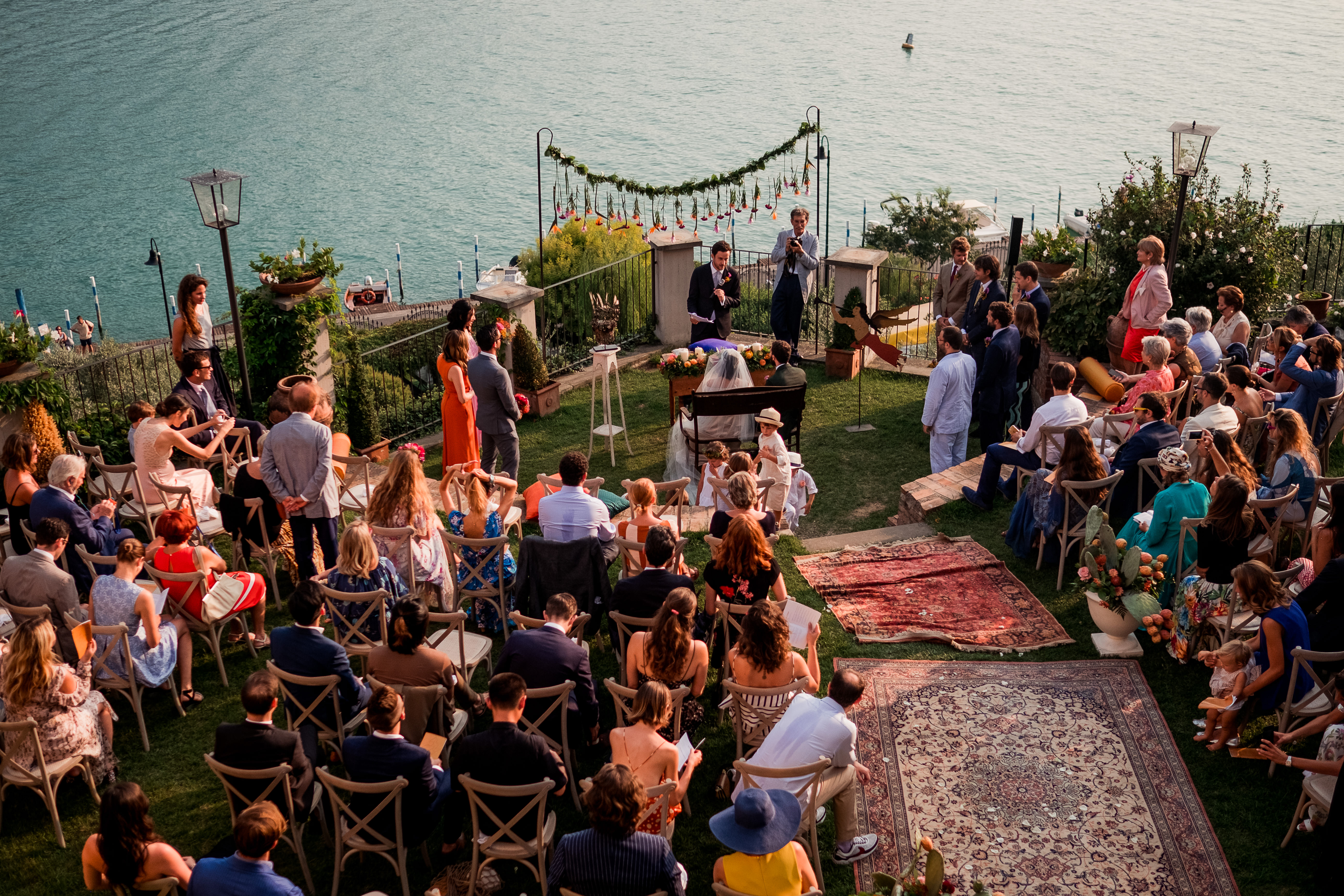
Lake Como is the classic: villas, boats and mountains falling into the water. Lake Iseo next door keeps a lower profile and hides Monte Isola, a car-free island with a castle on it, which is exactly as good for a wedding as it sounds.
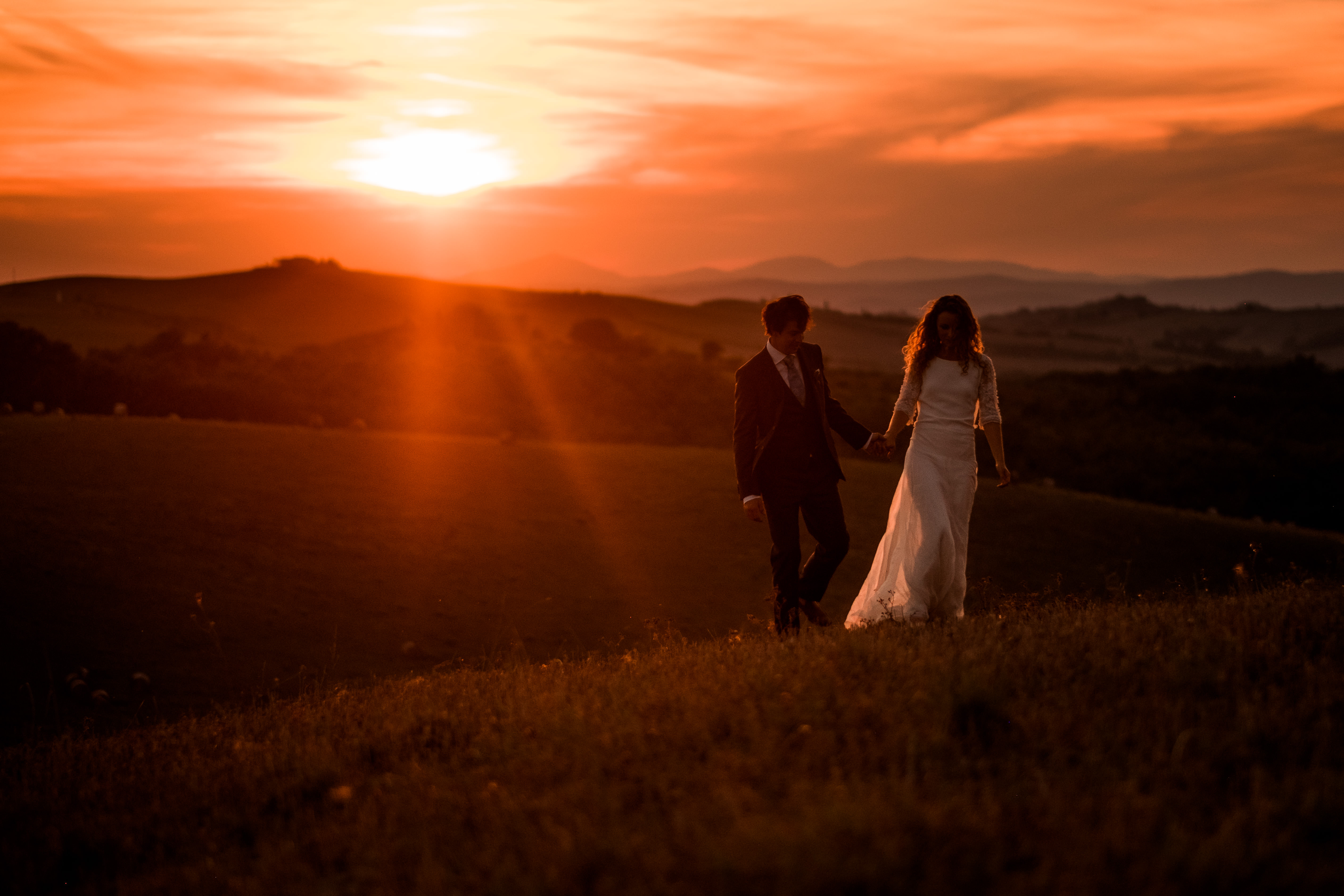
Puglia is Italy with the volume turned down and the light turned up: whitewashed towns, thousand-year-old olive groves, masserie behind stone walls and a coastline on both sides, so sunset is always a short drive away.
Faye and Laurie married here among the olives, and the south delivered what it always does: heat, ease and golden hours that outstay their welcome in the best way.
Puglia, in the olives
vi
The Islands
The Aeolians · volcanoes and slow days
Off Sicily’s north coast the Aeolian islands run on hydrofoils and their own clock. Salina is the green one: vineyards, two old volcanoes and villages that empty when the day boats leave.
The pale mountains of the north east are the biggest reason couples write to me about Italy, and they have earned a full guide of their own: seven regions, toll roads, rifugios and all.
What I would tell you before you book the flights.
When to go
May, June, September and October are the sweet spots almost everywhere: the cities before the heat, the hills in their best light, the coast still warm. July and August belong to the south and the lakes, taken early and late in the day. The mountains keep their own calendar, in their own guide.
Getting around
Trains connect the cities brilliantly, and then you want a car: the hill towns, the groves and the lakes all reward driving. The islands run on ferries and hydrofoils, which is part of the charm and part of the planning.
The legal part
Foreign couples can marry civilly in Italy with no residency requirement. The key document is the Nulla Osta from your consulate, submitted to the comune where you marry, and the realistic runway is three to six months. Every comune interprets the details slightly differently, so confirm locally and early.
The questions couples actually ask.
Can foreigners legally get married in Italy?
Yes, with paperwork and patience. You need a Nulla Osta, a certificate of no impediment from your consulate, submitted to the comune where you will marry, and there is no residency requirement; when both of you are foreign non-residents, the usual banns are waived. Allow three to six months, and expect every comune to have its own habits.
Civil ceremony in Italy or legal at home?
Both work, and I have photographed both. The Italian civil route gives you a real ceremony in a real comune, some of them in halls you would cross the world for. Legal at home keeps the admin simple and lets the Italian day be exactly what you want. Neither photographs better; choose by paperwork appetite.
Which part of Italy is right for us?
Cities if you want streets and life at dawn: Rome and Florence. Hills if you want slow days and long tables: Tuscany and, quieter still, Umbria. Water if you want drama: Como, Monte Isola or the Aeolians. Mountains if you want the wild: the Dolomites, which have a whole guide of their own on this site.
When is the best time for an Italian wedding?
May, June, September and October cover nearly every region at its best. August is the month Italy itself goes on holiday: the coast is full and the cities are hot and half closed. If you must have summer, take the lakes, the south at the edges of the day, or altitude.
Do we need a big venue?
No. Some of my favourite Italian days were built on a family-run casale, a town hall and a long dinner. Places like Casale San Cristoforo in Umbria host a wedding the way Italians host anything: generously, without choreography. The country itself does the production design.
If Italy is on your mind, tell me about it. I would love to hear the shape of the day you are imagining.