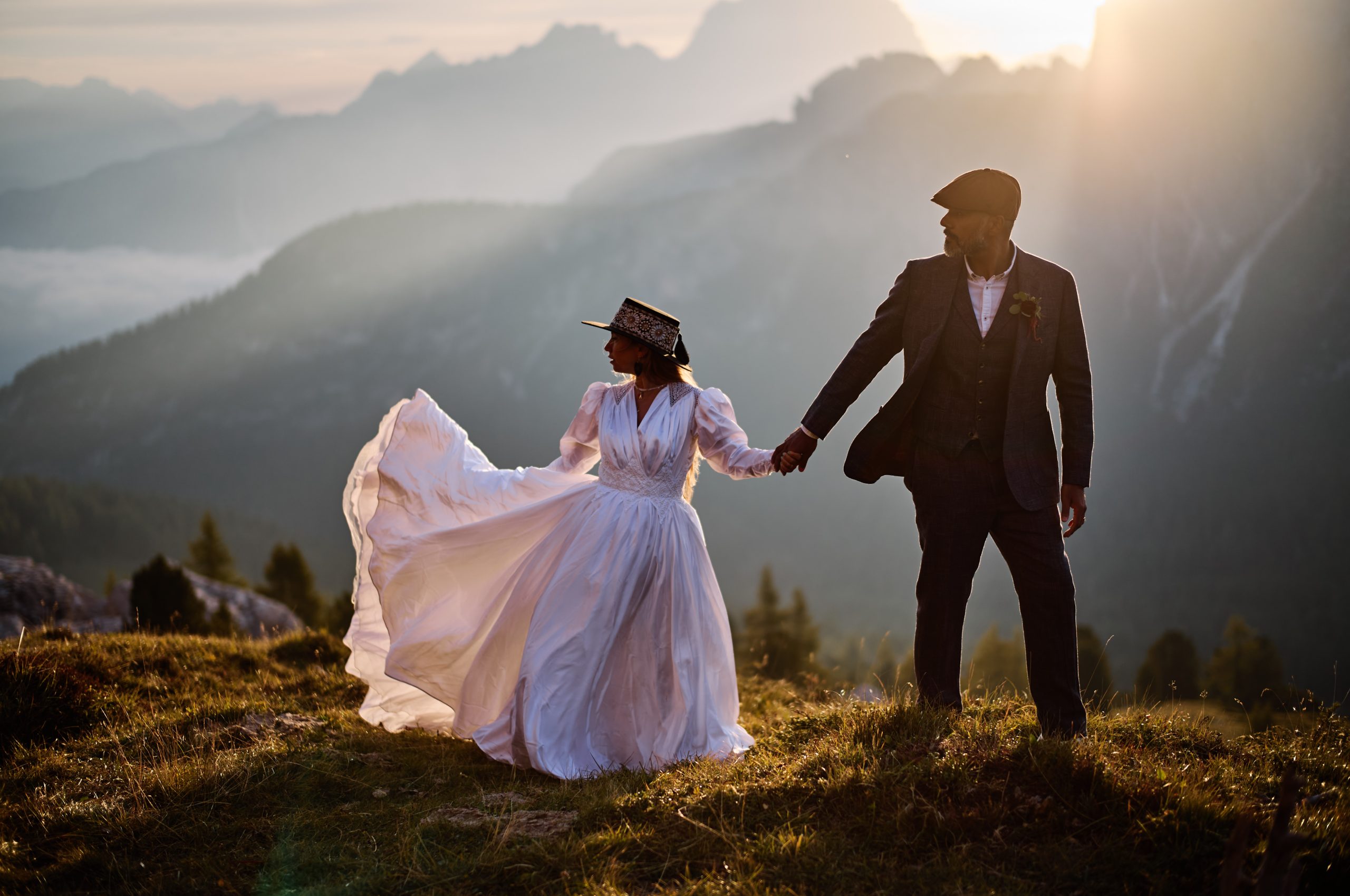
Getting Married in the Dolomites
Plenty of these guides are written by photographers looking for an excuse to go. I have been back to these mountains again and again, in high summer meadow and deep winter snow, for sunrises that meant a two in the morning start, and I would do it all over next week. Couples ask me the same things before they commit to it, so here are my answers.
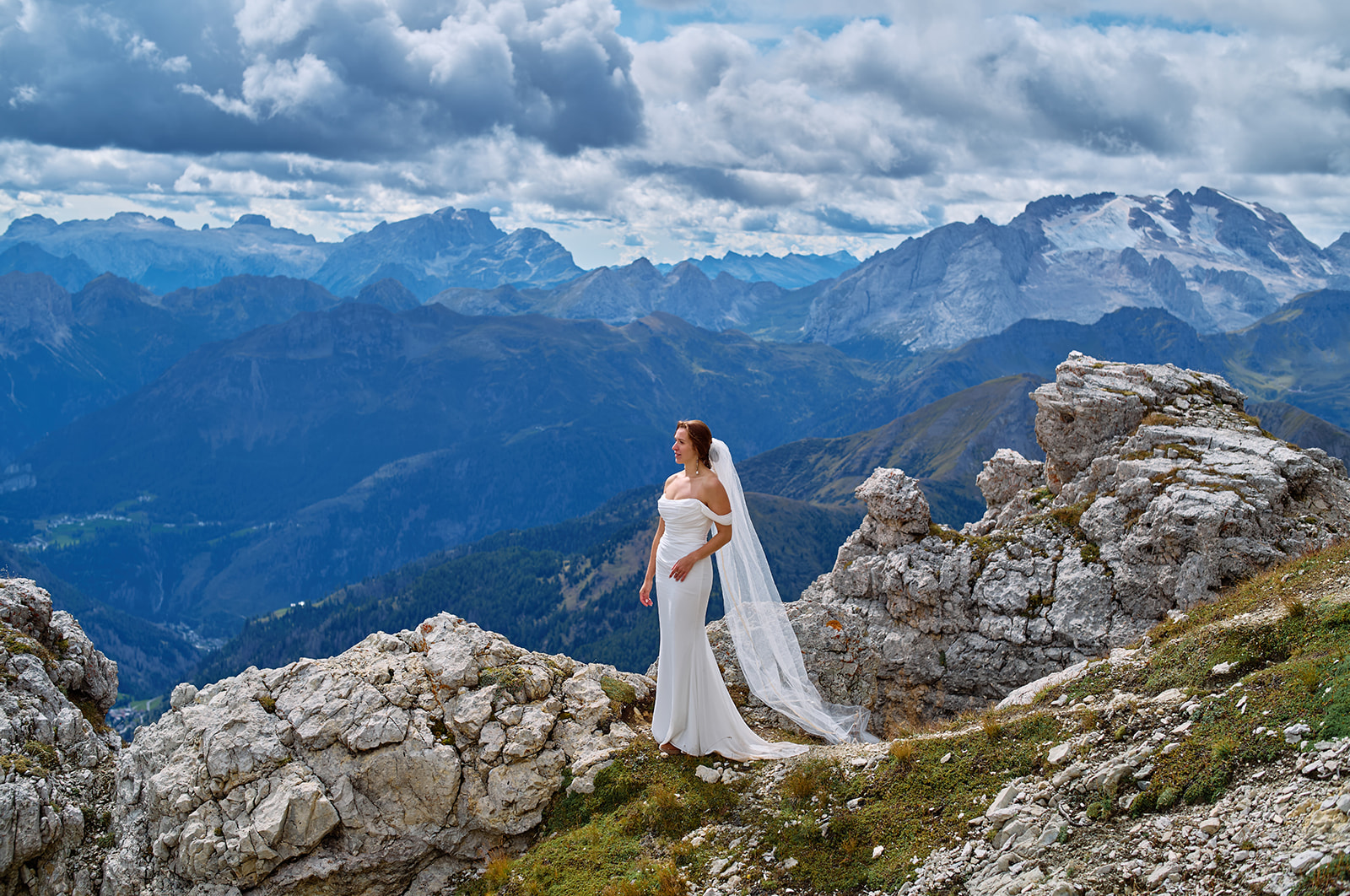
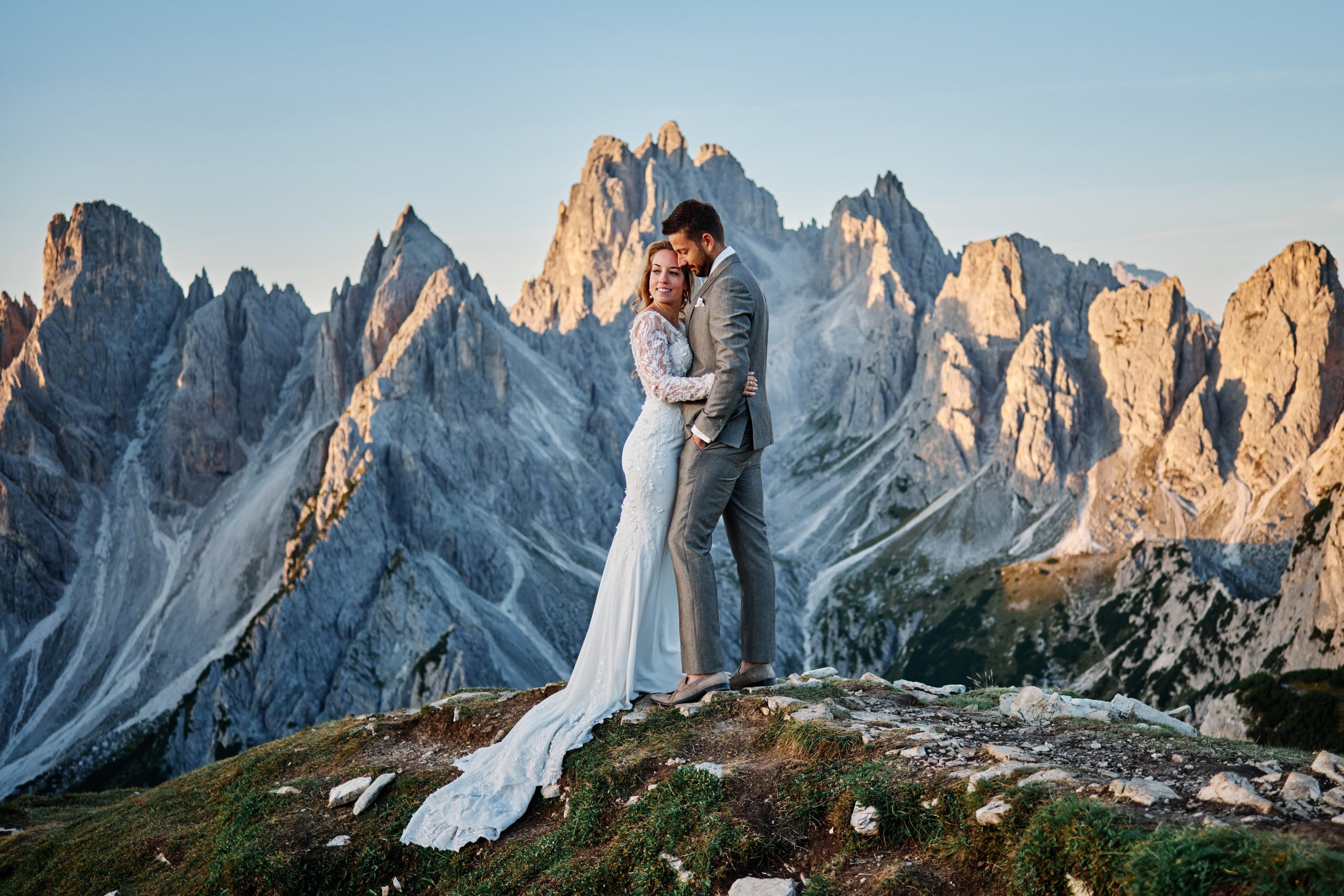
The Dolomites are a UNESCO range of sheer limestone, turquoise lakes and rolling alpine pasture, sitting where Italy meets old Austria. The weather changes by the hour and the light after a storm is worth every early alarm; the locals call these the pale mountains, and at sunrise you see why.
There is a lifetime of it up there. These are the three corners I would send you to first: Tre Cime di Lavaredo for the three great towers, Lago di Braies for the lake and its boathouse, and Passo Giau for a sunrise you can very nearly drive to. This is where I would put you, and what I would tell you before you go.
Tre Cime di Lavaredo
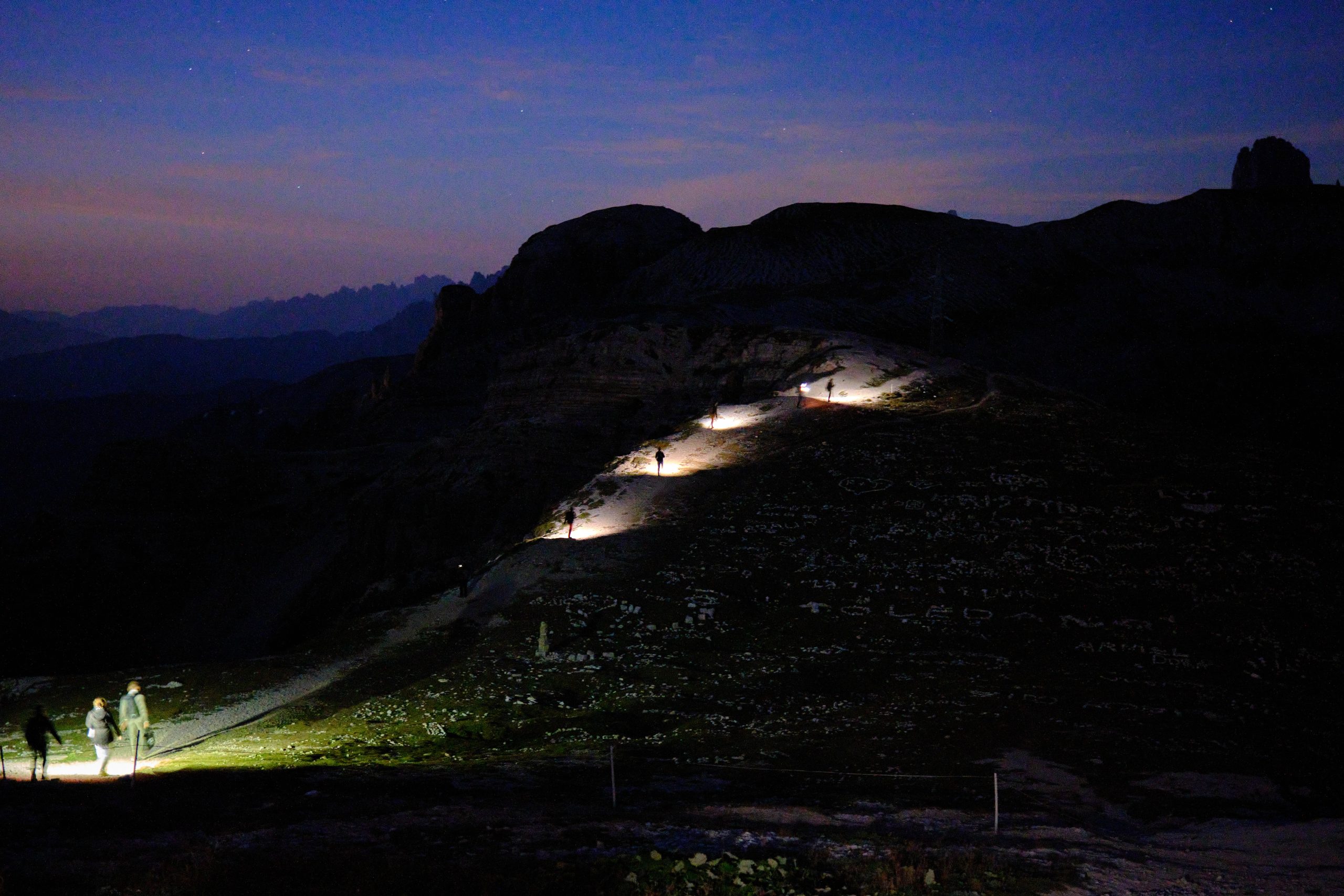
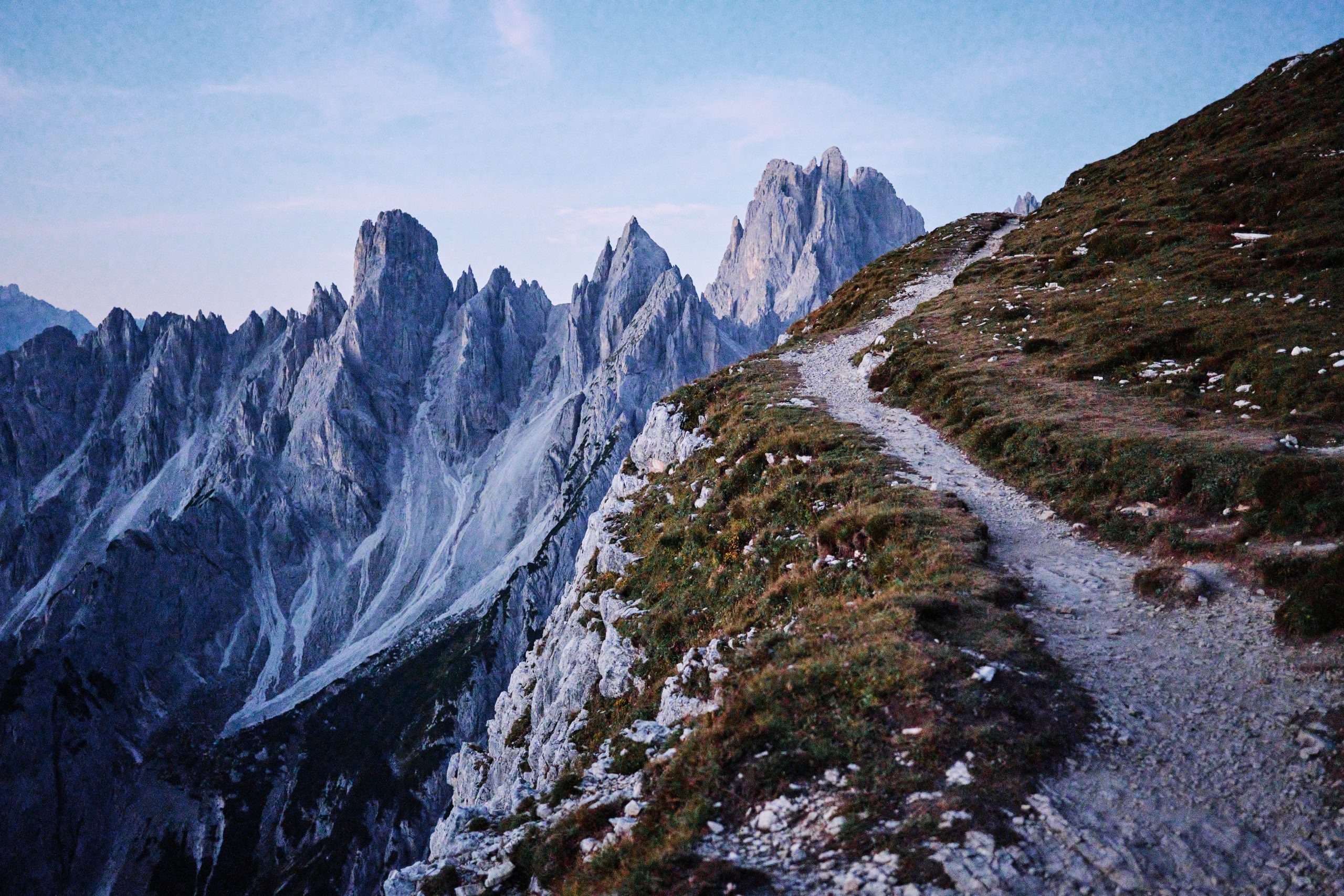
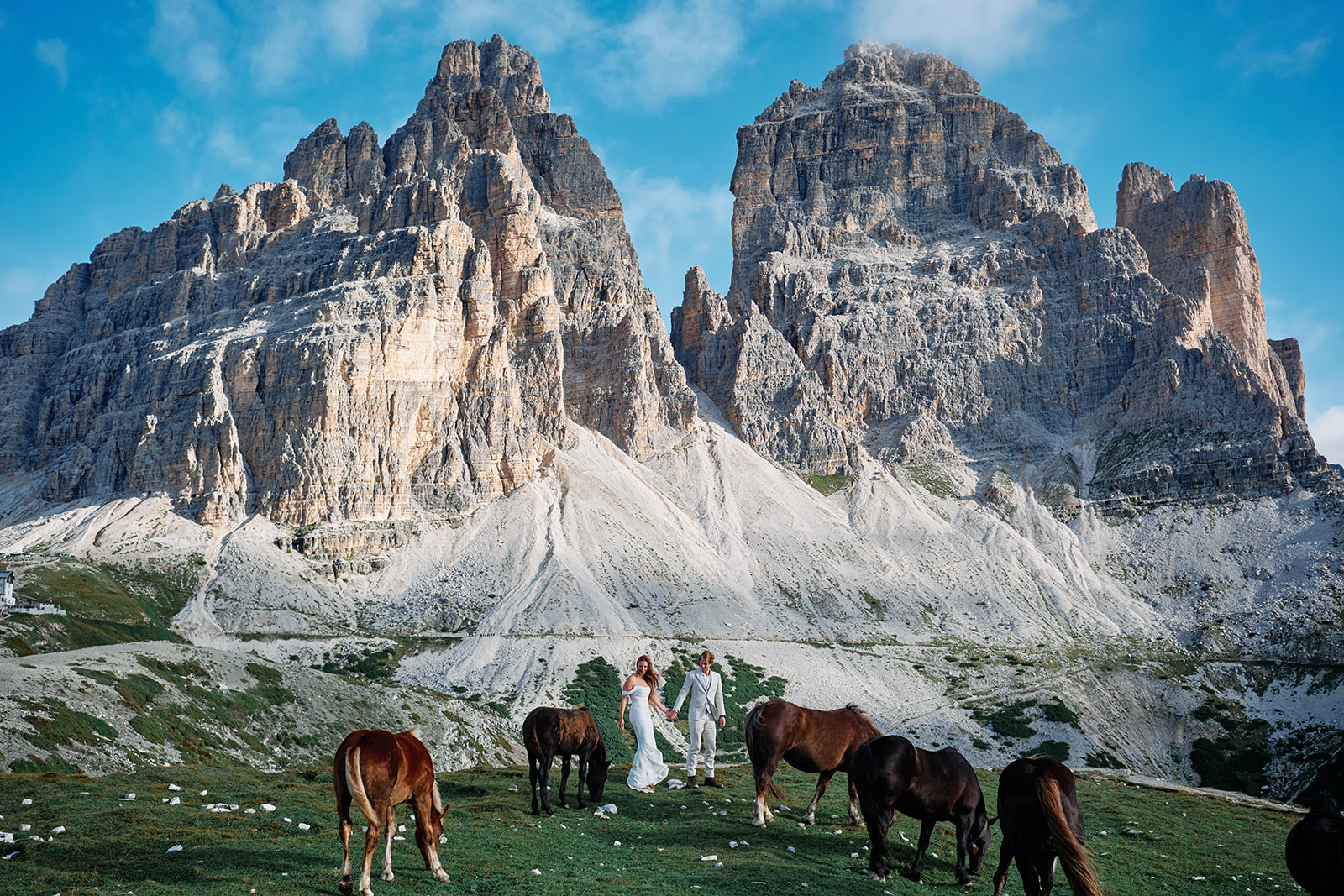
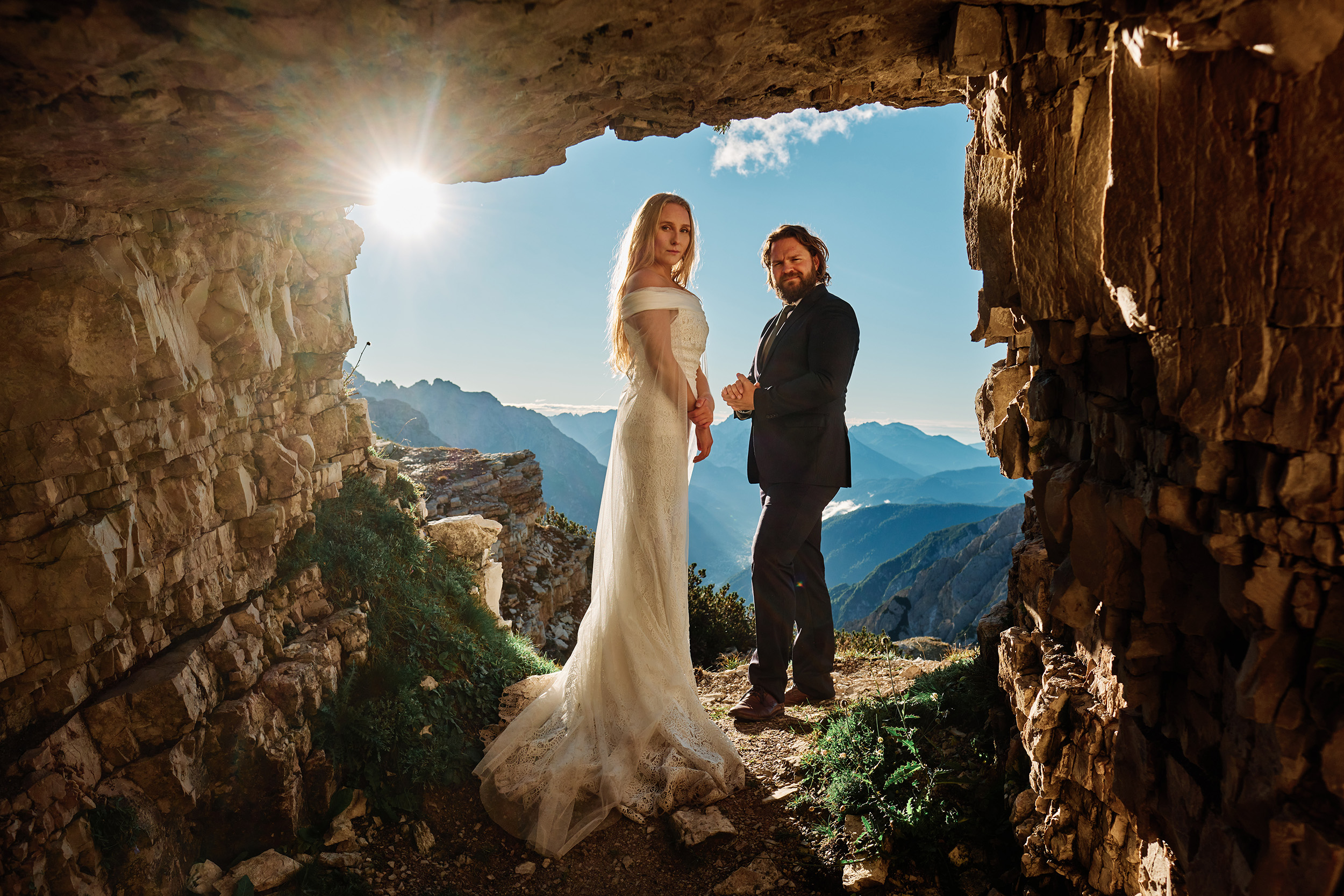
Tre Cime di Lavaredo is the picture everyone carries of these mountains: three sheer towers rising in a row, ringed by a rim path and a scatter of old wartime tunnels. You reach them by a toll road that now books out by time slot, so an elopement here means a start in the dark and a slow warm-up as the sun finds the rock. The refuges below serve coffee to anyone who made the climb. Nothing quite prepares you for the scale of them.
Lago di Braies
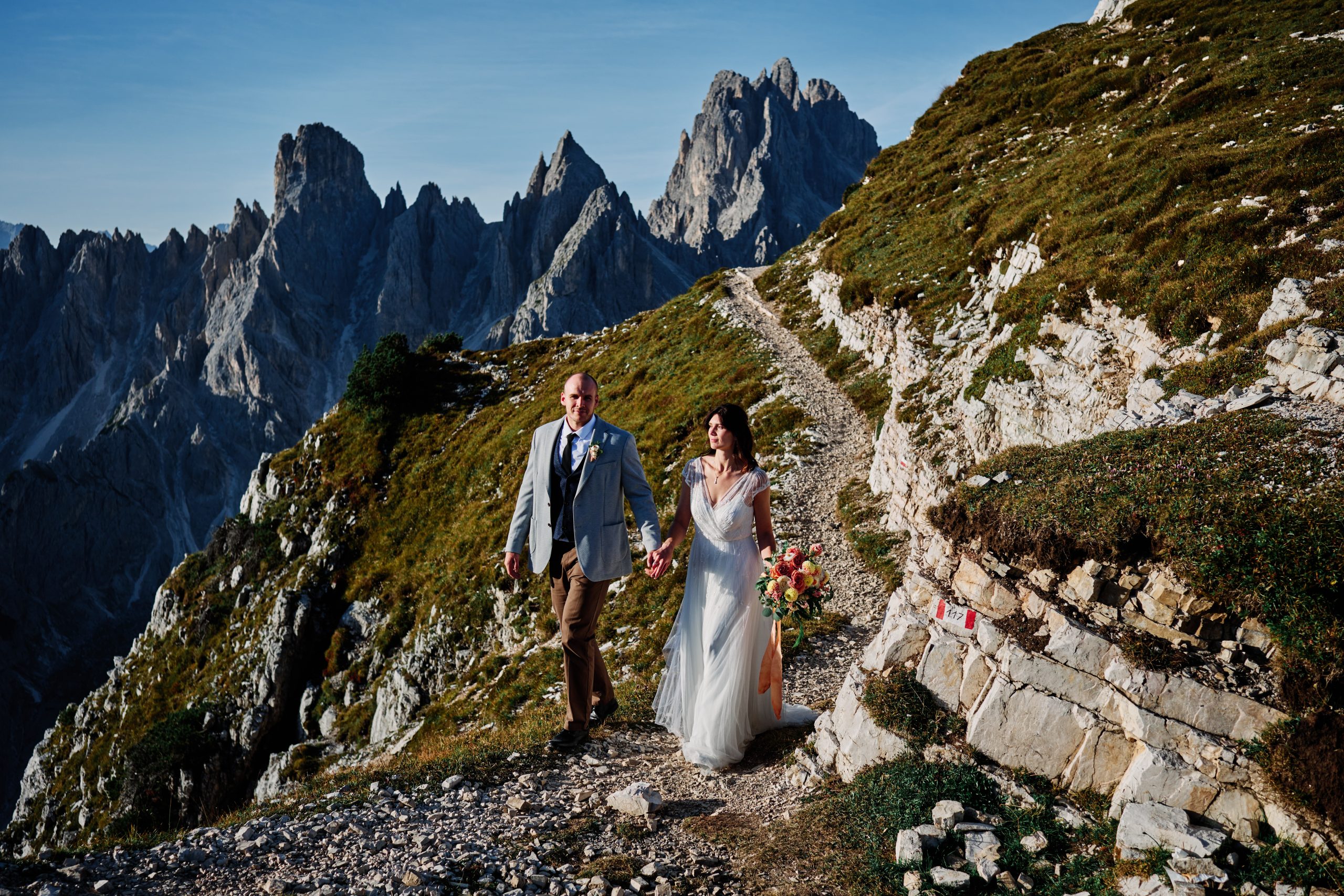
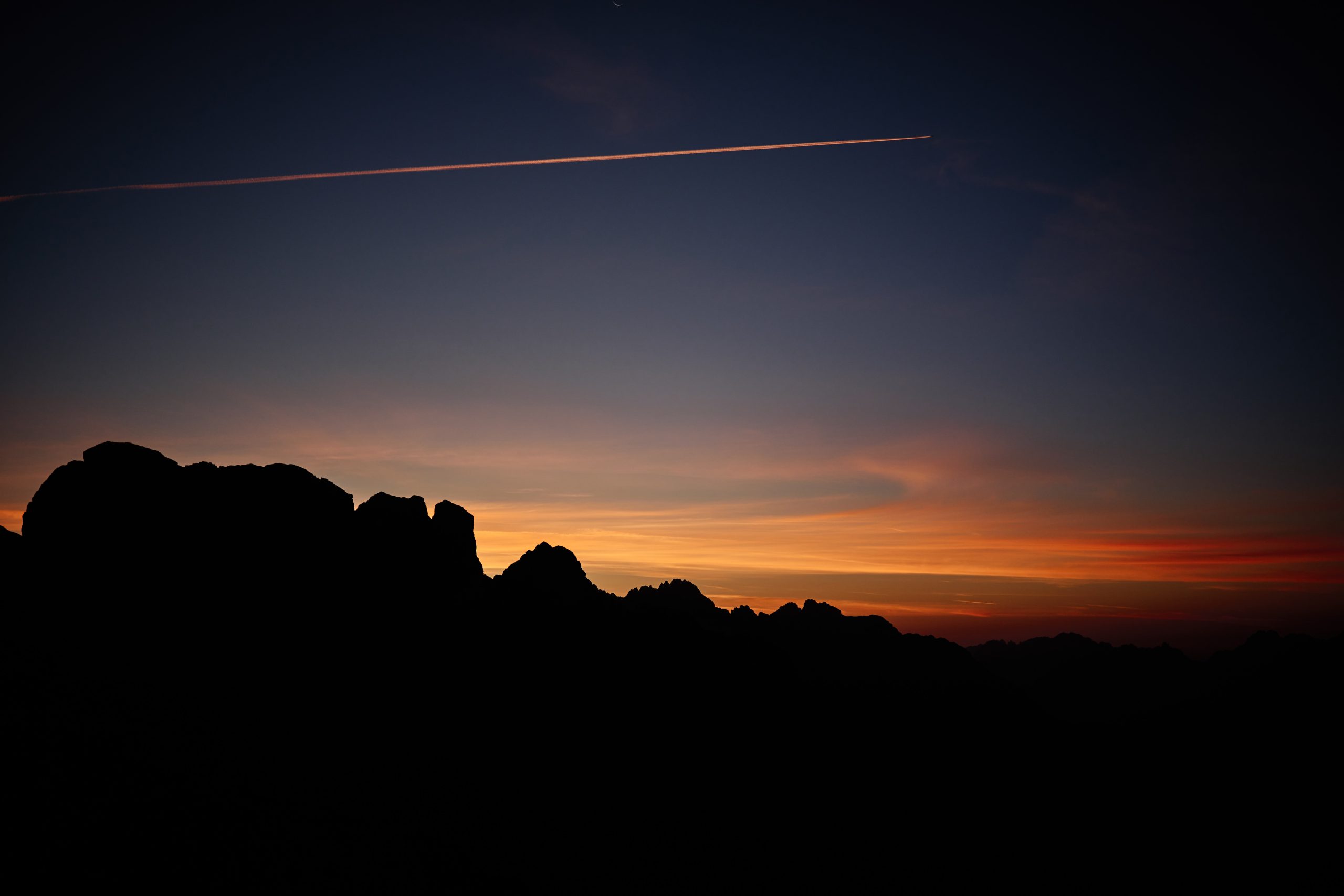
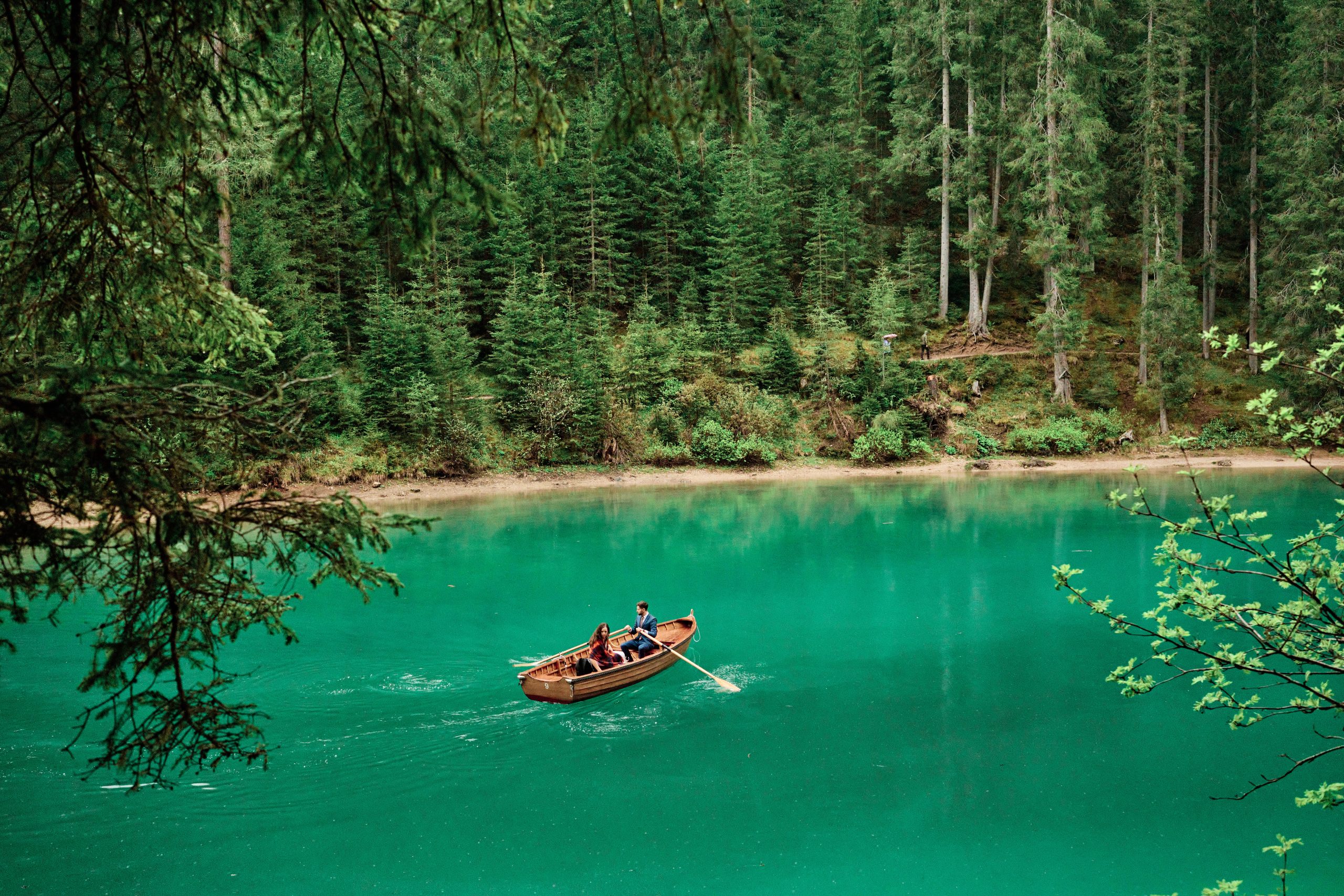
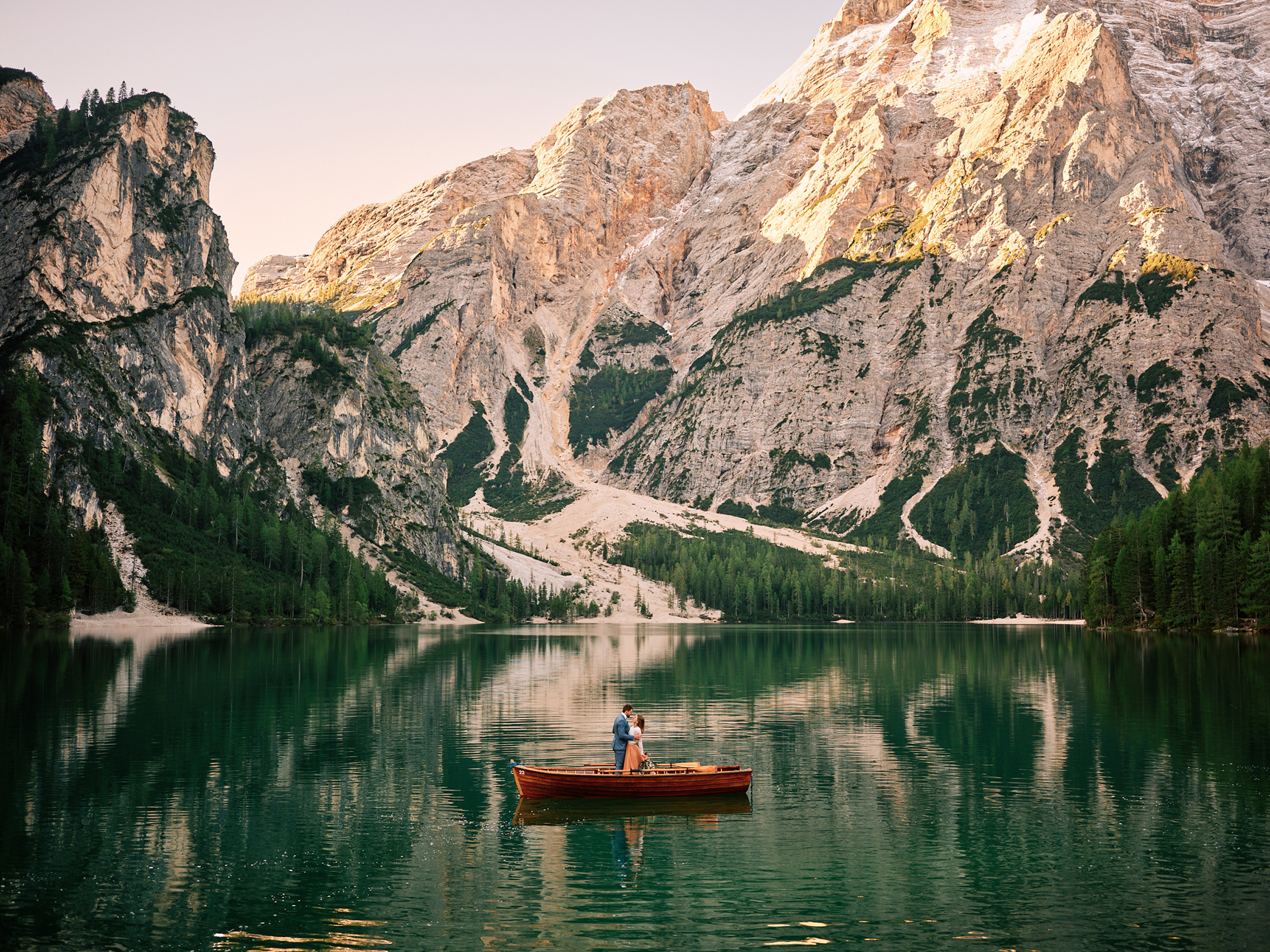
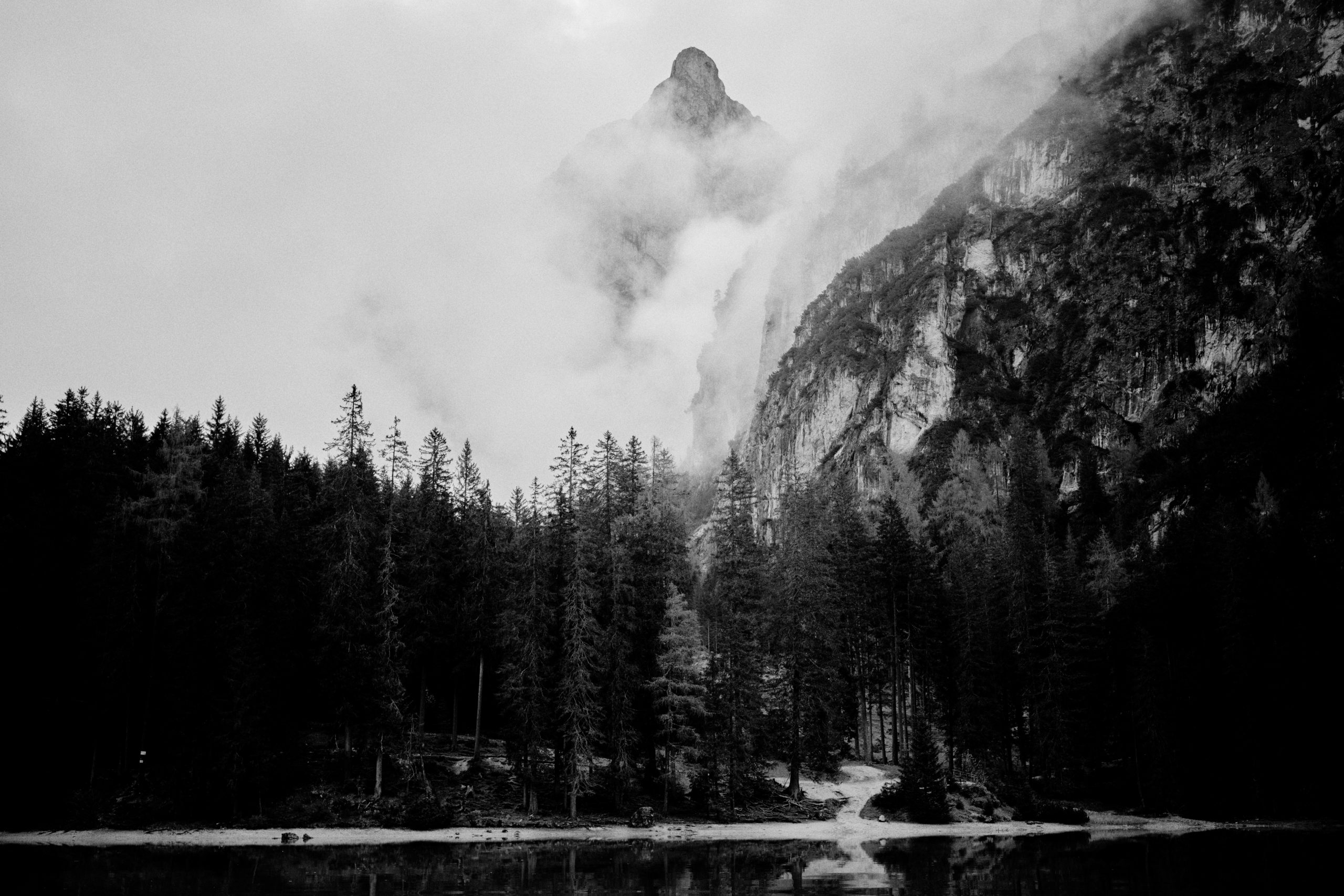
Lago di Braies is the most photographed spot in the Dolomites, and with reason: an emerald lake held in a bowl of cliffs, with a little wooden boathouse on the shore. It is also the busiest, so the only way to have it feel like yours is to be standing there before the first bus. In peak summer the road to the lake needs a reservation in the middle of the day, so we go early, when the water is glass and the boats are still tied up. You can see a morning of it in Simona and Marius's elopement.
Passo Giau
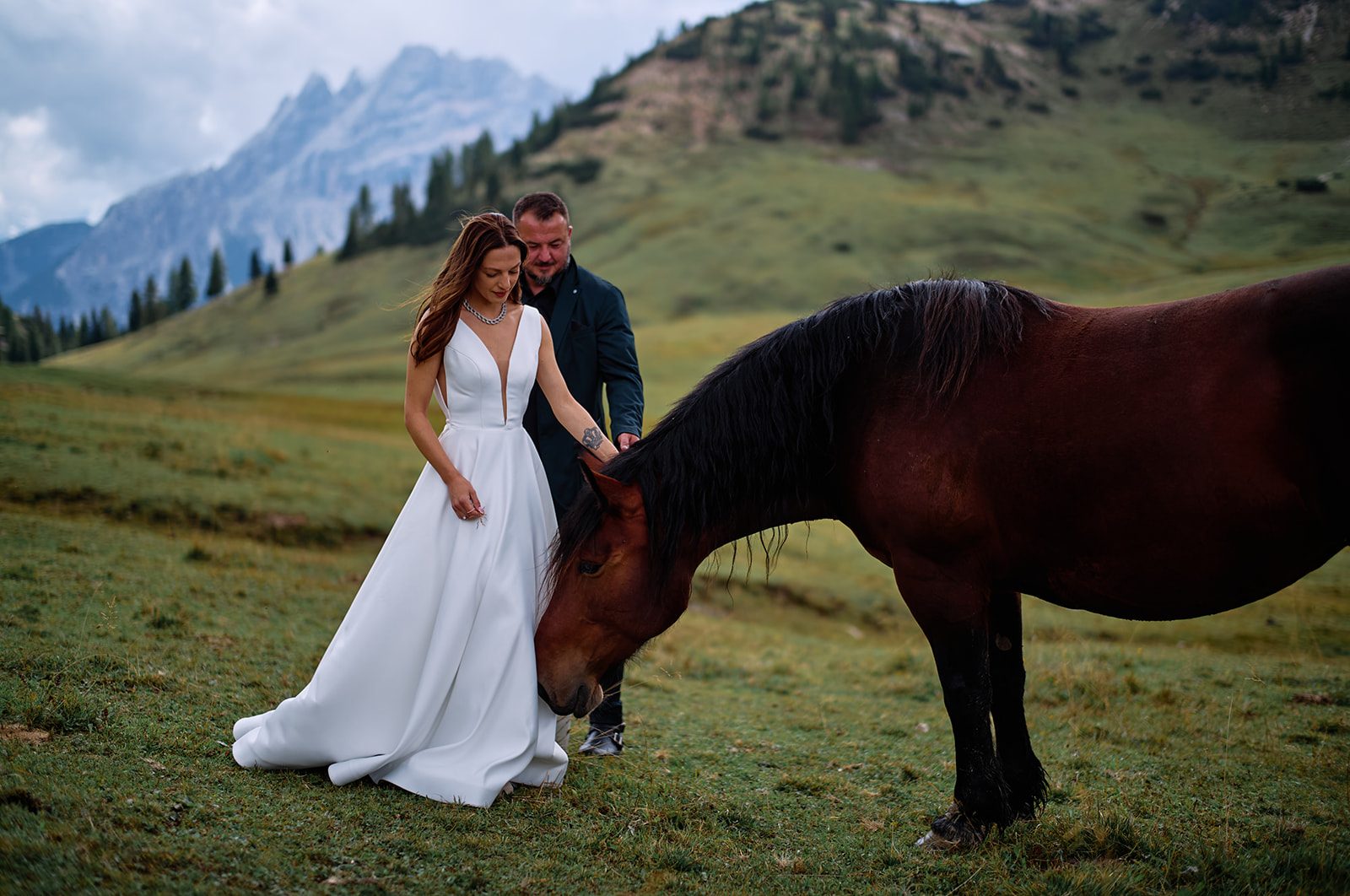
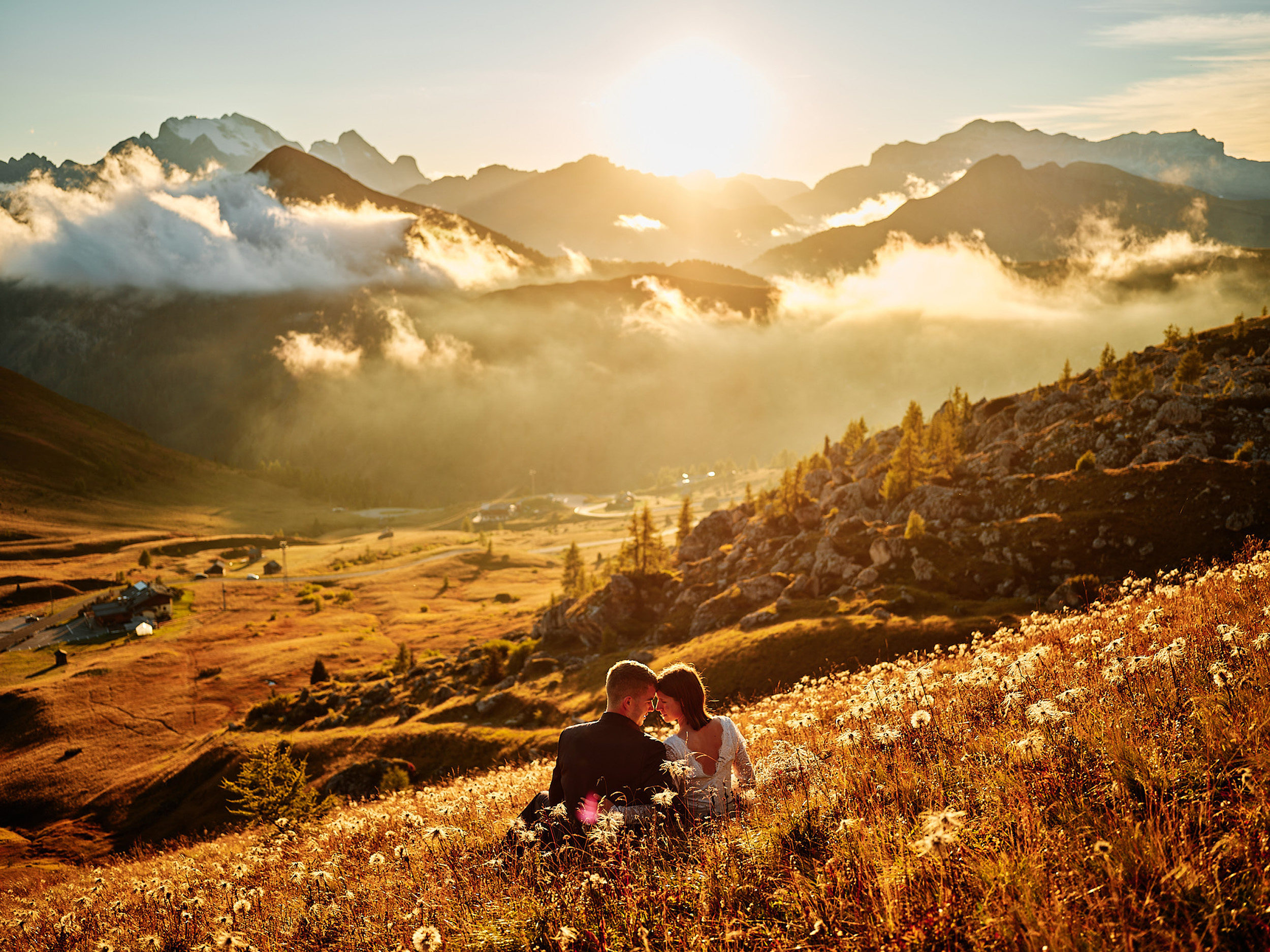
The road climbs in tight switchbacks to a saddle above two thousand metres, with the sawtooth of Ra Gusela on one side and a long run of peaks on the other. Because you can reach it without a hike, it suits a couple who want the drama of altitude without the four in the morning march, and it is glorious under snow when the passes empty out. If you are marrying up here, I would clear the calendar to be the one holding the camera.
Prato Piazza
Falzarego & Lagazuoi
Passo Gardena
Cortina & Misurina
The weddings and elopements that got me here.
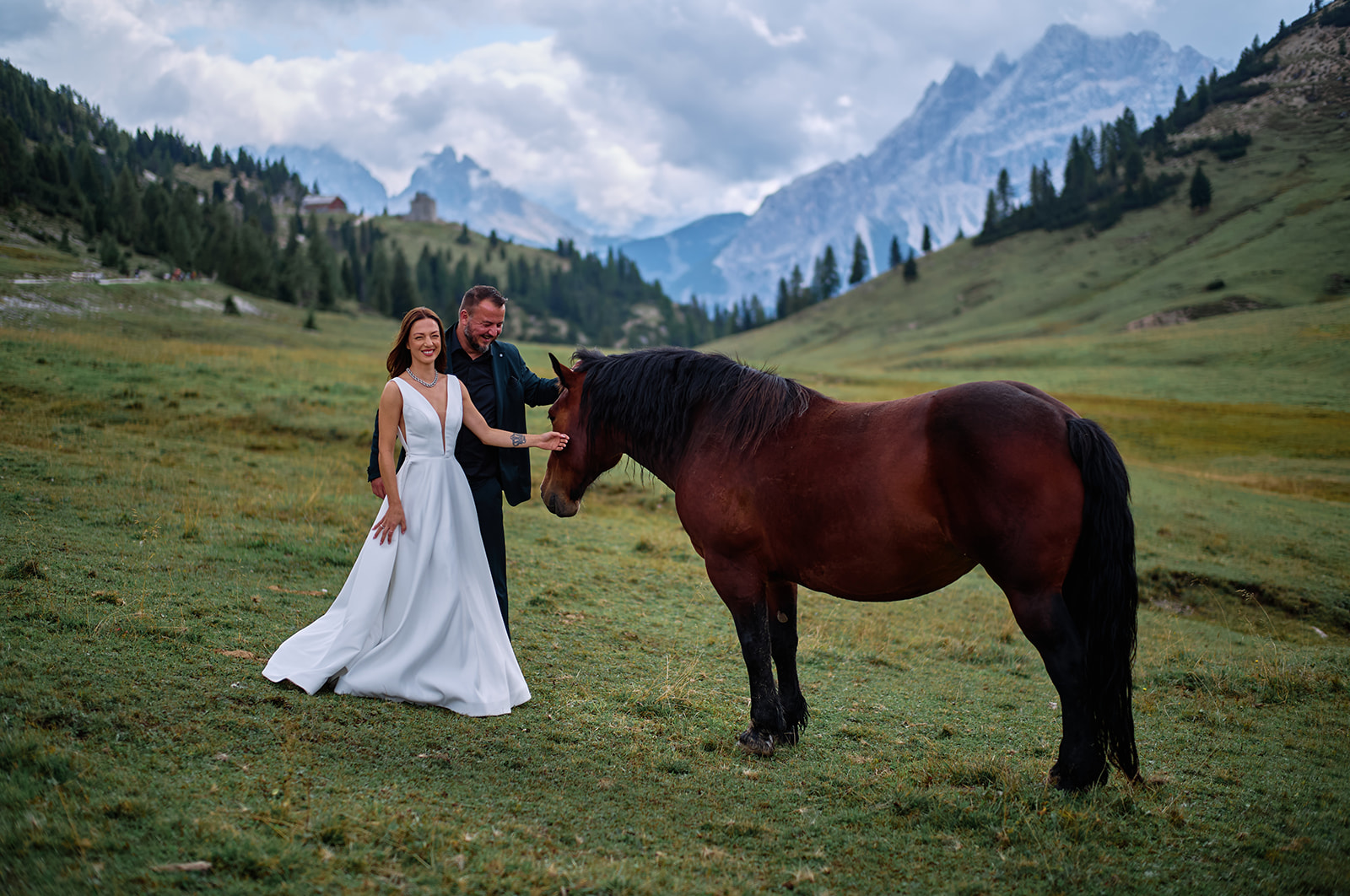
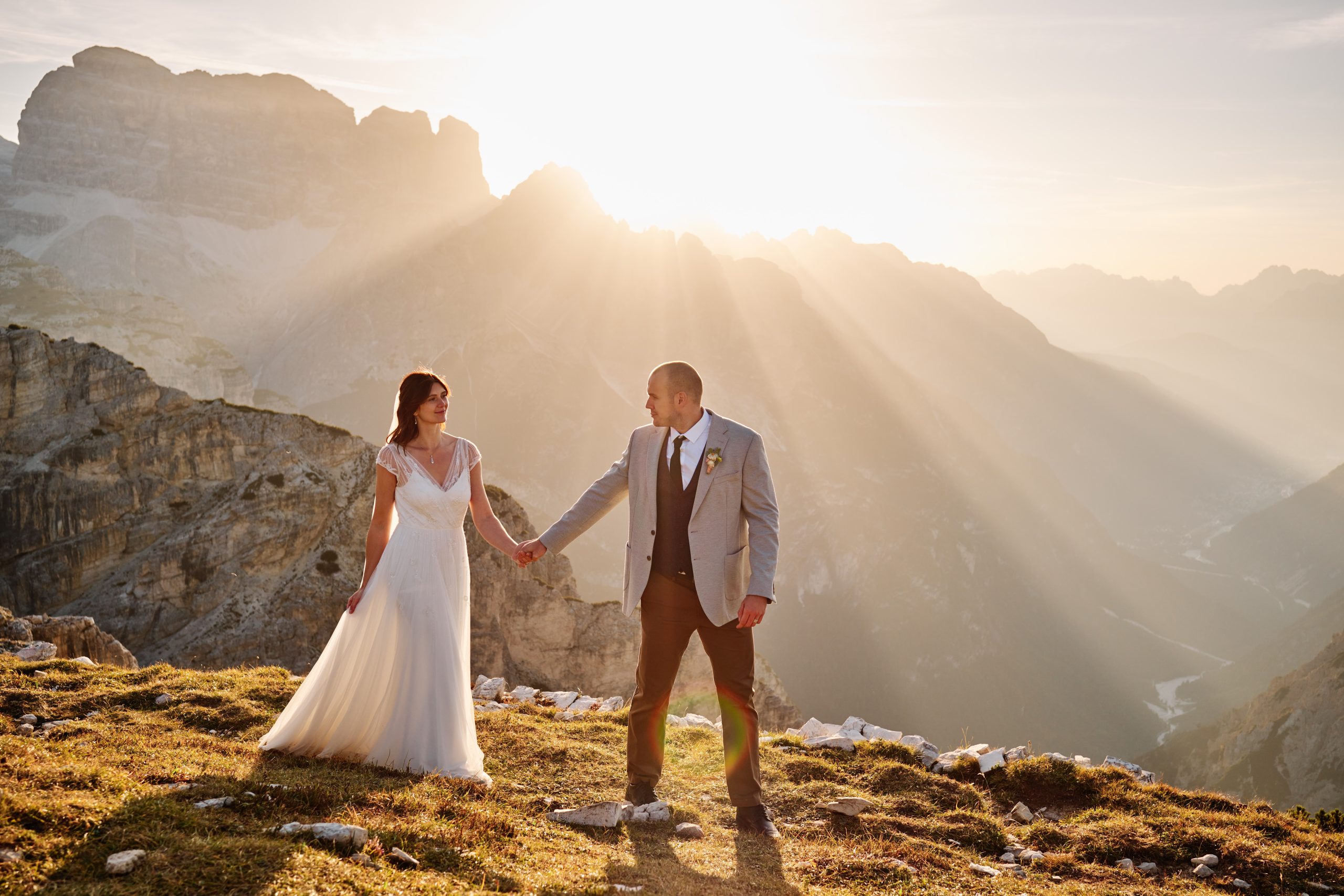
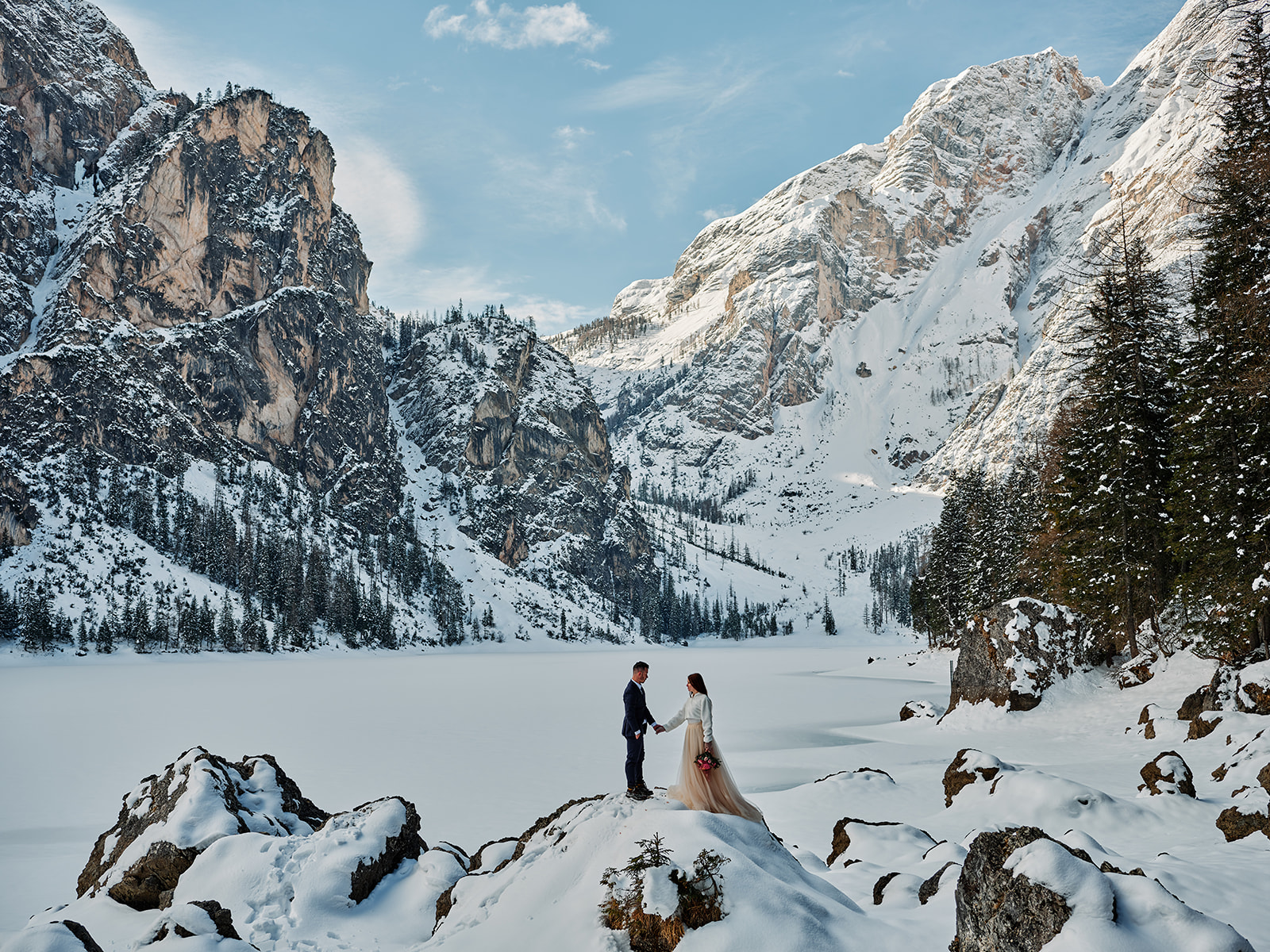
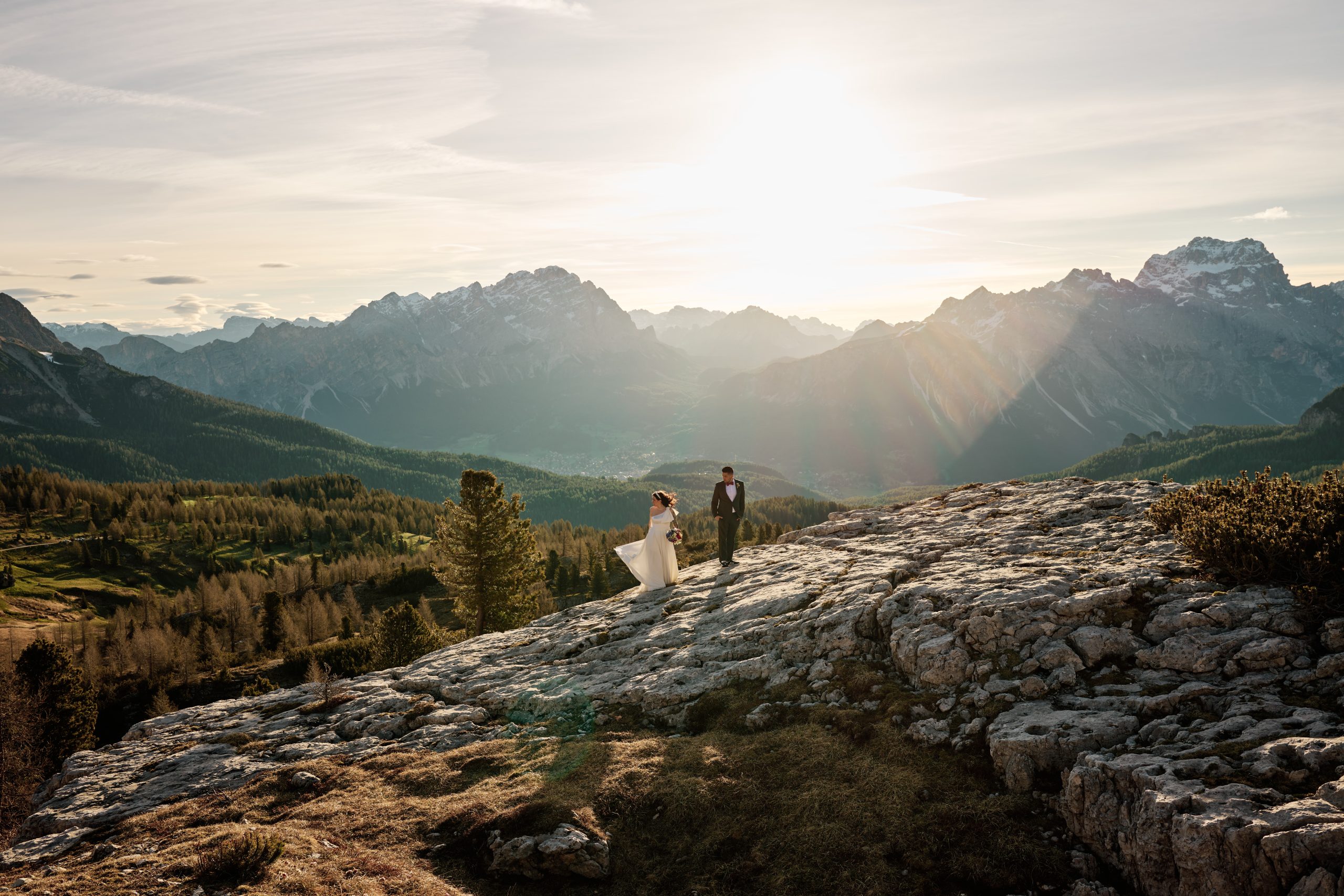

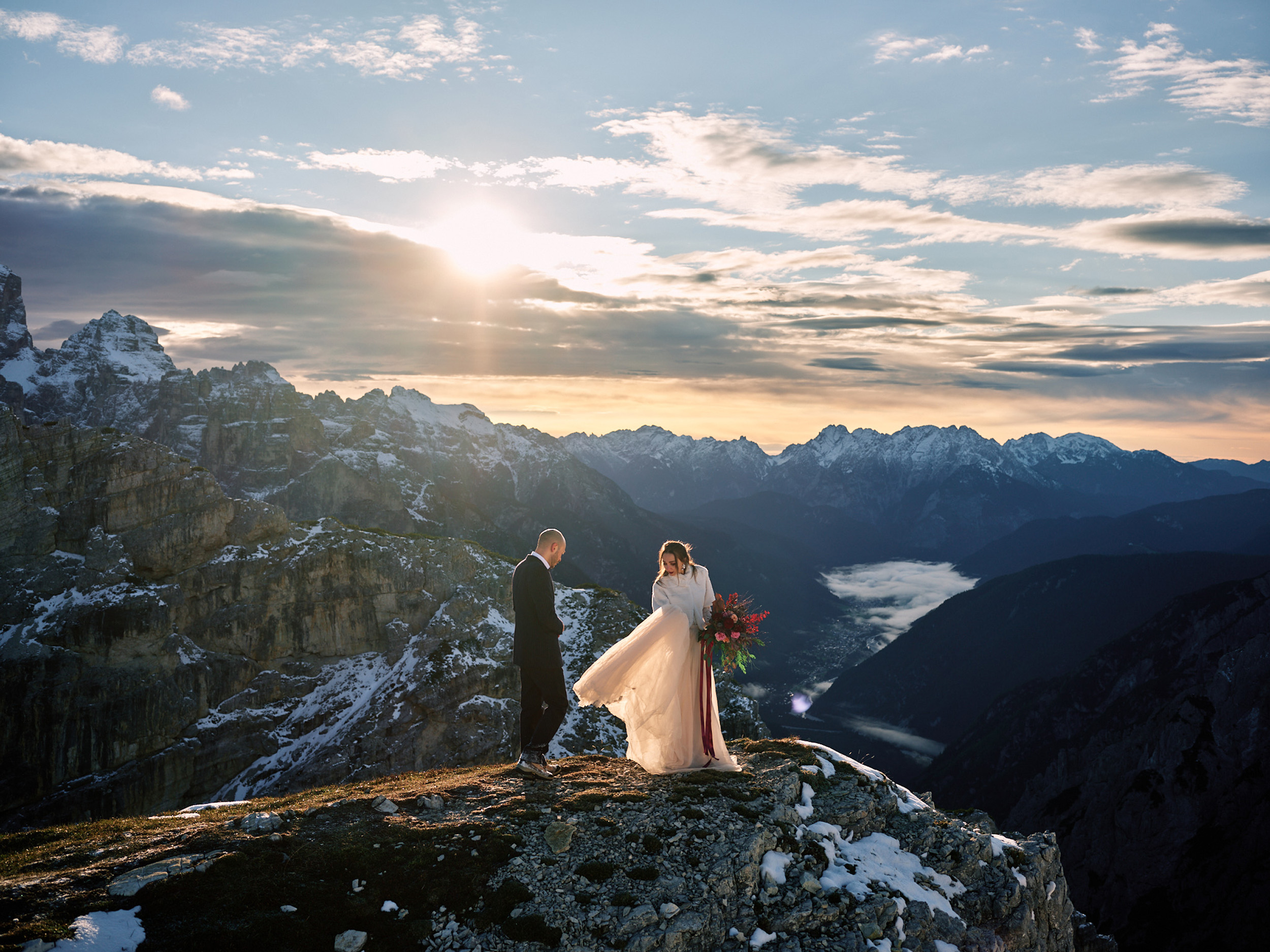

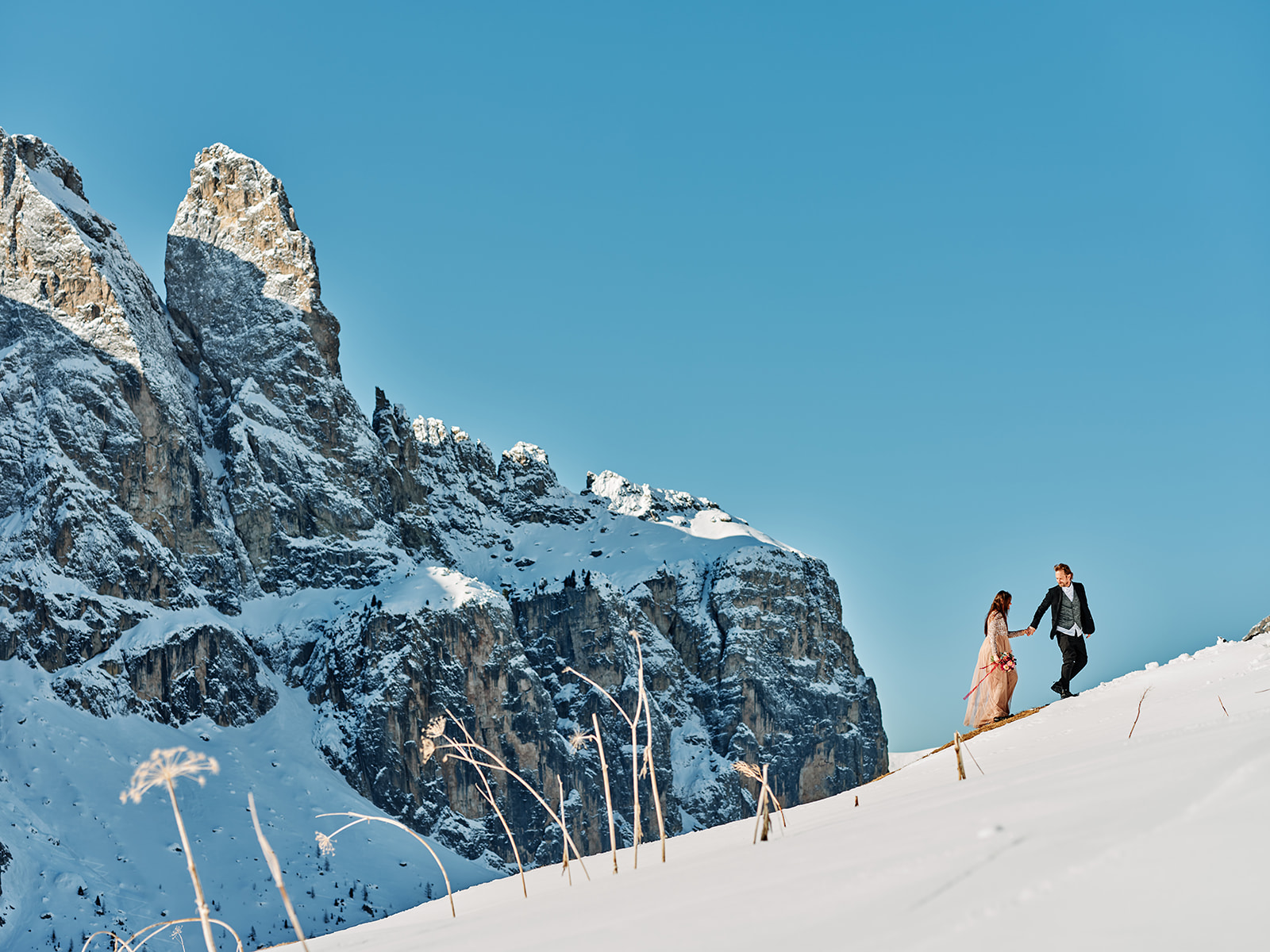
Mid June to late September is the green season, when the meadows are full, the lifts and refuges are running and the high passes are open; July and August are warmest and busiest, with afternoon thunderstorms that make sunrise the safe bet. September is my favourite, settled light and thinning crowds. December to March gives you snow and empty passes. April, May and late autumn are the awkward in-between, when much is still shut.
Most couples fly into Venice, which is about two hours from Cortina, or into Treviso, Verona or Innsbruck, and drive from there; direct flights are rare, so expect a connection. There is no real way to do this without a car. Give yourself a travel day at each end and do not book the tightest connection, because mountain weather delays small things first.
Cortina d'Ampezzo sits closest to the eastern icons, Tre Cime, Braies, Passo Giau and Lagazuoi, with the widest choice of hotels. Ortisei in Val Gardena is the base for Seceda and the Alpe di Siusi meadows to the west. Alta Badia sits quietly in the middle, near the passes. I would not try to cover the whole range from one town in a few days; pick an end and go deep.
You drive on the right, and a car is essential for the dawn starts and remote trailheads. The switchback passes are slow and spectacular in summer and some close in winter. Watch for ZTL zones, the camera-enforced no-go areas in town centres; park outside and walk in. Winter tyres or chains are required from mid November to mid April. Several of the best spots now meter access: Tre Cime is a paid, pre-booked toll road, and Braies and the Alpe di Siusi close to daytime traffic in high season, so plan the early start around it.
Italy is on the euro, and cards work almost everywhere, but carry cash for mountain refuges and parking machines, some of which take nothing else. This is bilingual South Tyrol, so towns have two names, German and Italian, and both are correct. If you want to stay in a refuge, book months ahead. The cable cars are the easy way to the high viewpoints, but they run to a summer and a winter timetable with gaps in the shoulder months, so check the dates before you rely on one.
Foreigners can marry legally in Italy, but the paperwork is heavy and the signing has to happen in a municipal building, not on a ridge, so most couples I photograph hold a symbolic ceremony at the location they love and complete the legal marriage at home. Start six to twelve months out for dates, lodging and the access permits. I am not a lawyer, and a good local planner earns their fee up here, especially with the toll roads and time slots to juggle.
At midday in summer, yes, completely. At dawn, no. From 1 July to 15 September the valley road is closed to cars between 9:00 and 16:00 unless you have pre-booked parking, and that works entirely in your favour: arrive before nine and the lake is close to empty. I photograph it at first light, and Simona and Marius had the boathouse to themselves. It is harder than it looks, and worth it done right.
Yes, on the toll road from Misurina up to Rifugio Auronzo, open roughly late May to late October. In 2026 it is 40 euro per car and you must reserve your slot online in advance. Book the earliest access you can get: Elisabeth and Julius started in the dark below the north faces and had the sunrise almost alone.
Yes. Civil ceremonies happen at town halls, Cortina included, and the paperwork runs through your home country and consulate, so start early. Plenty of my couples do the legal part at home and hold their real day here instead, which keeps the mountains in charge of nothing but the photographs.
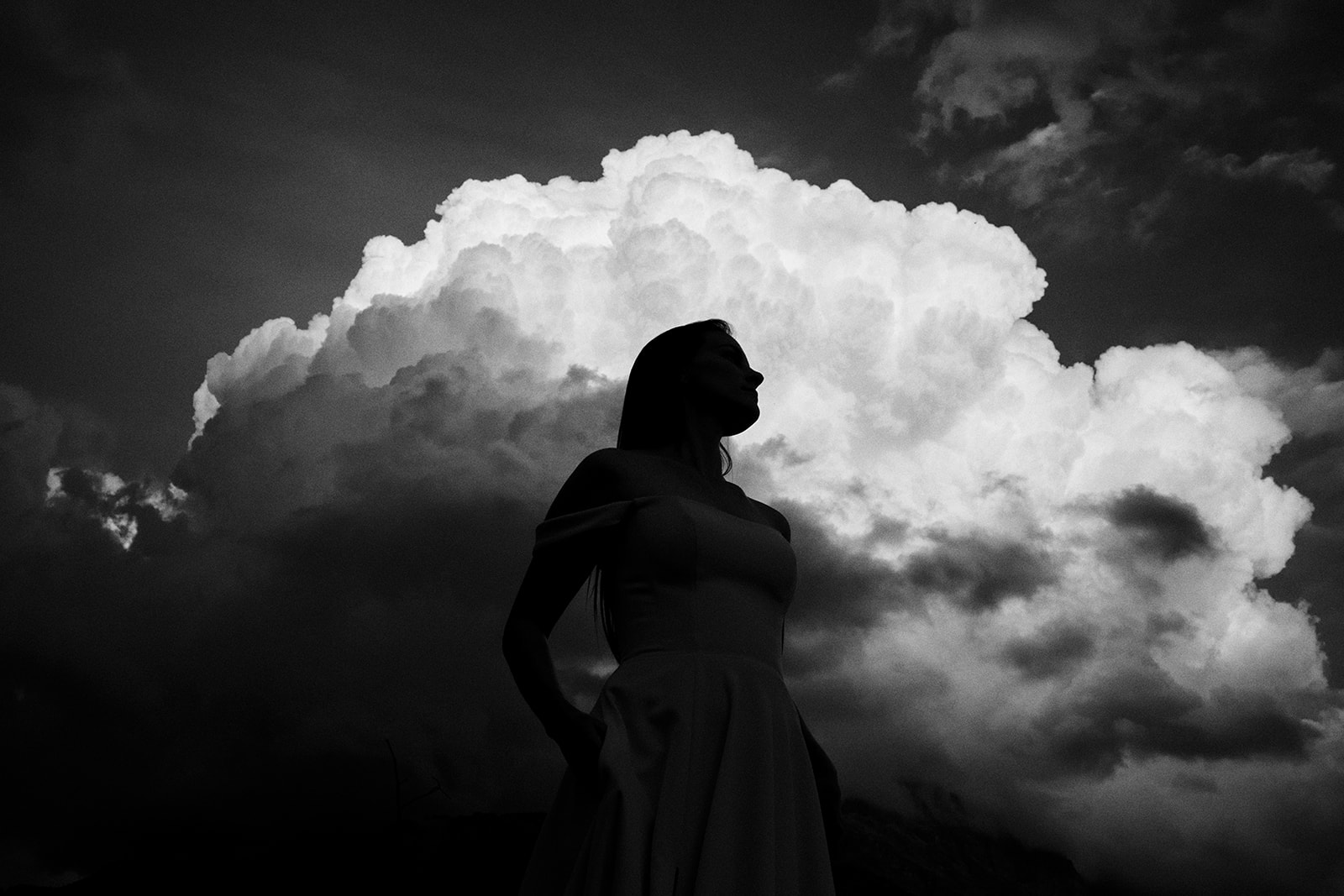
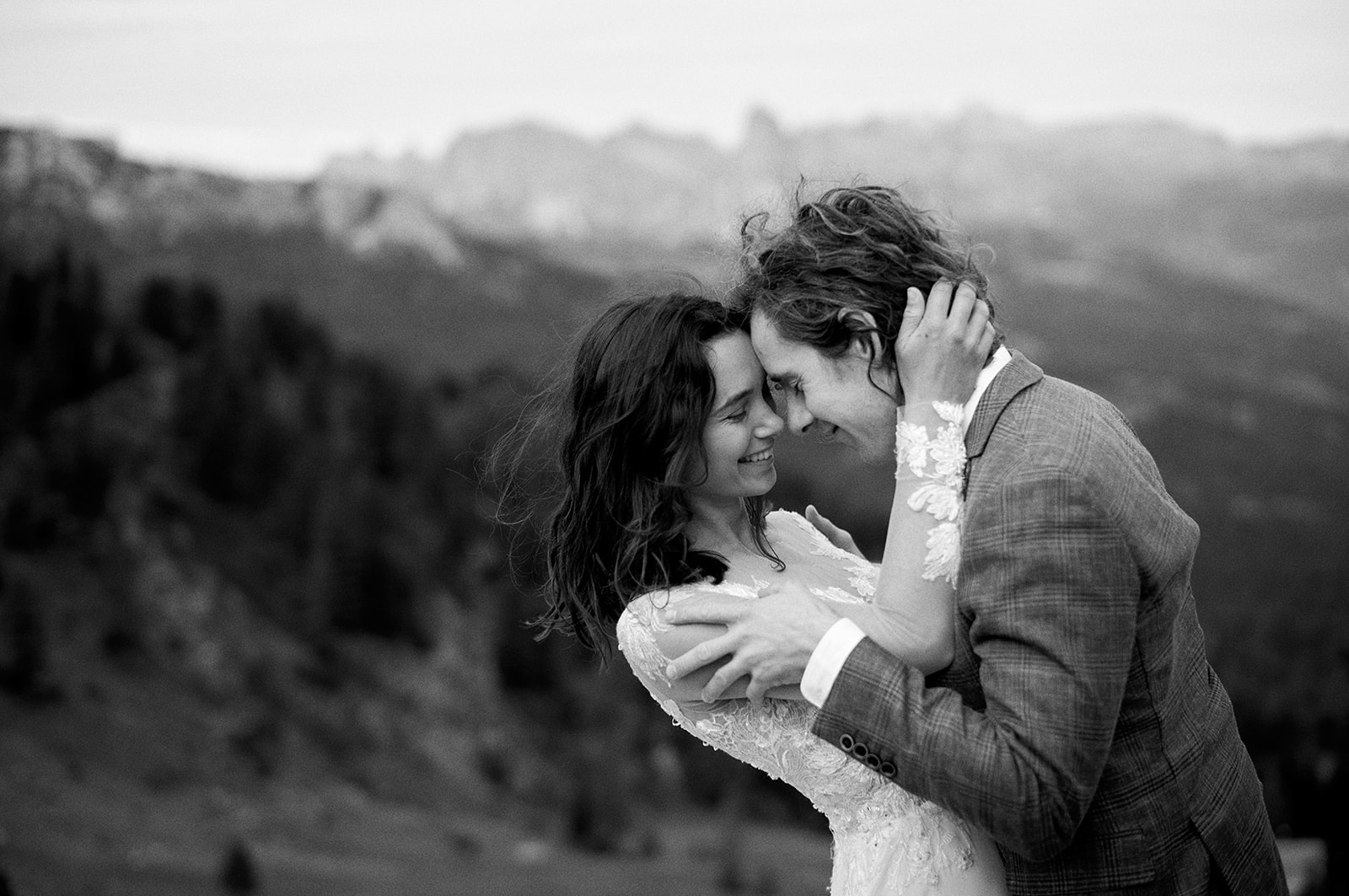
Sooner or later it does, and the range is big enough to answer back. Cloud on one pass rarely means cloud on the next, so I build every day with somewhere to pivot to. Yuliia and Gunnar’s day was a wild one and the photographs are better for it.
Giau if you want drama straight out of the car: the road crosses the pass and Ra Gusela stands right over the meadows. Tre Cime if you want the walk and the north faces. I have photographed weddings at Giau and elopements at Tre Cime, and there is no wrong answer, only a weather forecast.
One day. I photograph the Dolomites sunrise to sunset, and a single full day covers everything in this guide. Build the trip around it: a travel day each end, and a spare day if you want weather insurance, but the wedding itself needs exactly one.