Getting Married in Iceland
I have been to Iceland something like forty five times. I know it better than anywhere else I photograph: the locations, the way the light changes through the seasons, and the people who make a day work, from the celebrant to the guide who can get you somewhere quietly before the buses arrive. Most of these guides are written by photographers hoping the post earns them a trip; I have long since lost count of mine. Couples ask me the same things before they commit to it, so here are my answers.
Iceland is raw and volcanic and a little unreal: glaciers, black coastlines, moss over old lava, and wind that shapes every shoot. It is also, quietly, one of the simplest countries in the world for two people to marry legally, which is part of why so many come here to do exactly that.
You could see the headline sights in a week of driving. These are the corners I would start you in: the Reykjanes peninsula that begins the moment you land, the Snæfellsnes peninsula and its arrowhead mountain, and the long road east along the south coast. This is where I would send you, and what I would tell you before you go.
Reykjanes
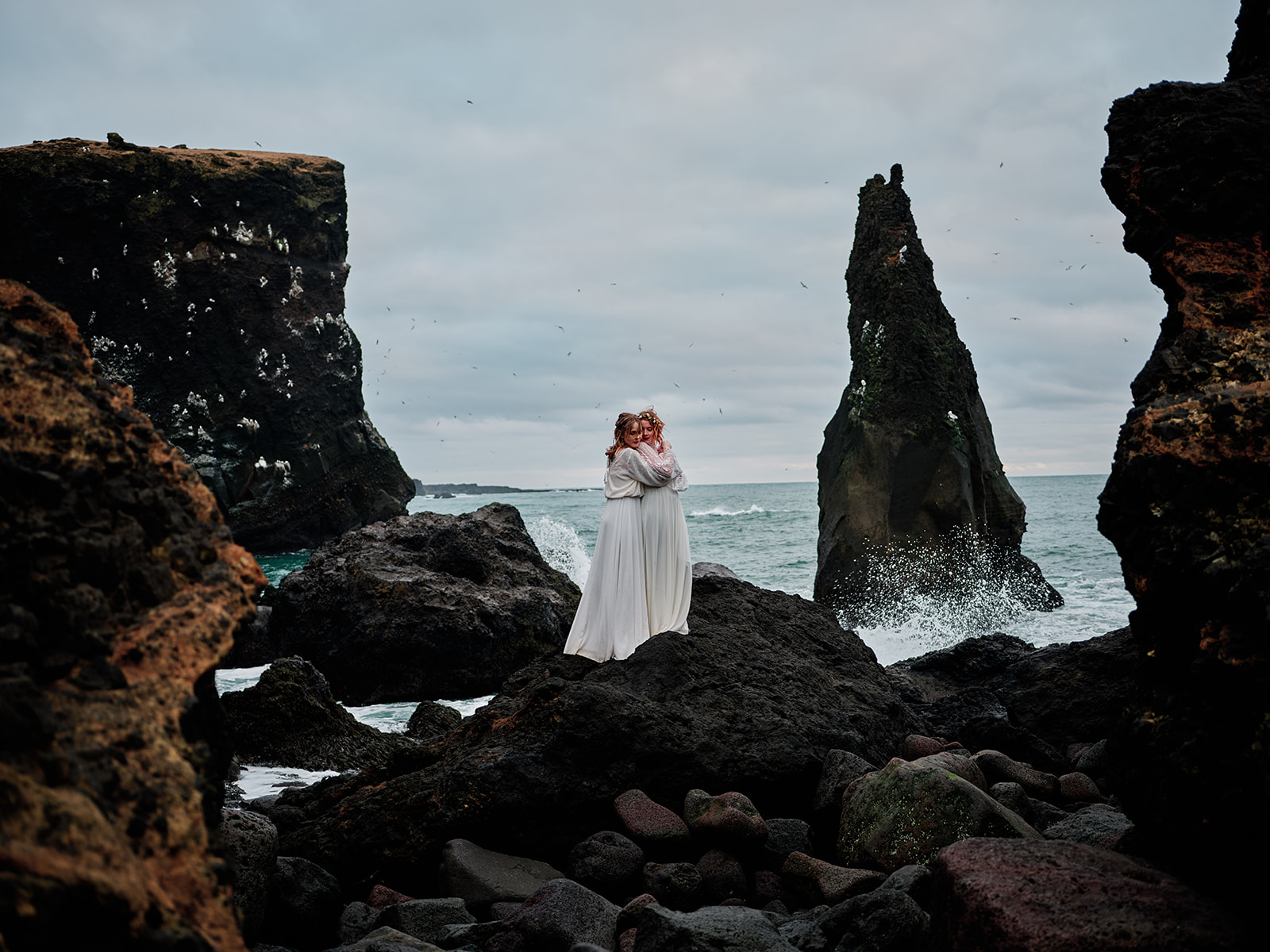
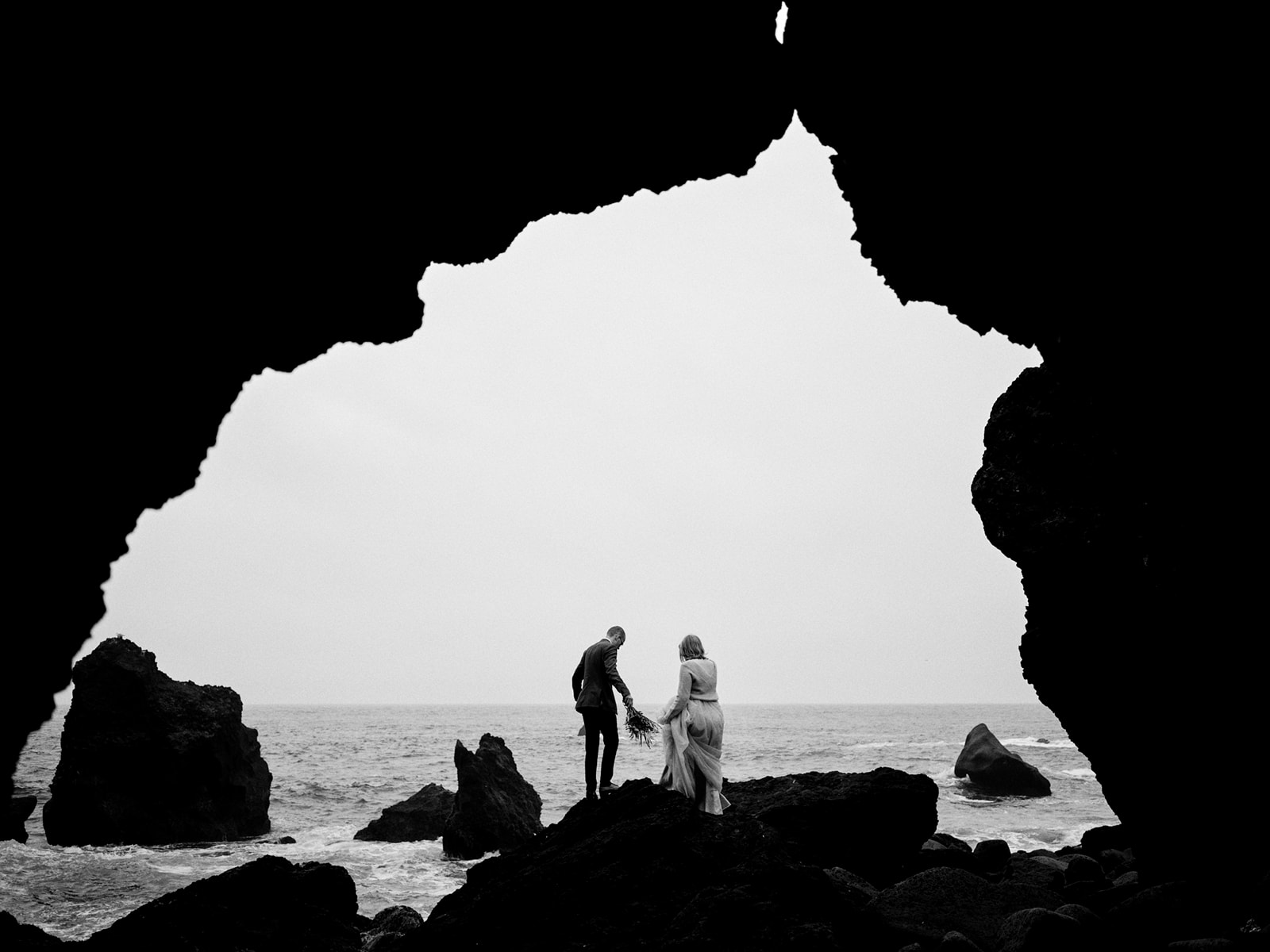
Reykjanes is the peninsula the airport sits on, so the landscape starts before you have found the hire car: fields of moss-covered lava, steaming ground, and a raw Atlantic coast. It is the easiest place to marry at short notice and a dramatic one in its own right, all graphic black rock and big sky. It has also seen recent volcanic activity, so it is worth checking what the ground is doing before you plan a spot.
Snæfellsnes
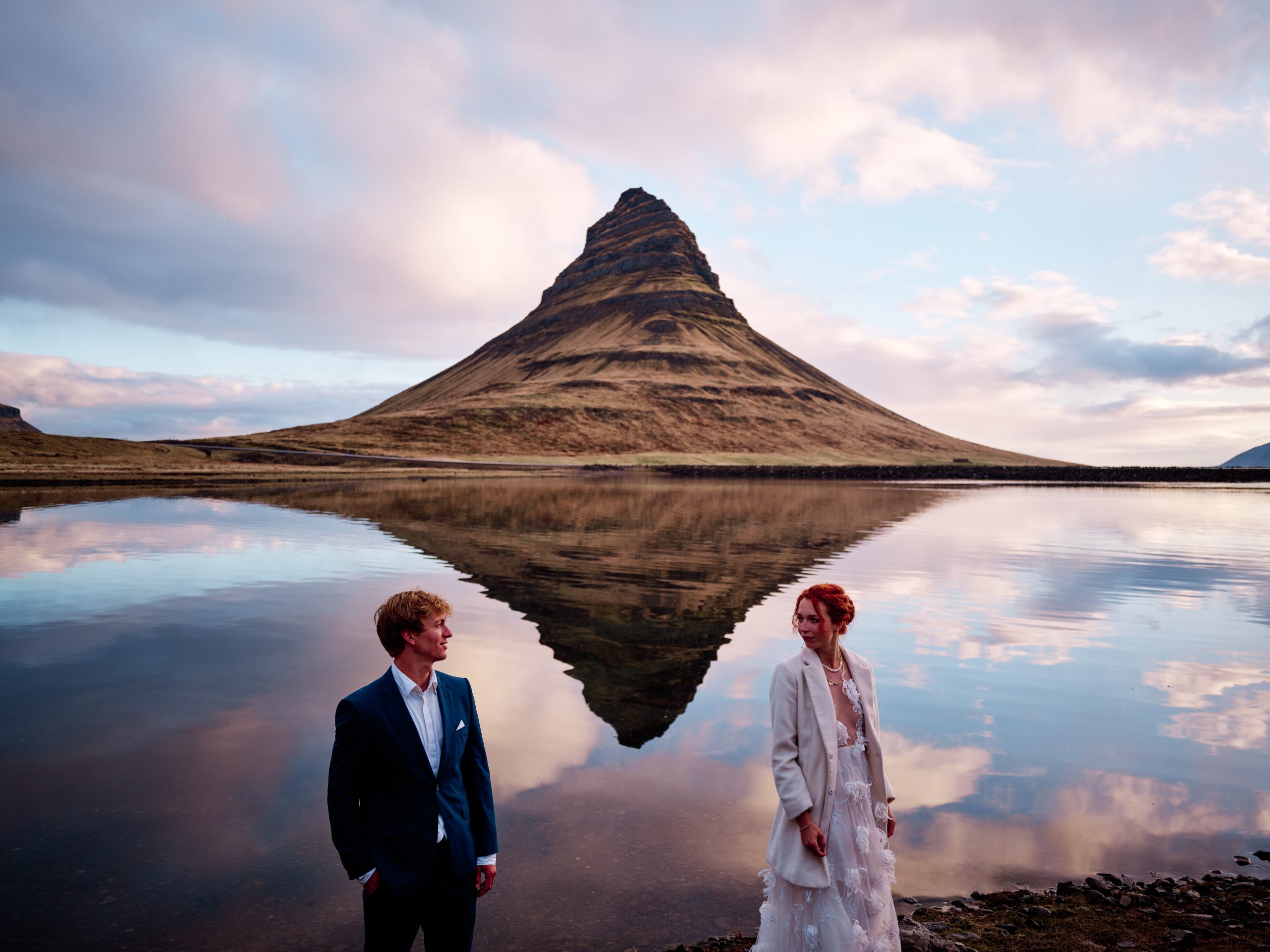
Snæfellsnes is often called Iceland in miniature, and about two hours from Reykjavik it hands you Kirkjufell, the arrowhead mountain beside its little waterfalls and the most photographed peak in the country. Nearby stand the black timber church at Búðir and the old hotel beside it, out on a plain of moss and lava. It is quieter than the south and endlessly photogenic. You can see a day of it in Anna and Niklas's elopement.

The south coast
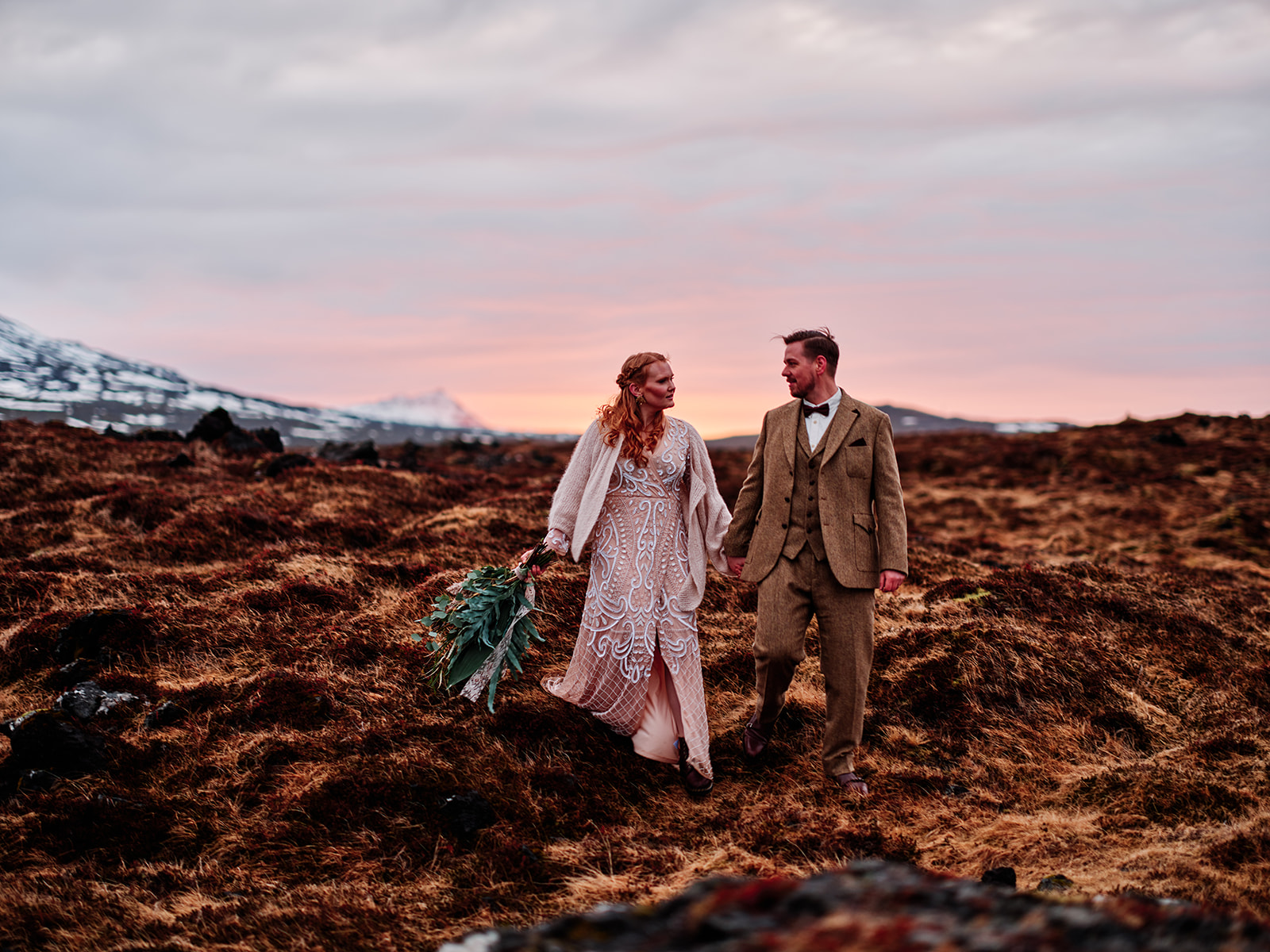
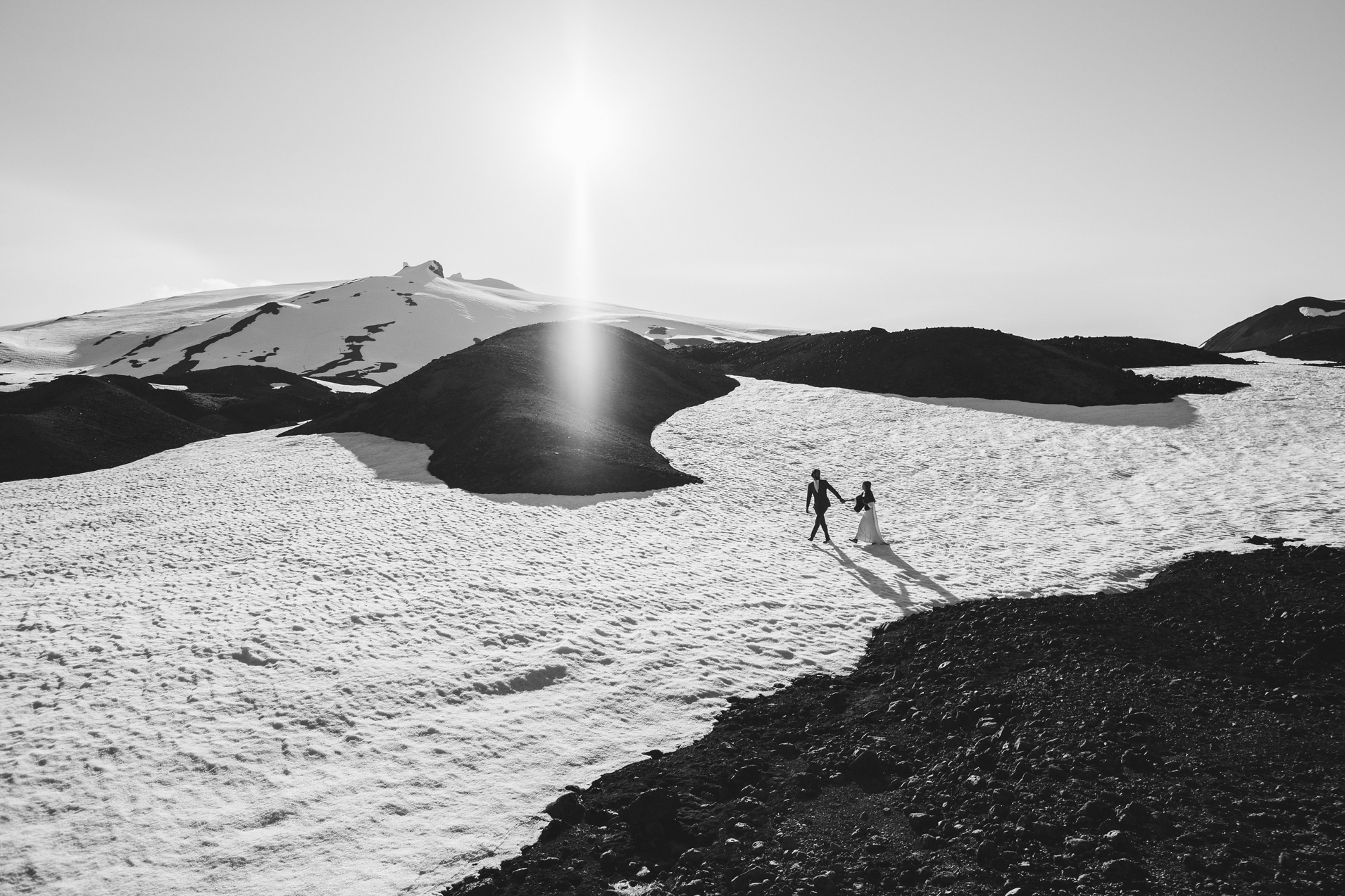
From Reykjavik, Route 1 runs east past Seljalandsfoss and Skógafoss, the black beach at Reynisfjara, the village of Vík, and, further on, the Jökulsárlón glacier lagoon and the Diamond Beach where the ice washes up on black sand. It is a lot of ground, so I would give it two days rather than one, and I would keep the day loose, because the weather out here decides most of it. Mind the sneaker waves at Reynisfjara; they are genuinely dangerous.
Þingvellir & the Golden Circle
The north & Akureyri

The east & Vestrahorn
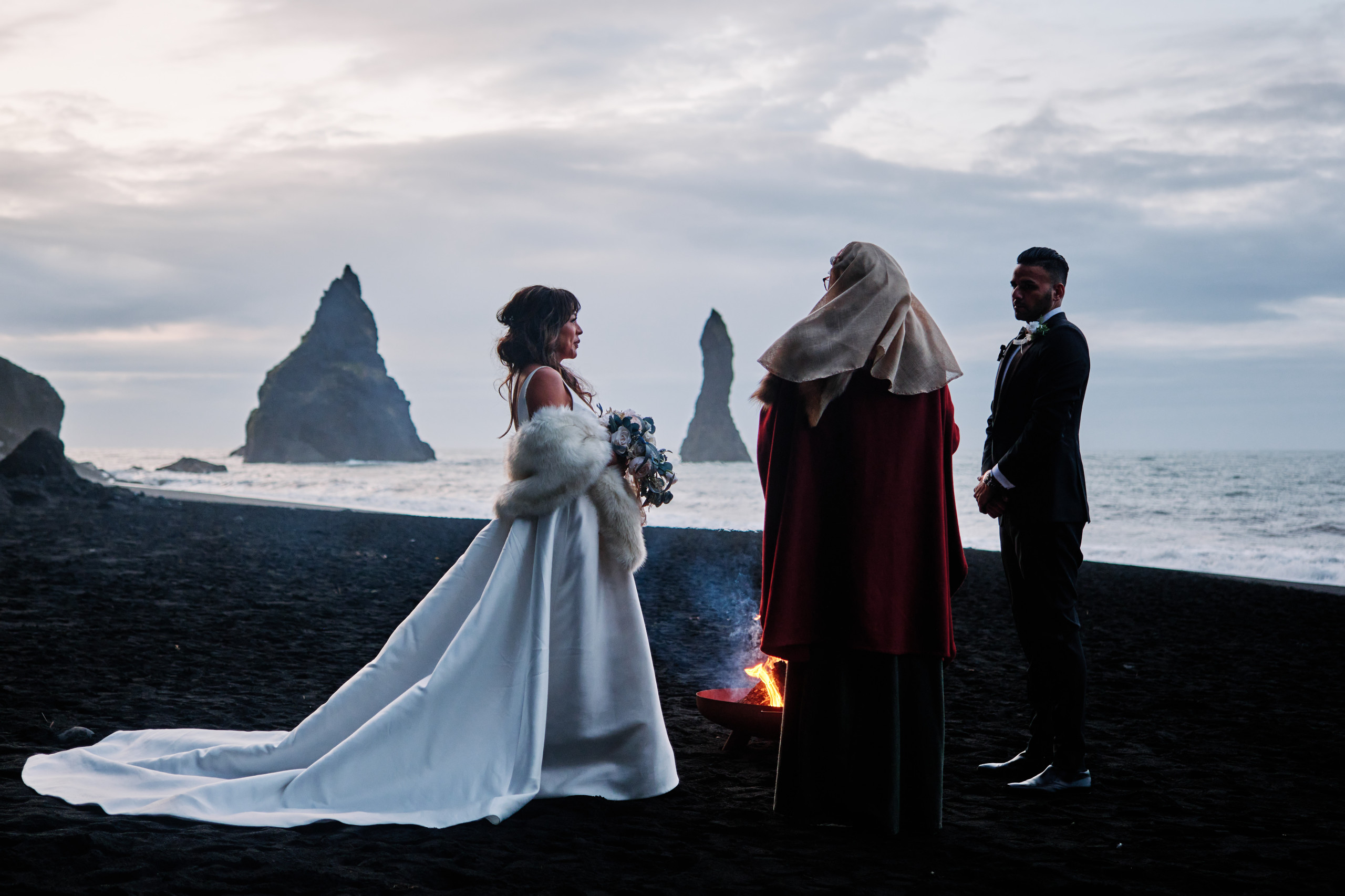
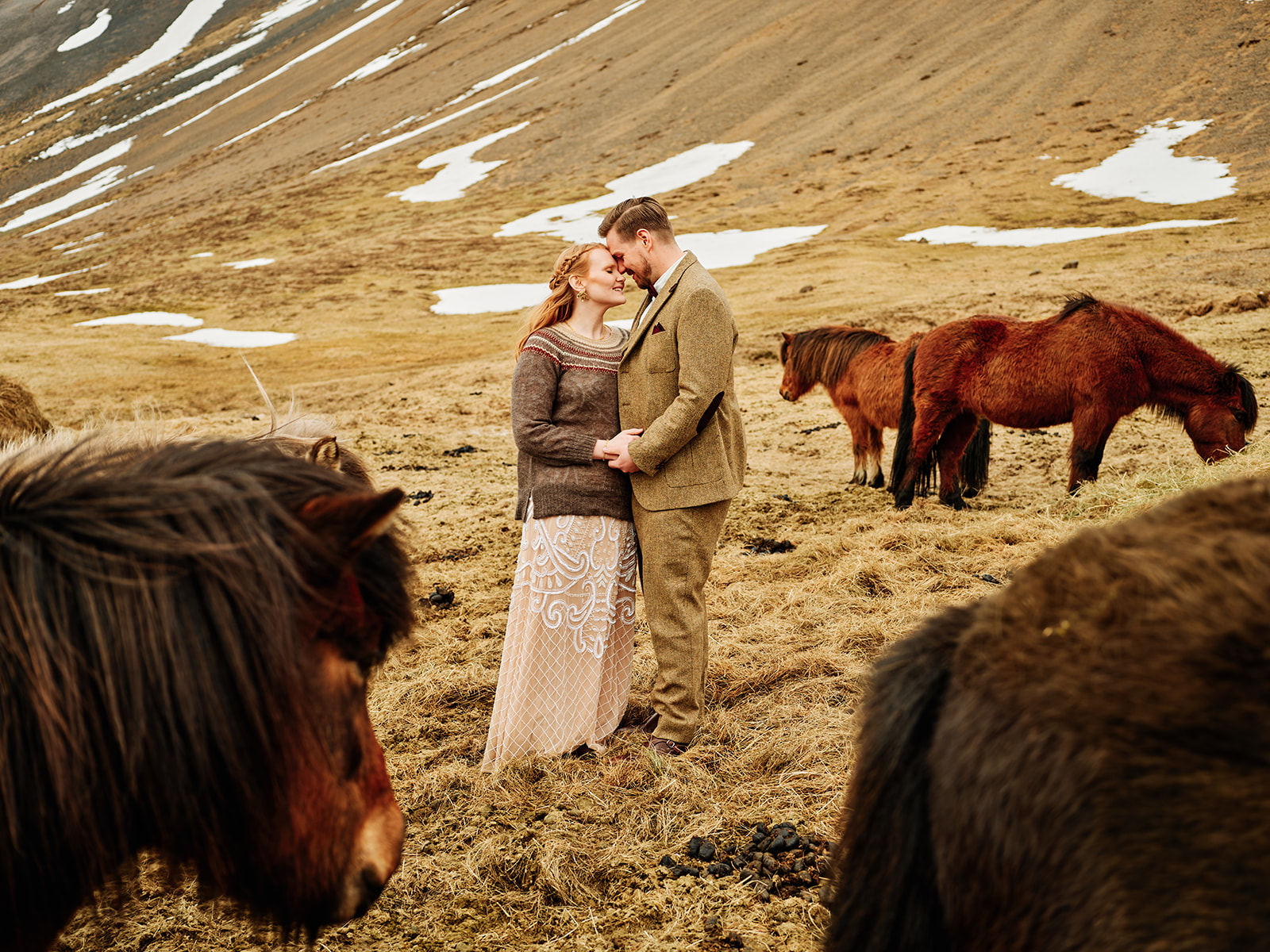
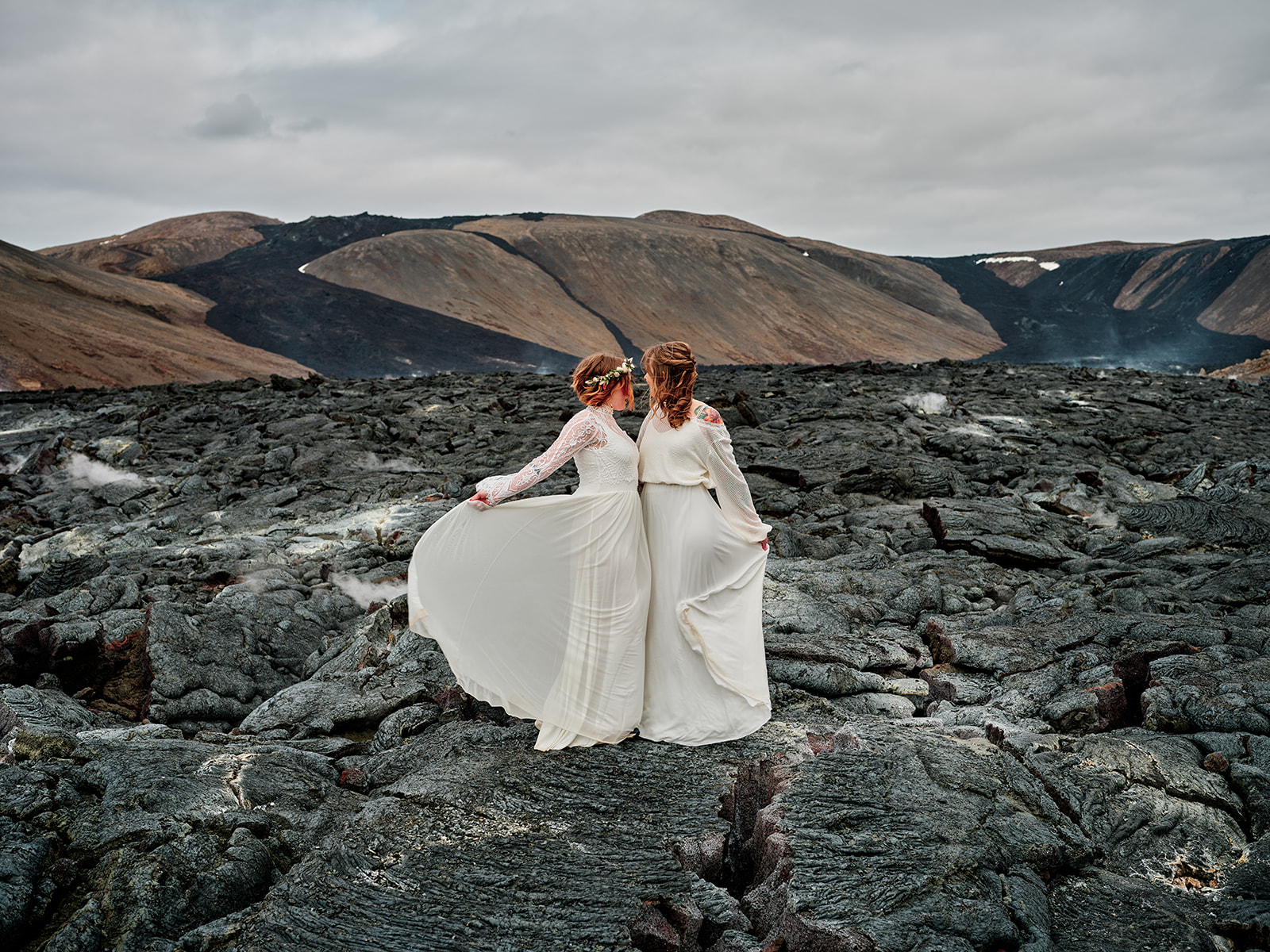
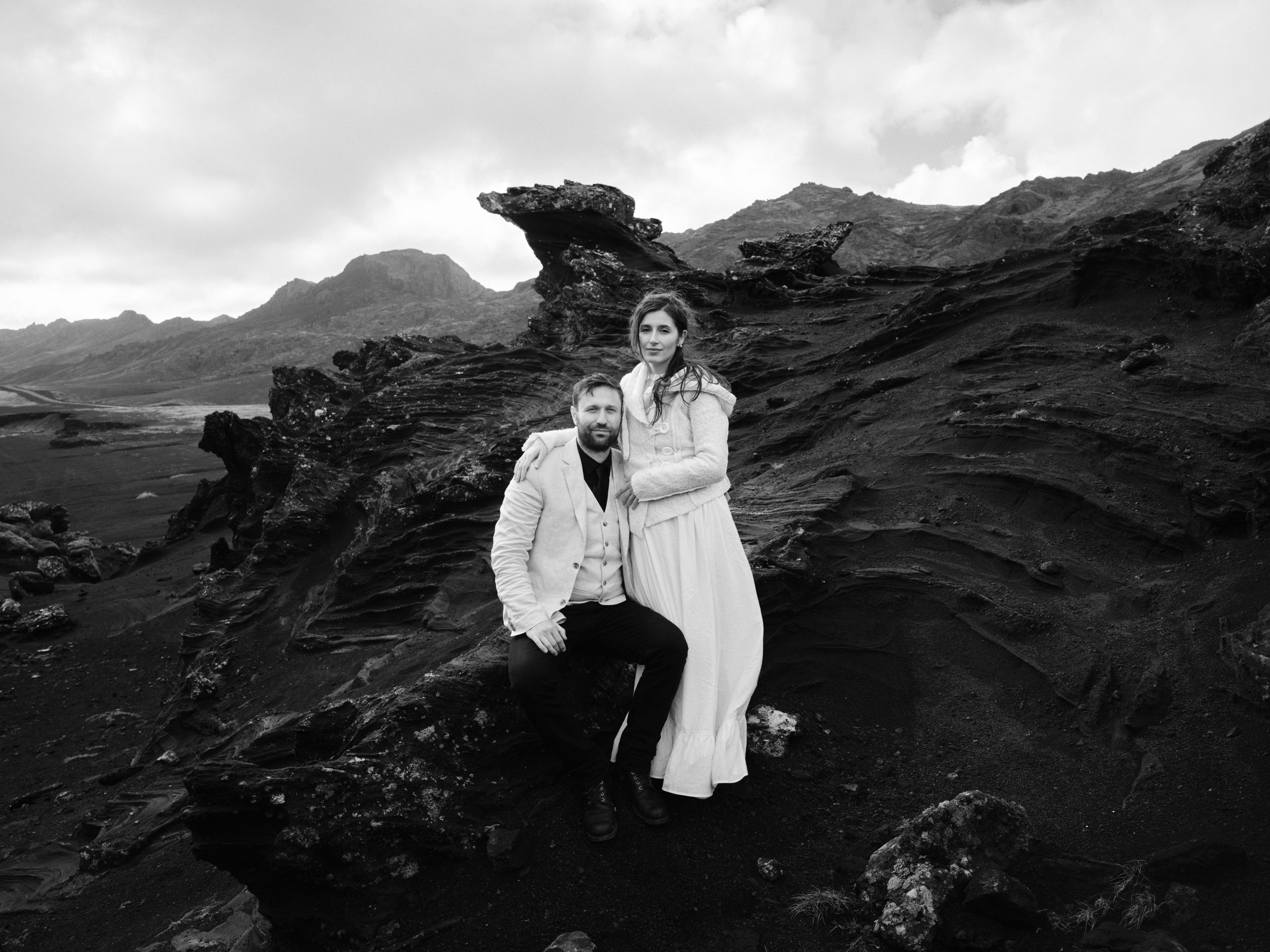
The weddings and elopements that got me here.
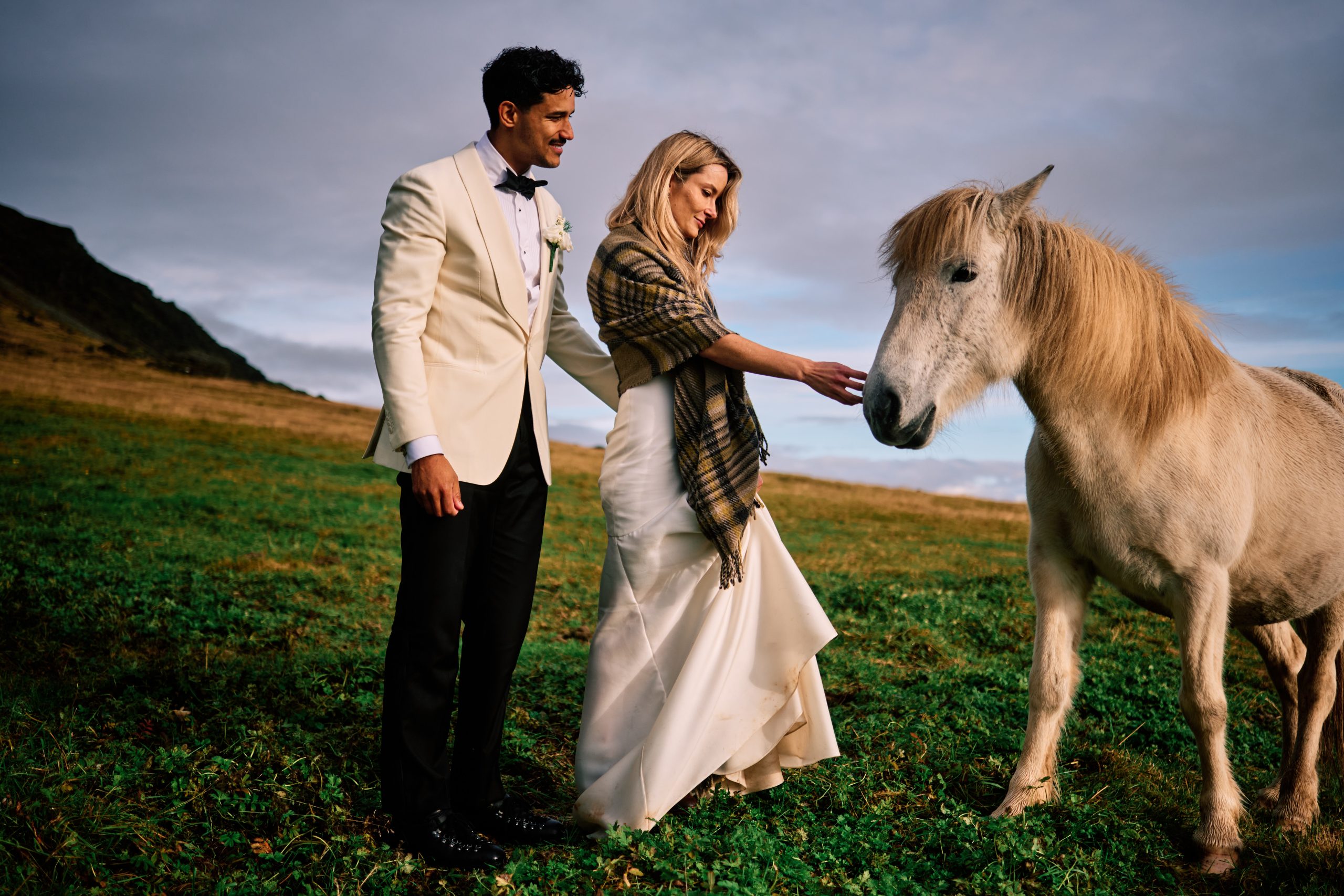
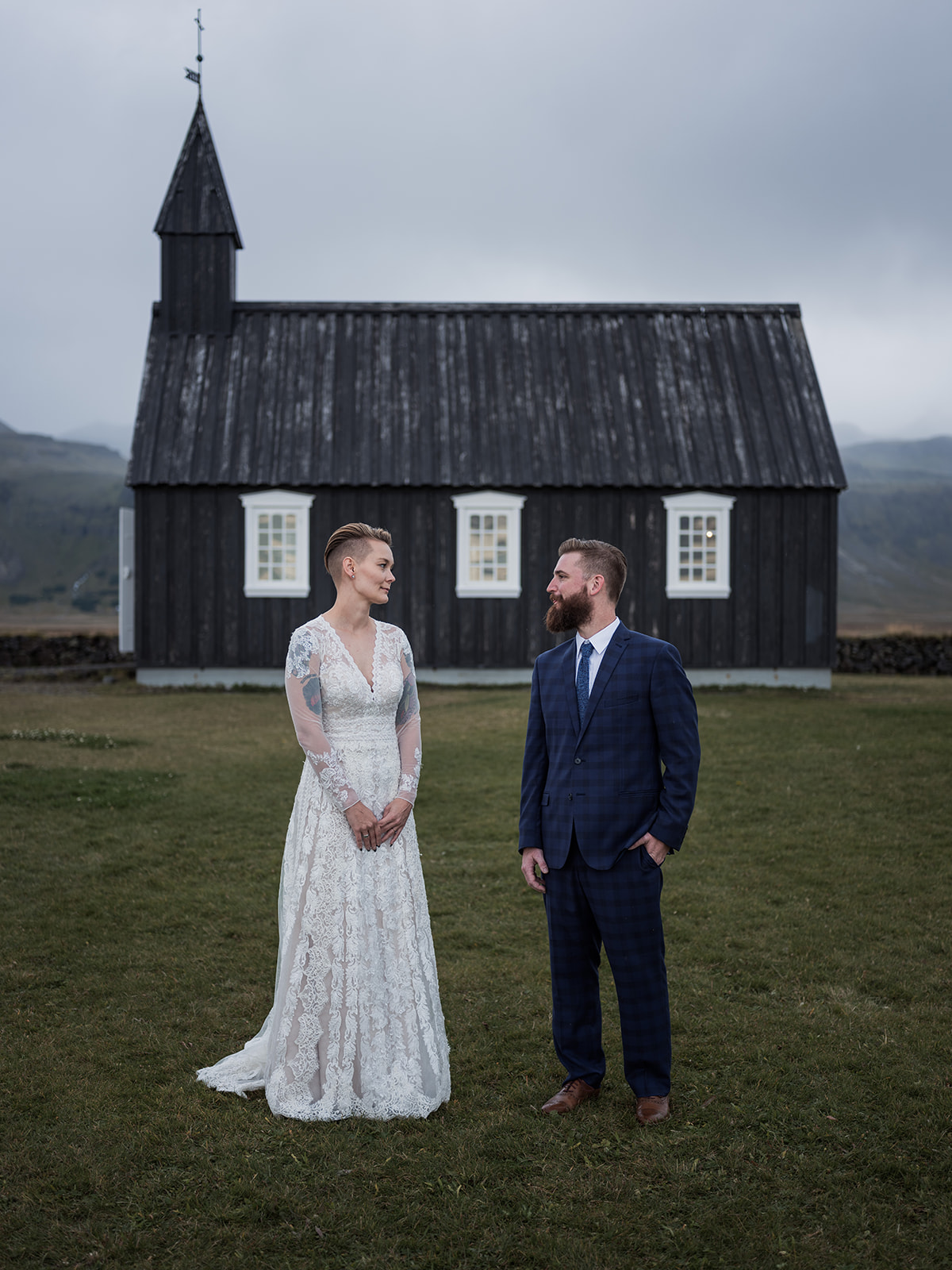
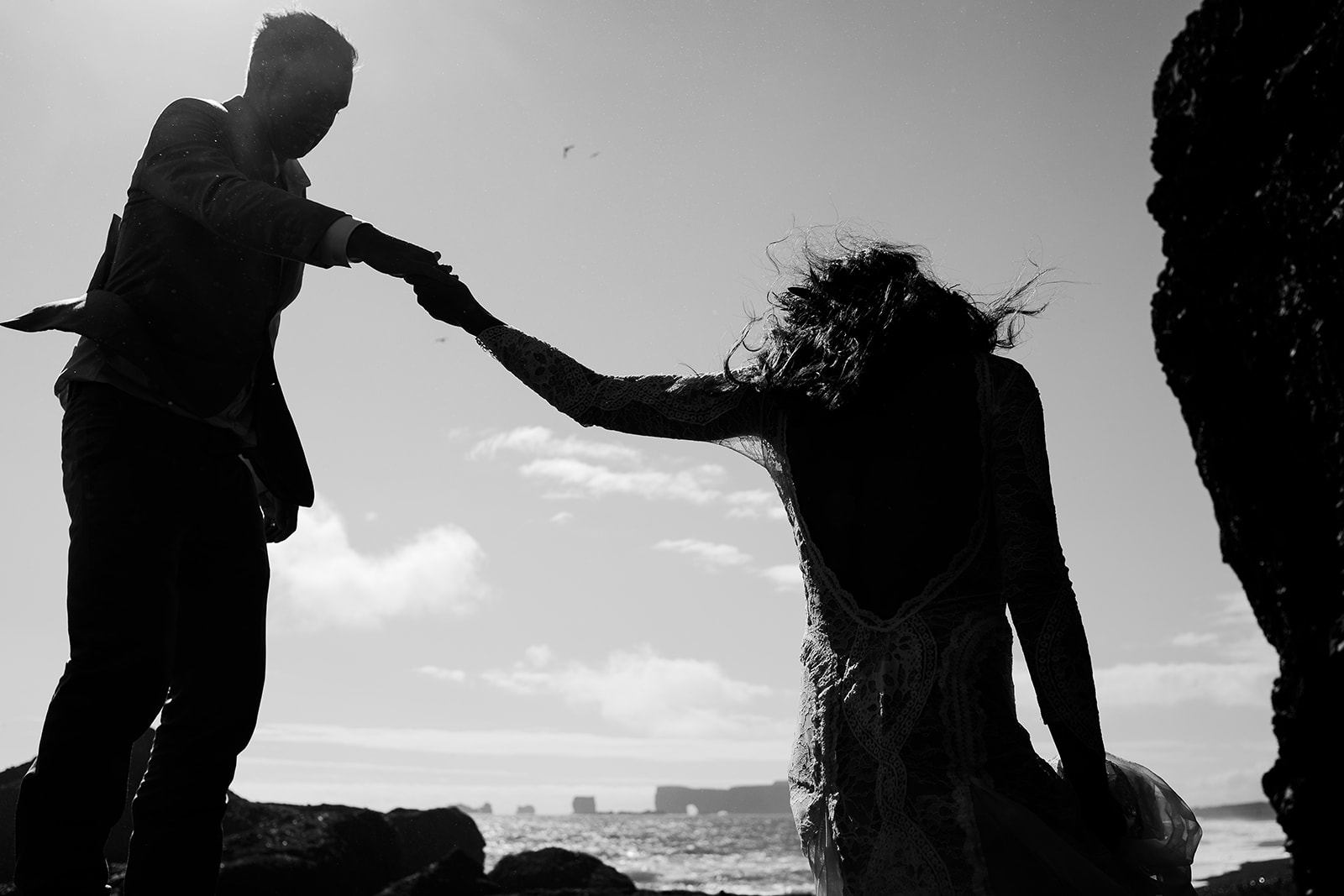
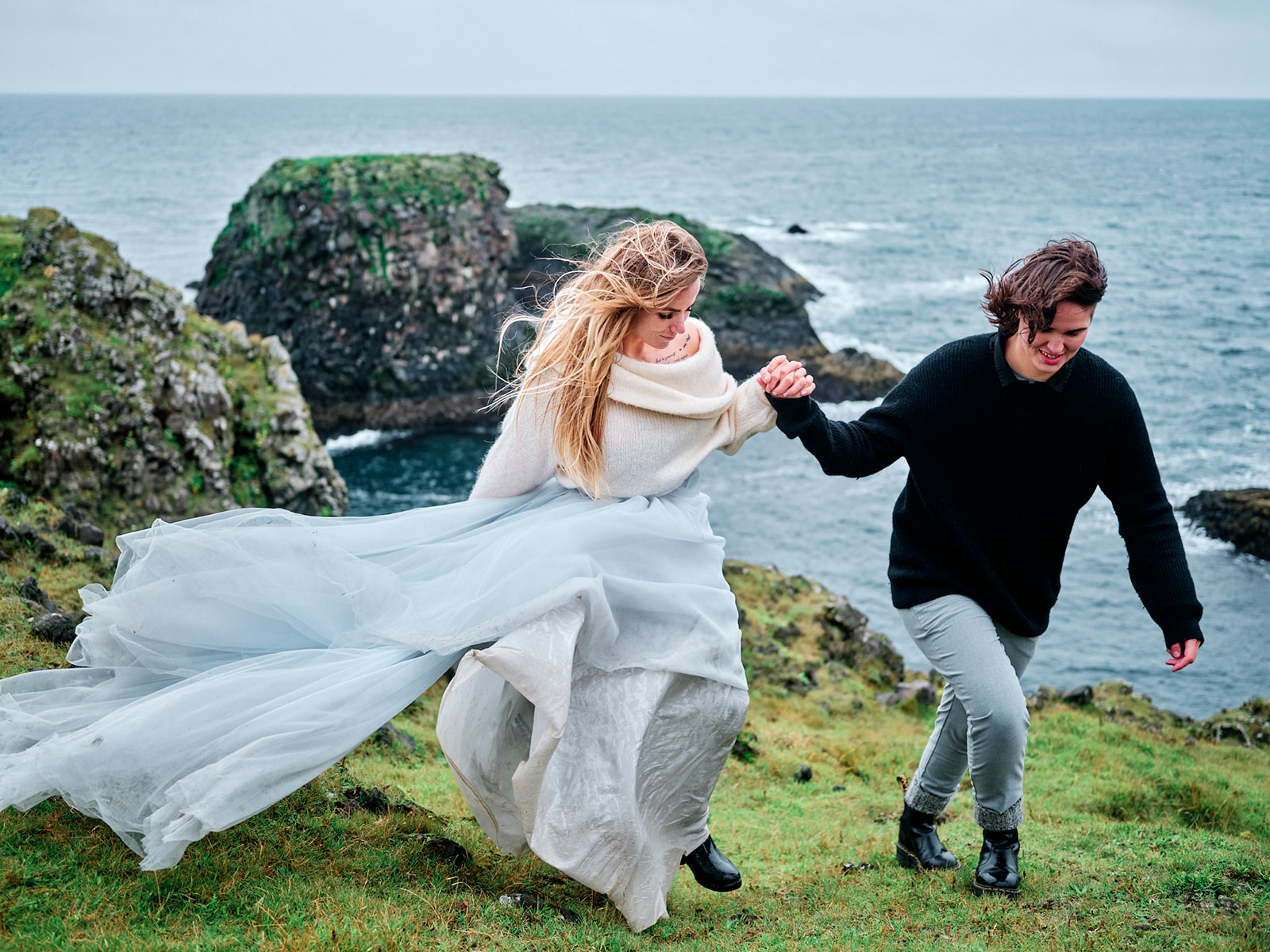
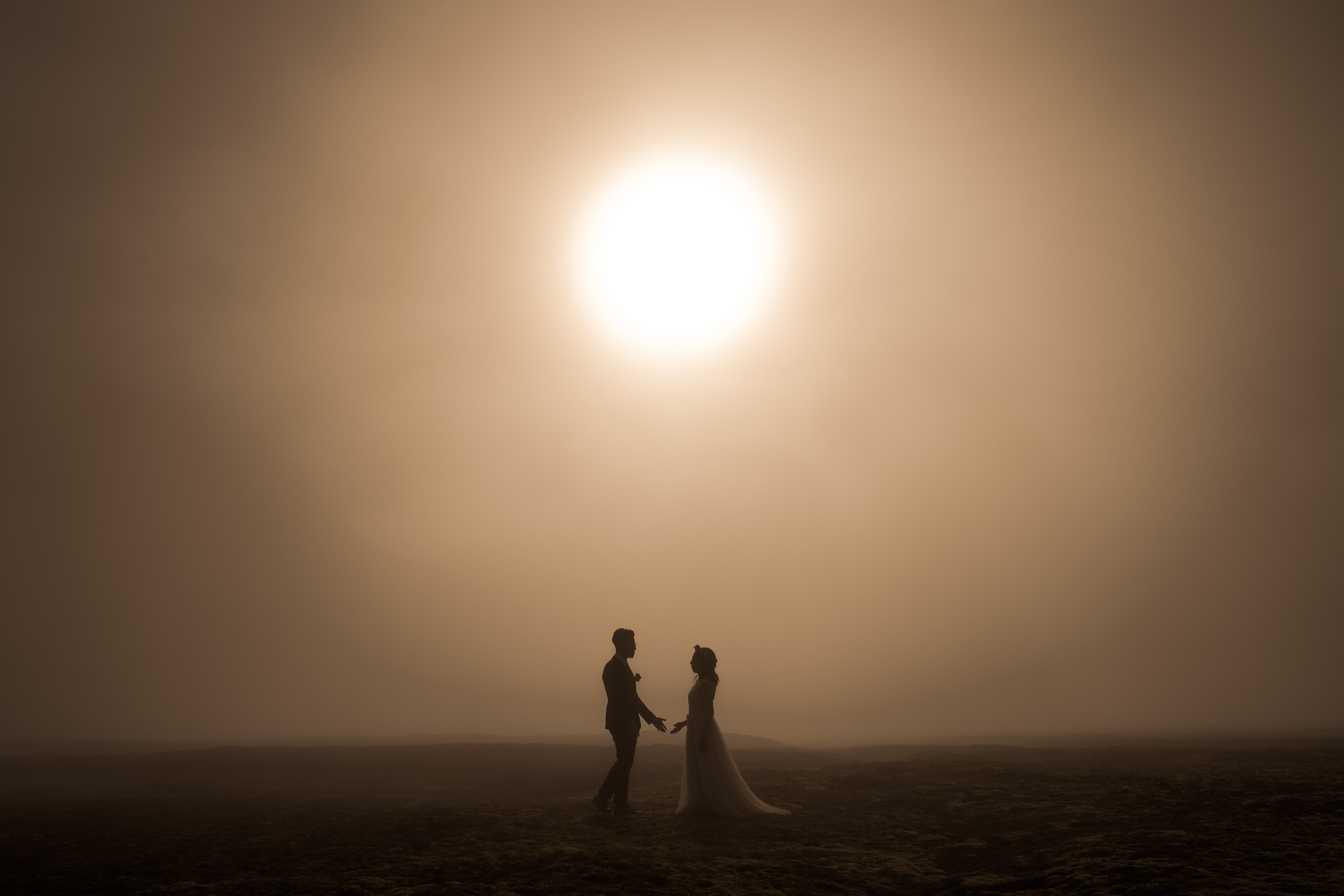
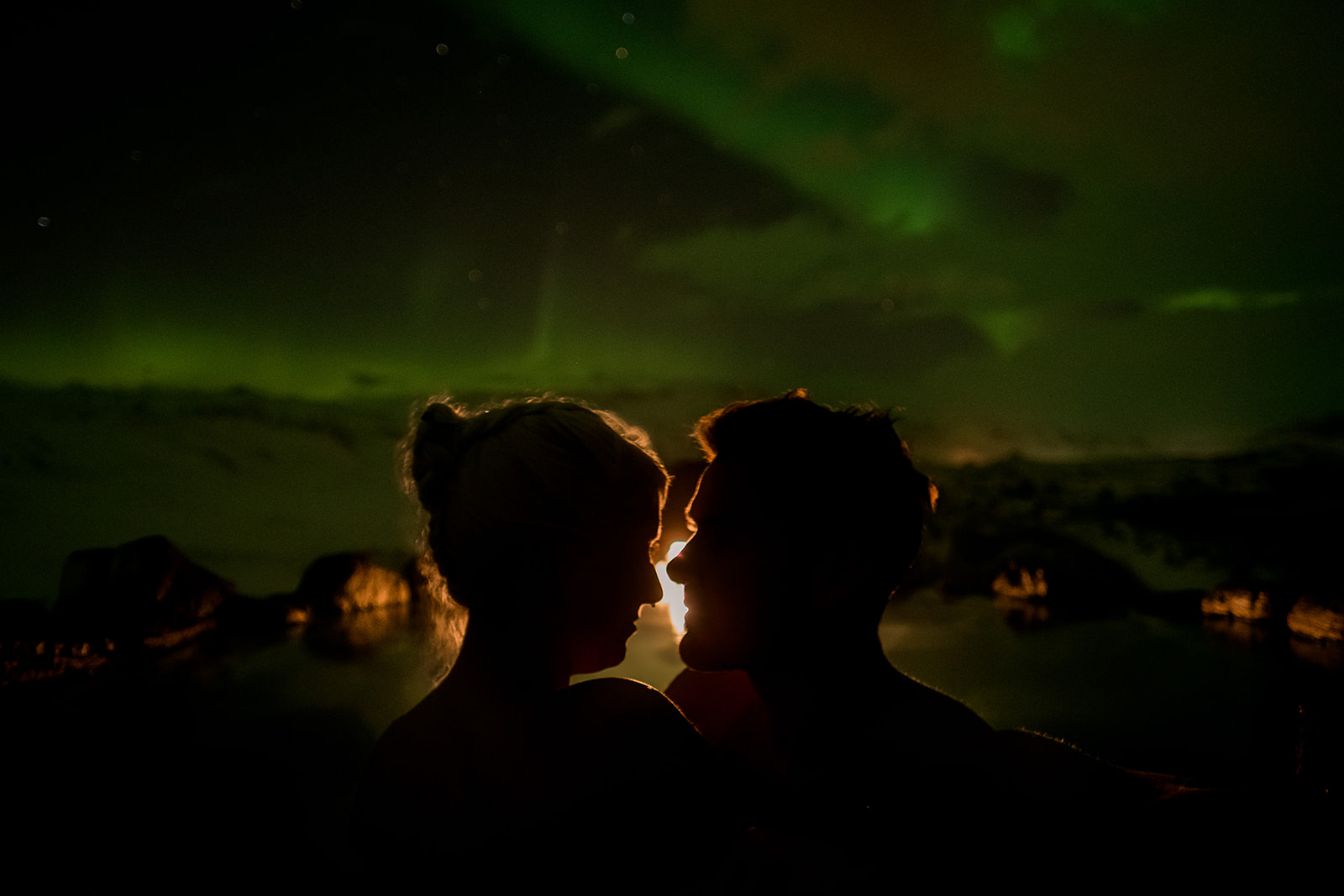


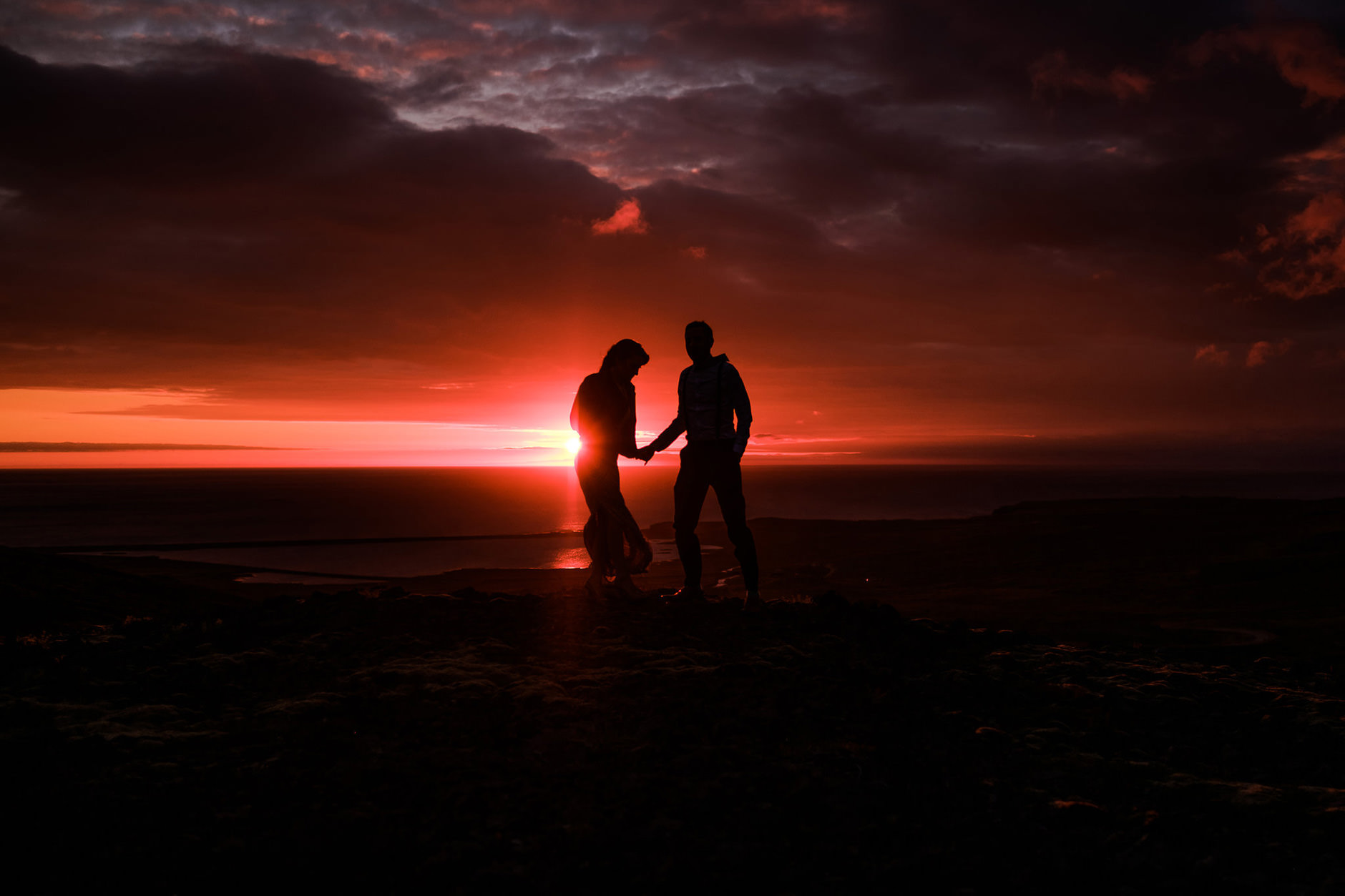
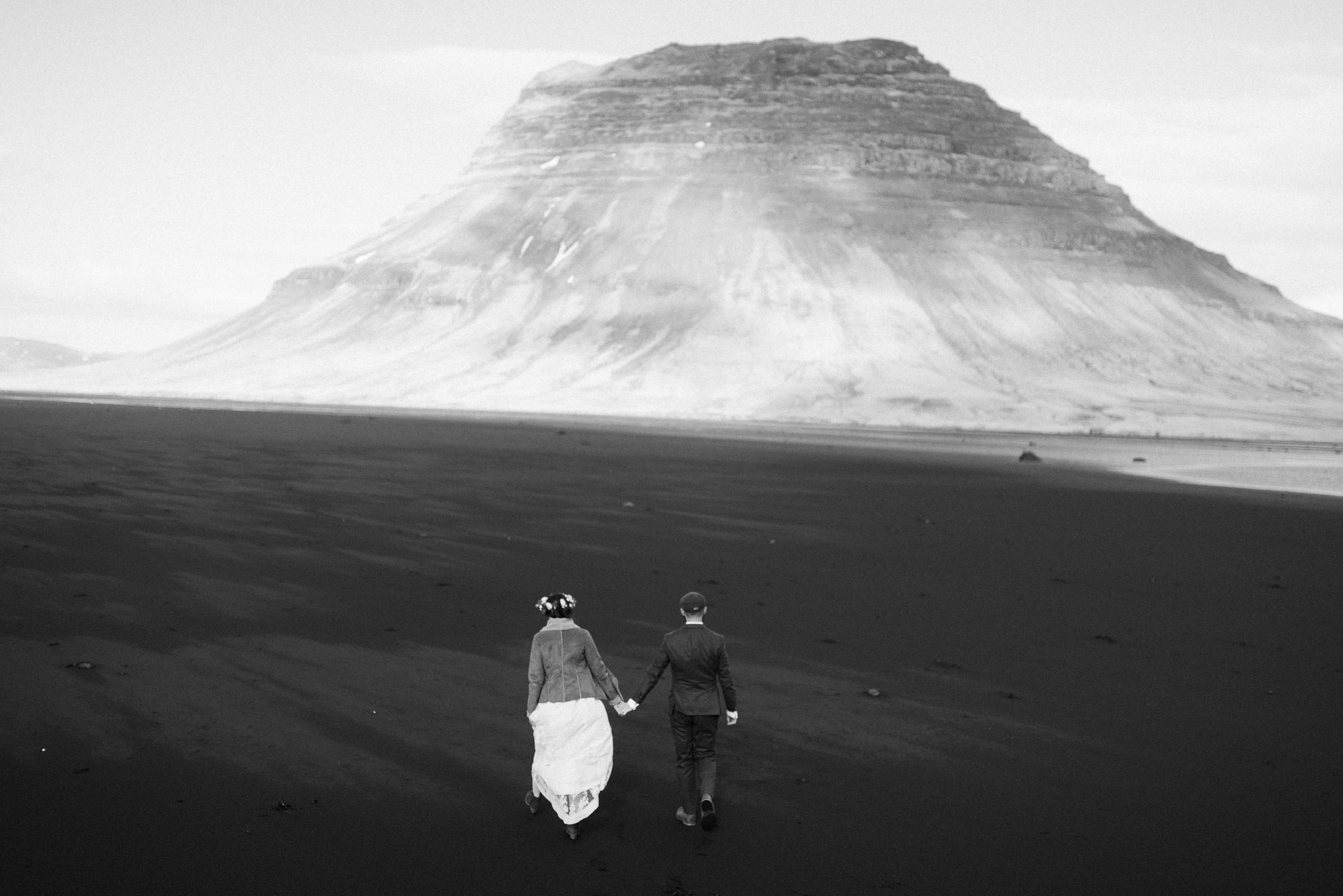

Summer, roughly June and July, gives you the midnight sun and a long golden light that never quite fades, but no darkness for the aurora; it is the warmest, busiest and priciest window. Winter, from late September to March, trades daylight for northern lights, snow and ice caves, along with storms and road closures. The shoulder seasons, spring and early autumn, are the sweet spot: fewer people, decent light, and by late September a chance of early aurora. The weather is genuinely brutal and changeable in every season, and the wind is the real story, so build in slack and dress for all of it.
You fly into Keflavik, code KEF, forty five minutes from Reykjavik on the Reykjanes peninsula, with direct flights from across the UK, from North America and from mainland Europe; London to Keflavik is about three hours, the US east coast five to six. Iceland's position in the mid Atlantic makes it the natural meeting point for a couple coming from both sides of the ocean.
Reykjavik and Reykjanes are the arrival base, with the lava coast and the Blue Lagoon right there, good for a first night or a short-notice ceremony. Snæfellsnes, about two hours north, is quieter elopement country around Kirkjufell and Búðir. The south coast, all strung along Route 1, holds the biggest run of icons, the waterfalls, the black beach and the glacier lagoon, so I would base a night or two out that way rather than day-tripping it from the city.
You drive on the right, and a car is essential; nothing worth photographing is reachable without one. The Ring Road is paved, but plenty of side roads are gravel, and the highland F-roads are four by four only, summer only, and often involve fording rivers, so a two wheel drive up there voids your insurance. The wind can rip a car door clean off its hinges, so hold the doors and never open two at once. Watch for single-lane bridges and slow right down where tarmac turns to gravel. In winter you want a four by four on studded tyres and a daily look at road.is and vedur.is.
Iceland is on the krona and it is expensive, and it is almost entirely cashless; a contactless card covers everything, and the fuel pumps want a chip and PIN, so bring one. Tipping is not expected. The clocks stay on GMT all year, the same as the UK in winter and an hour behind it in summer. Before any hot spring or pool you are expected to shower properly first; it is a firm rule. Stay on the marked paths, because the moss and lava take decades to recover from a single boot print, and check the drone rules, which are tight around the parks and busy sites.
This is the good part: Iceland is one of the easiest and most welcoming countries in the world for foreigners to marry legally, open to any couple, with no residency required. You apply to the District Commissioner, the Sýslumaður, for a certificate confirming there is no impediment, and a licensed Icelandic officiant, a registrar or a registered celebrant, can then marry you legally almost anywhere outdoors. Start the paperwork around twelve weeks out to allow for the marital-status certificate, the apostille and any translations. A foreign officiant cannot marry you here, so if you want a friend to lead the words, do that as a symbolic ceremony and keep the legal signing separate. Either way, a good local planner or celebrant makes it painless.
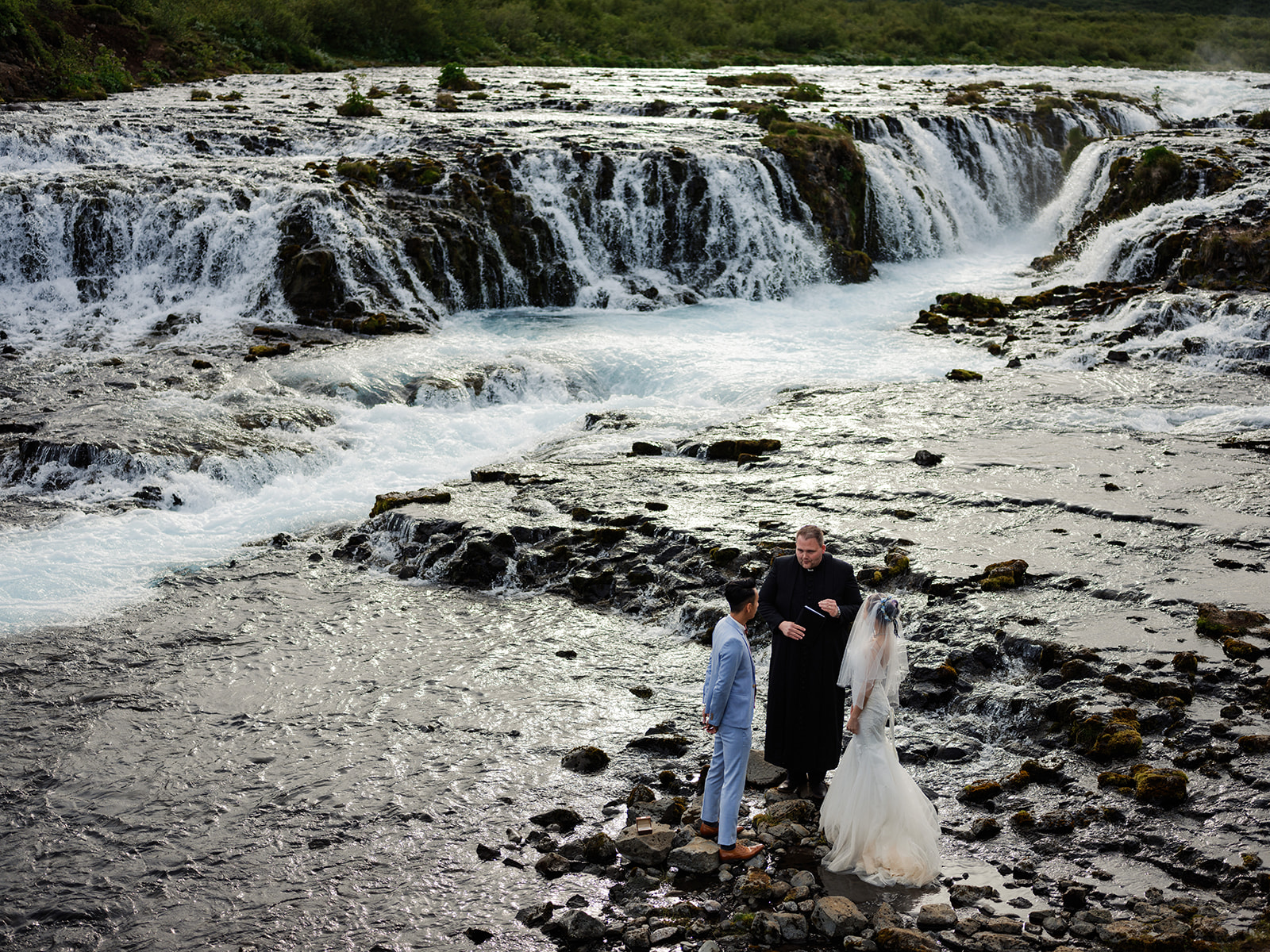
Yes, and Iceland makes it easier than almost anywhere in Europe. You send birth certificates, a certificate of marital status issued within eight weeks of the date, and the marriage notification form to the District Commissioner, ideally six to eight weeks ahead. There is no residency requirement, so you can marry on an ordinary tourist stay. Lindsey and Daniel married at a waterfall with a celebrant and two witnesses.
For two people and a celebrant on public land, generally no. Private land and protected areas have their own rules, drones are restricted in many places, and anything with chairs and arches should be asked about first. The real permit is respect: stay on the paths and leave the place as you found it.
September and October give settled light, open roads and a real chance of aurora without deep-winter driving. June and July give the midnight sun. Deep winter is the most beautiful and the most demanding: Brittany and Jeff married in the snow and it was worth every frozen minute.
At midday, yes. The car park fills and the famous angle grows a queue. At sunrise it belongs to you, which is true of nearly every famous corner of Iceland: Anna and Niklas had it to themselves. This island rewards early alarms better than anywhere I photograph.
Take it seriously. Storms close roads with little warning and plans need slack built in. Base yourselves in one region instead of circling the island, check road.is and vedur.is every morning, and let the weather set the order of the day. Sophia and Tanveer worked the south coast that way and never felt rushed.